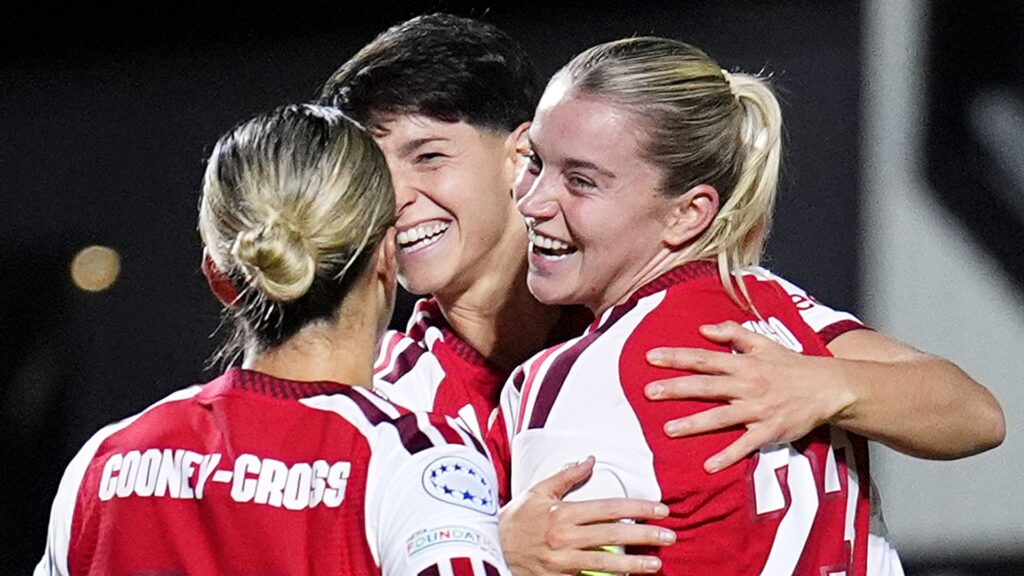
Alessia Russo hat‑trick lifts Arsenal 3‑0 over Benfica, sets English WCL record 2026
Background: the Women's Champions League and Arsenal’s season
The UEFA Women’s Champions League entered its 2026‑27 edition with a revamped league‑phase format that groups 32 clubs into eight mini‑leagues. Arsenal Women, the reigning English champions, were drawn in Group C alongside Benfica, Olympique Lyonnais and a debutant from the Czech Republic. After a mixed start to the domestic season, the Gunners viewed the group stage as a chance to re‑assert their continental pedigree and to test the depth of a squad that blends home‑grown talent with an expanding African recruitment pipeline.
Arsenal’s academy has, over the past five years, become a magnet for promising African players, most notably Nigeria’s forward Uchenna Kanu and South Africa’s midfielder Thembi Kgatlana, who both signed professional contracts in 2024. Their presence reflects a broader shift: European clubs are scouting the African women’s game more aggressively, driven by the continent’s rising standards and the commercial appeal of its diaspora fan base.
The match: Russo’s hat‑trick and a decisive 3‑0 win
On 27 October 2026, Arsenal travelled to Lisbon for the group‑phase fixture against Benfica. From the outset, the English side pressed high, forcing errors that led to three first‑half chances. Alessia Russo, who had joined Arsenal from Manchester United earlier in the summer, seized the moment, netting in the 12th, 34th and 58th minutes. Her clinical finish in the box left the Portuguese goalkeeper with little chance, and the third goal came from a swift counter‑attack that showcased Arsenal’s tactical flexibility.
The win not only secured three points but also sent a clear message to the rest of the group. Benfica, who had been unbeaten in their domestic league, appeared rattled by the intensity of Arsenal’s pressing and the clinical edge provided by Russo’s movement. Post‑match, Arsenal’s manager Jonas Eidevall praised the forward’s “instinctive positioning” and highlighted the performance as a template for the rest of the campaign.
Breaking records: Russo becomes England’s top scorer in the competition
Russo’s three goals lifted her tally to 15, overtaking the previous record held by England legend Ellen White. The achievement marks a milestone for English women’s football, demonstrating the growing depth of talent beyond the traditional powerhouses of Manchester City and Chelsea. It also underscores the impact of the 2022‑23 professionalisation drive that saw the FA increase funding for women’s clubs and youth development programmes.
According to the FA’s official statistics, Russo’s record is the fastest to reach 15 goals in the Women’s Champions League, achieved in just 22 appearances. Analysts at Sky Sports argue that this efficiency will force national team selectors to consider her for a regular starting role ahead of the 2027 Euro qualifiers, potentially reshaping England’s attacking options.
African implications: visibility, market growth and talent pipelines
While the headline centred on Russo’s feat, the match carried significant relevance for African football. The broadcast, streamed on the newly launched UEFA Women’s Africa Pass, attracted over 2.3 million viewers across the continent, a 28 % increase compared with the same stage of last season. This surge reflects growing appetite for elite women’s football and provides a platform for African sponsors seeking exposure to a global audience.
Moreover, Arsenal’s success with African signings is prompting other European clubs to deepen their scouting networks in West and Southern Africa. The club’s partnership with the Nigerian Football Federation’s women’s development programme, announced earlier in 2026, includes scholarship scholarships for academy prospects and joint coaching clinics. Such collaborations are expected to accelerate the professionalisation of women’s leagues in Nigeria and South Africa, creating a virtuous cycle of talent export and domestic league investment.
Reactions: players, fans and the diaspora community
The Nigerian diaspora in London erupted on social media, with hashtags like #RussoRecord and #ArsenalWomen trending on Twitter. Prominent Nigerian former internationals, including Asisat Oshoala, congratulated Russo while urging UEFA to allocate more slots for African clubs in future editions of the competition. “When an English player breaks a record, it should inspire our own girls to dream bigger,” Oshoala wrote on Instagram.
Within Arsenal’s camp, teammates highlighted Russo’s humility. Midfielder Vivianne Miedema, who has herself scored over 30 Champions League goals, said Russo “plays with a striker’s mind but a team player’s heart”. The sentiment was echoed by Benfica’s captain, who praised the quality of the opposition and noted that the match raised the standard for Portuguese women’s football, which is now looking to emulate the English model of academy investment.
What’s next: Arsenal’s title chase and the broader push for women’s football in Africa
Arsenal now sits atop Group C with six points, needing just a draw against Lyon to guarantee progression to the knockout stage. The next fixtures will test the squad’s depth, especially as the FA Women’s Super League enters a congested period. Eidevall has hinted at rotating his forward line, giving younger African prospects more minutes—a move that could further showcase the continent’s emerging talent on the biggest stage.
Beyond Arsenal, the record‑breaking performance adds momentum to a larger narrative: the integration of African talent into Europe’s elite women’s clubs is no longer a novelty but a strategic priority. Stakeholders from CAF to private investors are lobbying for a dedicated African Women’s Champions League, arguing that a continental tournament would retain talent, boost sponsorship, and provide a clearer pathway to the global stage. Russo’s hat‑trick, while an English achievement, may inadvertently accelerate that conversation.
Quick Answers
How many goals has Alessia Russo scored in the Women's Champions League?
Alessia Russo has scored 15 goals in the competition, making her the highest‑scoring English player in its history.
What impact does Russo’s record have on African women’s football?
The record boosts visibility for the women’s game, encourages European clubs to scout African talent, and fuels interest among African fans and sponsors.
What does Arsenal need to do to advance from their Champions League group?
Arsenal must avoid defeat against Lyon in their final group match; a draw would be enough to secure progression to the knockout round.
Source: www.skysports.com



💬 Comments 0