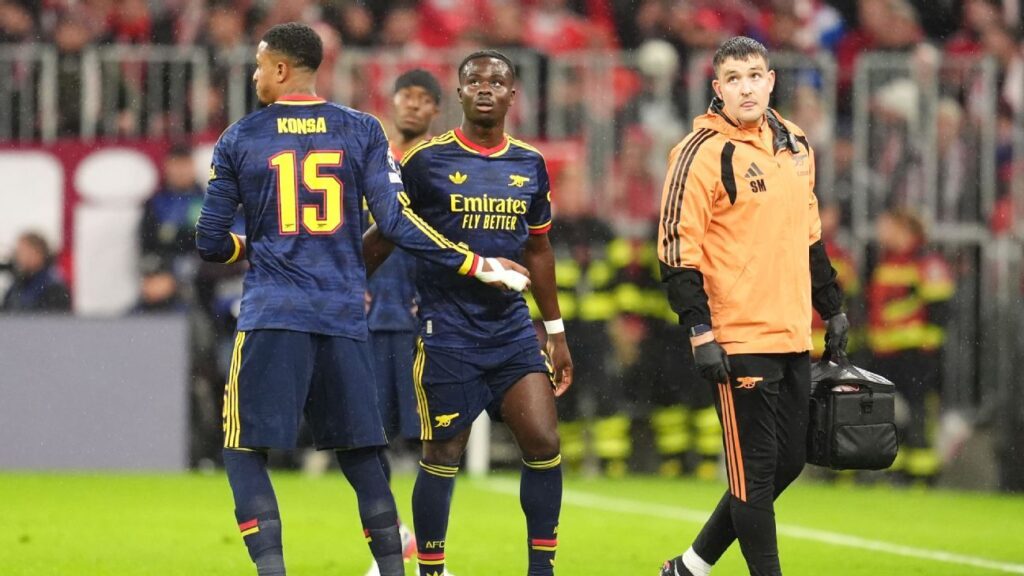
Bukayo Saka limps off in 10th minute vs Bayern Munich – Arsenal injury shock 2026 Champions League
Background: Arsenal's European hopes and Saka's role
Arsenal entered the 2026‑27 Champions League group stage with a blend of youthful exuberance and experienced leadership, hoping to finally break the ceiling that has kept them out of the knockout rounds for several seasons. Central to that ambition has been Bukayo Saka, the 24‑year‑old English winger who has become the creative engine of Mikel Arteta’s side, contributing 12 goals and 18 assists across all competitions last season.
Beyond the numbers, Saka’s marketability has helped Arsenal attract a growing global fanbase, especially among younger supporters in Africa and the diaspora. His partnership with fellow English star Gabriel Martinelli has been hailed as one of the most dynamic attacking duos in Europe, and his presence on the pitch is often linked to Arsenal’s ability to control tempo and create scoring opportunities from the flanks.
The early exit: what happened on the pitch
On Wednesday night in Munich, Arsenal started strongly, pressing Bayern’s high line and looking to exploit the space behind the German side’s full‑backs. However, just eight minutes in, Saka attempted a low cross that was met with a hard challenge from Bayern defender Joshua Kimmich. The contact appeared to twist Saka’s right knee, and he immediately clutched the area before being substituted at the ten‑minute mark.
The match continued without Arsenal’s marquee winger, and Bayern took advantage, eventually winning 3‑1. The early substitution forced Arteta to reshuffle his attacking formation, moving Martinelli to the left and inserting a more defensive midfielder to cover the loss of creativity. The incident sparked a flurry of concern on social media, with fans and pundits questioning Arsenal’s depth and the potential impact on their European campaign.
Why Saka's injury matters for Arsenal and the wider Premier League
Saka’s absence is more than a tactical setback; it threatens Arsenal’s rhythm in a competition where margins are razor‑thin. The Champions League’s group stage offers only six matches, and a single loss can jeopardise qualification for the knockout phase. Without Saka’s ability to stretch defenses and deliver incisive passes, Arsenal may struggle to break down teams that sit deep, such as Paris Saint‑Germain and Napoli, who are also in the same group.
From a broader Premier League perspective, Saka’s injury highlights the growing tension between domestic league commitments and European fixtures. Clubs are increasingly forced to rotate squads to manage player fatigue, yet an early exit in a high‑profile game can have financial repercussions, affecting broadcasting revenue shares and prize‑money allocations that are vital for clubs’ budgeting, especially those that rely on European earnings to balance their books.
African connections: impact on Ghanaian‑heritage players and the diaspora
Bukayo Saka’s parents are of Nigerian and Ghanaian descent, a fact that resonates strongly with African fans who see him as a bridge between European elite football and the continent’s emerging talent pool. His injury reverberates across the African diaspora, where his story is frequently cited as proof that players of African heritage can reach the pinnacle of the sport while staying rooted in their cultural identity.
The setback also puts a spotlight on other African‑descent players at Arsenal, such as Eddie Nketiah, who shares Ghanaian roots. Nketiah has spoken in the past about the responsibility he feels to represent his heritage, and an increased role for him could inspire a new wave of Ghanaian youngsters to pursue professional careers, reinforcing the talent pipeline that African academies have been feeding into English clubs over the past decade.
Broader trend: injury management and squad depth in elite football
Saka’s early exit underscores a wider trend in elite football: the necessity of robust squad depth to weather inevitable injuries. Teams like Bayern Munich have long invested in versatile players who can slot into multiple positions, a strategy that allowed them to adapt quickly when Arsenal’s star winger vanished. Arsenal, by contrast, has been criticised for a relatively thin bench in attacking roles, a point that analysts at The Athletic noted before the match.
The incident may accelerate Arsenal’s upcoming transfer window activity. Sources say the club is already scouting for a left‑wing alternative who can provide immediate impact, while also exploring options for a long‑term replacement should Saka’s recovery extend beyond the season. This reflects a growing market for versatile, high‑energy wingers who can thrive in both domestic and continental competitions.
What comes next: recovery timeline and implications for the Champions League
Medical staff diagnosed Saka with a mild medial collateral ligament (MCL) sprain, an injury that typically requires three to six weeks of rehabilitation, according to Arsenal’s official statement. While the club hopes for a swift return, the timeline coincides with crucial group‑stage fixtures against Napoli and PSG, meaning Arsenal may have to navigate at least two matches without their talisman.
If Saka’s recovery is delayed, Arsenal could face a scenario where they must rely heavily on younger prospects such as Emile Smith Rowe or explore a tactical shift towards a more possession‑based approach, as Arteta has hinted in post‑match interviews. The outcome of this period will not only determine Arsenal’s fate in Europe but also influence how other clubs approach squad building, injury prevention, and the integration of diaspora talent into their long‑term plans.
Quick Answers
When did Bukayo Saka leave the Arsenal vs Bayern match?
Saka was substituted in the 10th minute of the Champions League game on October 22, 2026.
What injury did Saka sustain against Bayern Munich?
He suffered a mild medial collateral ligament (MCL) sprain in his right knee.
How could Saka's injury affect Arsenal's Champions League campaign?
Missing Saka for three to six weeks could force Arsenal to play key group‑stage matches without their main creative outlet, jeopardising their chances of advancing to the knockout round.
Source: www.espn.com




💬 Comments 0