China Tightens Travel Restrictions for Citizens in 2026, Affecting African Trade
Background: A pattern of tightening exits
China has been gradually tightening outbound travel rules since the pandemic, first by imposing health‑related quarantine requirements and later by adding political vetting for certain destinations. The Ministry of Foreign Affairs and the National Immigration Administration have historically used travel permits as a lever to manage both public health and perceived security risks.
In the past two years, Beijing introduced a “national security exit‑screening” system that flags journalists, activists and members of certain religious groups. The policy has been justified as protecting national interests, but human‑rights observers say it deepens state control over personal freedom.
The latest round, announced in early September 2026, expands the list of high‑risk countries and adds a mandatory “travel health clearance” that must be renewed every six months. The move follows a series of high‑profile defections and overseas protests that the Chinese leadership labeled as “foreign‑influenced destabilisation.”
What the new rules actually require
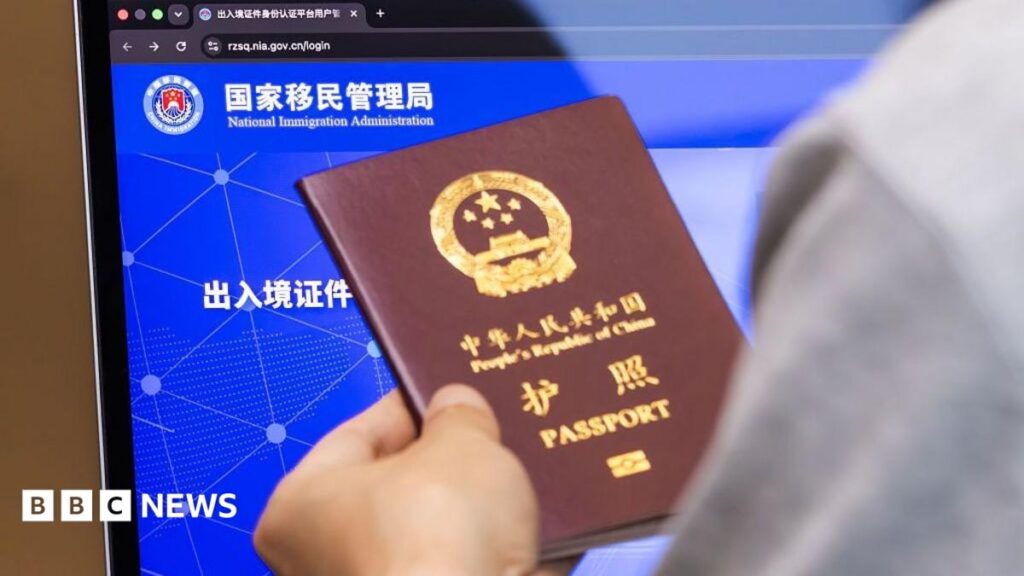
Effective October 1, Chinese citizens must apply for a travel authorization through a new digital portal that cross‑checks health records, criminal background and any recent participation in political gatherings. Applications are reviewed by a joint committee of the Ministry of Public Security and the State Administration of Foreign Affairs.
The portal also integrates a “risk‑assessment score” that automatically blocks travel to a growing list of 27 countries, including the United States, Canada, the United Kingdom, Australia and several EU members. Travelers to the remaining 120‑plus destinations can still go abroad, but they must submit a detailed itinerary and obtain a clearance certificate from their local Public Security Bureau.
Failure to secure the clearance before departure can result in a fine of up to 10,000 yuan (about $1,400) and a possible travel ban for up to three years, according to the official notice. The policy applies to all passport holders, regardless of age or occupation.
Why the crackdown matters globally
The restrictions signal a shift from the pandemic‑driven health narrative to a broader security‑first approach. Analysts at the Brookings Institution argue that the move could curtail the already‑shrinking pool of Chinese tourists and business travelers, which would dent sectors that rely on outbound spending, such as luxury retail and international education.
For multinational companies, the new system adds a layer of compliance risk. Firms with Chinese employees on overseas assignments now face the possibility of sudden travel denials, which could disrupt project timelines and increase costs. The World Bank warned that such uncertainty may dampen foreign direct investment flows from China to emerging markets.
From a diplomatic standpoint, the policy may deepen mistrust between Beijing and Western capitals that have accused China of using travel bans as a retaliatory tool. The European Union’s recent statement described the measures as “inconsistent with the principles of free movement of persons” and called for transparent criteria.
African connections: trade, tourism and diaspora impacts
China remains Africa’s largest trading partner, accounting for roughly $200 billion in bilateral trade in 2025. The new travel rules could affect Chinese logistics firms that operate cross‑border supply chains across the continent, especially those that rely on expatriate managers shuttling between Shanghai and African hubs such as Nairobi, Lagos and Addis Ababa.
Tourism is another vulnerable sector. In 2024, Chinese visitors contributed an estimated $2.1 billion to Africa’s tourism revenues, with South Africa, Morocco and Kenya ranking among the top destinations. A tighter exit regime may reduce the number of outbound tourists, pressuring hotels and tour operators that have tailored packages for Chinese travelers.
The Chinese diaspora in Africa, estimated at 1.5 million people, includes entrepreneurs, engineers, teachers and medical staff. Many of them travel back home for family events or to renew documents. The added bureaucratic steps could discourage short‑term visits, potentially weakening community ties and limiting the flow of remittances that support local economies.
Conversely, some African governments may see an opportunity to attract Chinese tourists who are now looking for alternative destinations outside the restricted list. Kenya’s tourism ministry has already begun a pilot program offering fast‑track visas for Chinese visitors from countries still on the approved roster, hoping to offset the anticipated dip in arrivals.
What comes next: reactions and possible adjustments
Domestic reaction in China has been mixed. State media framed the policy as a necessary safeguard, while social‑media users on platforms like Weibo expressed frustration over the added paperwork and uncertainty. Legal scholars at Peking University warned that the vague “risk‑assessment score” could be subject to arbitrary interpretation.
Internationally, several governments have lodged formal complaints, asking for clearer guidelines and an appeal mechanism. The United States Department of State noted that the restrictions could complicate visa processing for Chinese nationals seeking to study or work in the U.S., potentially leading to reciprocal measures.
For African stakeholders, the immediate priority is to monitor how the policy translates into on‑the‑ground realities. Business councils such as the China‑Africa Business Council are urging Chinese firms to develop contingency plans, including remote management tools and alternative travel routes through third‑party countries.
In the longer term, the travel restrictions may become a bargaining chip in China’s broader geopolitical strategy. If Beijing perceives a need to ease pressure on key African partners, it could selectively relax the list of blocked destinations or introduce a fast‑track channel for business‑critical travel. Observers say that the next few months will reveal whether the policy is a hard‑line stance or a flexible instrument.
Quick Answers
When do China's new travel restrictions for citizens take effect?
The rules become enforceable on October 1, 2026.
How might the restrictions affect Chinese tourists in Africa?
They could reduce outbound trips, potentially lowering tourism revenue for African countries that rely on Chinese visitors.
Can Chinese citizens appeal a denied travel clearance?
Yes, the official notice allows an appeal to the local Public Security Bureau, though the process is not fully transparent.
Source: www.bbc.co.uk




💬 Comments 0