Donkey Princess Review 2026: Chilean Stop‑Motion Film Challenges Patriarchy and Signals New Opportunities for African Animators
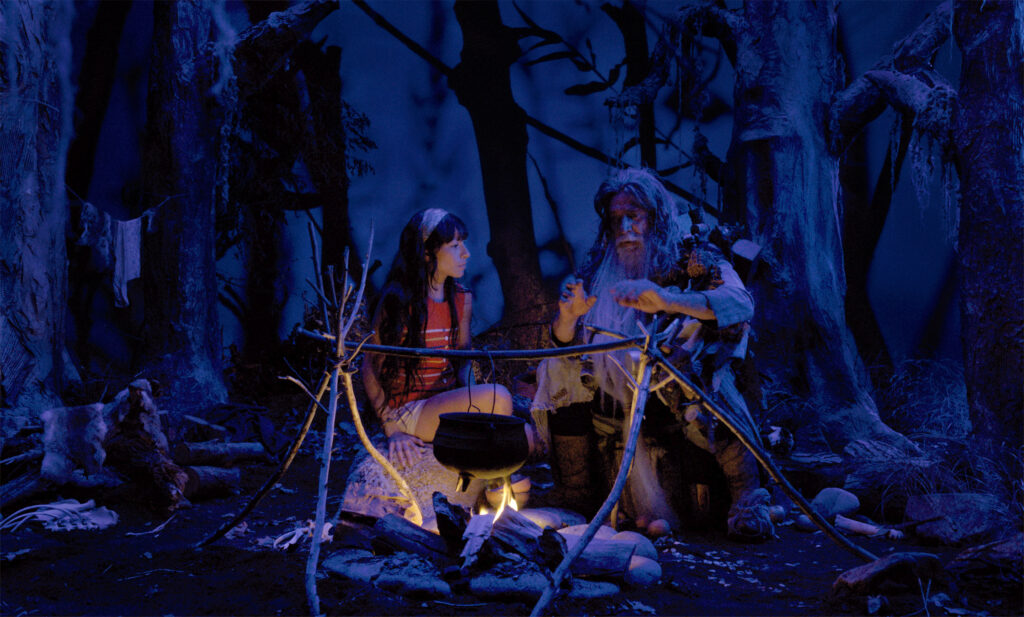
A bold debut from Chile’s stop‑motion innovators
Cristóbal León and Joaquín Cociña, the Chilean duo behind the cult hit "The Wolf House," have returned with "Donkey Princess," a stop‑motion feature that fuses clay‑animation, puppetry and papier‑mâché. The film’s visual language feels hand‑crafted yet uncanny, a hallmark of the pair’s aesthetic that earned them a Palme d’Or for short‑form animation in 2022.
Set in a vaguely medieval kingdom, the narrative follows a young princess who flees an arranged marriage only to discover that the patriarchal structures she escaped are woven into every corner of the world. The story begins with a whimsical fairy‑tale premise—a donkey‑shaped carriage, talking animals, and a magical forest—before slipping into darker, more adult territory.
Premiering at the Toronto International Film Festival in September 2026, "Donkey Princess" has already been picked up by several European distributors. Critics praise its daring tonal shifts, while audiences are split between those who appreciate its lyrical absurdity and those who find the sudden plunge into feminist critique jarring.
Why the film’s critique of patriarchy hits a nerve
At its core, "Donkey Princess" is less about a runaway royal and more about the ways gendered power persists even when the obvious symbols of authority are removed. The princess’s journey through a world that still enforces rigid gender roles mirrors real‑life struggles faced by women across continents, making the film resonate beyond its fantasy setting.
León and Cociña have said in interviews that they wanted to expose how patriarchy can be “invisible, like a shadow that follows you even when you think you’ve outrun it.” Their use of the donkey—a traditionally undervalued animal—serves as a metaphor for how societies devalue both women and the labor that sustains them.
The film’s climax, where the princess confronts a council of male elders who claim to be “protectors of tradition,” has sparked discussion on social media platforms such as Twitter and TikTok, with many users drawing parallels to contemporary political debates in Latin America, Africa and beyond.
A turning point for global stop‑motion animation
Until recently, stop‑motion has been dominated by studios in the United States, the United Kingdom and Japan. "Donkey Princess" adds Chile to the growing list of countries proving that high‑quality, auteur‑driven animation can thrive outside traditional power centers. The film’s success could encourage funding bodies in Latin America to allocate more resources to experimental animation projects.
The movie’s hybrid technique—combining traditional hand‑crafted models with digital compositing—offers a cost‑effective blueprint for studios that lack the massive budgets of Hollywood giants. According to a report by Variety, production costs were kept under $5 million, a fraction of what a comparable live‑action fantasy would require.
Streaming platforms are also taking note. Netflix announced a multi‑year deal with León and Cociña’s studio earlier this year, signalling a willingness to bring more non‑English stop‑motion content to a global audience. This could open doors for other under‑represented regions, including Africa, to showcase their own handcrafted stories.
What the film means for African animators and audiences
African animation has been on an upward trajectory, with studios in Nigeria, Kenya and South Africa producing award‑winning shorts and series. Yet many creators still struggle to find distribution channels that value handcrafted aesthetics over CGI. "Donkey Princess" demonstrates that there is a market for tactile, culturally specific animation, a lesson African studios are already heeding.
The film’s distribution model—festival debut followed by a streaming rollout—mirrors the path taken by South Africa’s "Khumba" and Nigeria’s "Mami Wata" documentaries. By proving that a non‑English stop‑motion film can secure worldwide streaming deals, the success of "Donkey Princess" could embolden African producers to pitch similar projects to Netflix, Amazon Prime and Disney+.
Moreover, the film’s thematic focus on dismantling patriarchal norms aligns with a wave of African storytelling that centers women’s agency. Initiatives like the African Women in Animation (AWA) network have highlighted the need for more narratives that challenge gender stereotypes, and "Donkey Princess" offers a concrete example of how fantasy can be weaponised for social critique.
Looking ahead: festivals, awards and the next wave of stop‑motion
With its Toronto premiere behind it, "Donkey Princess" is slated for a circuit that includes Cannes’ Critics’ Week, the Annecy International Animation Festival, and the Durban International Film Festival later this year. Its presence at these events will test whether audiences outside the Western mainstream are ready to embrace politically charged stop‑motion from the Global South.
Industry insiders predict that the film could become a contender for the Academy Award for Best Animated Feature, a historic first for a Chilean stop‑motion work. Even if it falls short of Oscar glory, the buzz around its feminist narrative may inspire awards bodies to broaden their criteria beyond traditional storytelling formats.
For African creators, the next steps involve leveraging the momentum generated by "Donkey Princess" to secure co‑production deals, training programs, and cross‑continental festivals that celebrate handcrafted animation. As the global appetite for diverse, tactile storytelling grows, the continent’s animators are poised to claim a larger slice of the market.
Quick Answers
What is the main plot of "Donkey Princess"?
The film follows a princess who flees an arranged marriage and discovers that patriarchal oppression follows her even in a fantastical world.
Why is "Donkey Princess" significant for African animation?
Its success shows that non‑English, stop‑motion films can attract global streaming deals, encouraging African studios to pursue similar handcrafted projects.
When and where will "Donkey Princess" be released internationally?
After its Toronto debut in September 2026, the film will roll out on Netflix later this year, with theatrical screenings in select European cities.
Source: variety.com




💬 Comments 0