Eduardo Camavinga flag strike at Barcelona Clasico: fan identified, security concerns rise in 2026
Background – the stage and the player
The El Clásico between Barcelona and Real Madrid is more than a football match; it is a cultural showdown that draws millions of viewers worldwide and fills the Camp Nou to capacity. The 2026 edition was billed as a showcase of emerging talent, with Real Madrid’s 22‑year‑old midfielder Eduardo Camavinga expected to play a pivotal role for the visiting side. Camavinga, born in Angola to Cameroonian parents before moving to France, has become one of the most closely watched African‑born stars in Europe, representing a new generation of diaspora athletes who bridge continents through sport.
Camavinga’s rise has been accompanied by a growing fan base across Africa and among the African diaspora in Europe. His performances are regularly highlighted on African sports channels, and his name appears in marketing campaigns targeting markets in Nigeria, Ghana, and the Democratic Republic of Congo. Consequently, any incident involving him on the pitch resonates far beyond the stadium, feeding into broader conversations about the treatment of African‑origin players in elite football.
The incident – a flag, a blow, and a stunned crowd
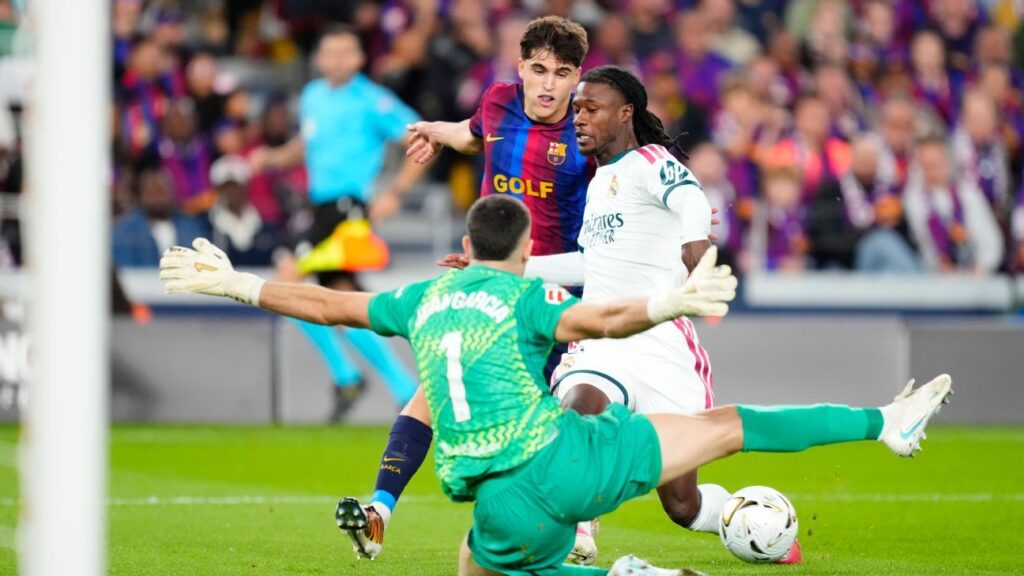
In the 67th minute of the match, a Barcelona supporter in the south stand leapt over the low fence separating fans from the playing area and thrust a large club flag toward Camavinga as the midfielder approached the penalty box. The flag struck Camavinga on the head, causing him to stumble and briefly lose balance before regaining his footing. The referee halted play for a short period while medical staff attended the player, and the match resumed after Camavinga was cleared to continue.
Video footage captured by broadcasters showed the fan’s arm extending the flag with enough force to make contact, but the incident was not pre‑planned. Spectators in the stadium reacted with a mix of shock and boos, while commentators described the act as “a regrettable breach of stadium protocol”. Within minutes, police units inside the venue began cordoning off the area to locate the individual.
Immediate fallout – police action and club response
Catalan police (Mossos d'Esquadra) announced that they had identified the fan as 27‑year‑old Alejandro Martínez, a resident of Barcelona who holds a season ticket for the club. Martínez was detained on charges of assault and violating stadium security regulations. The club released a statement expressing “deep disappointment” and pledging full cooperation with authorities, while also emphasizing that the safety of all participants remains a top priority.
Real Madrid’s medical team reported that Camavinga suffered a superficial contusion but no serious injury, allowing him to finish the match. The midfielder later posted on social media that he was “fine” and thanked fans for their support. However, the incident sparked a flurry of commentary on social platforms, with many users calling for stricter security measures at high‑profile fixtures.
Why it matters – security, player welfare, and the African diaspora
The flag‑strike highlights a persistent vulnerability in stadium security, especially during high‑tension encounters like the Clasico. While isolated incidents of pitch‑invasions have occurred before, the use of a club prop as a weapon raises questions about how clubs monitor fan behaviour and enforce barrier protocols. For a player of African descent, the episode also intersects with ongoing concerns about targeted aggression and the psychological impact of being singled out in a hostile environment.
Camavinga’s background makes the incident particularly resonant for African audiences. In many African nations, footballers who succeed abroad are celebrated as national heroes, and any affront to them can be perceived as an affront to the continent’s sporting reputation. The incident therefore feeds into a broader narrative about the need for European leagues to protect diaspora athletes from both physical and symbolic attacks, reinforcing calls for anti‑racism and anti‑violence campaigns that include African stakeholders.
Broader implications – fan violence trends and market repercussions
Statistical data from La Liga’s security department shows a modest rise in pitch‑invasion attempts over the past three seasons, with 2025 recording a 12 % increase compared with 2022. The Camavinga episode is likely to be cited in upcoming league reviews as an example of why the governing body is considering tighter entry controls, higher fines for clubs whose supporters breach safety zones, and the possible deployment of more advanced surveillance technology.
From a commercial perspective, the incident could affect Barcelona’s relationship with sponsors targeting African markets. Brands such as MTN and Safaricom, which have previously partnered with the club for outreach programmes in East Africa, monitor public perception closely. Any perception that the club tolerates unsafe fan behaviour may jeopardise future sponsorship deals, especially as African advertisers demand higher standards of social responsibility from European clubs.
What’s next – legal steps, club policies, and lessons for the continent
Martínez is expected to face a court hearing later this month, where prosecutors will likely seek a custodial sentence and a ban from attending future La Liga matches. Barcelona has indicated that it will review its season‑ticket allocation policy and may introduce a “zero‑tolerance” clause that allows the club to revoke tickets from individuals involved in violent conduct.
For African football federations and diaspora organisations, the incident serves as a reminder to lobby for stronger player‑protection clauses in international contracts. It also underscores the importance of amplifying African voices in global football governance, ensuring that incidents affecting African‑origin players receive the same level of scrutiny and remedial action as any other case.
Quick Answers
Who was the fan that hit Eduardo Camavinga with a flag at the 2026 Clasico?
The fan was identified as 27‑year‑old Alejandro Martínez, a Barcelona season‑ticket holder, and he was detained by Catalan police.
Did Eduardo Camavinga suffer any serious injury from the flag strike?
Camavinga suffered only a minor contusion and was able to finish the match, later confirming he was fine.
How could the incident affect Barcelona’s sponsorship deals in Africa?
Sponsors targeting African markets may reassess their partnerships if the club is seen as failing to ensure fan safety, potentially impacting future contracts.
Source: www.espn.com




💬 Comments 0