Emma Hayes Calls for USWNT Collective Effort to Beat Spain – What It Means for Global Women’s Football
Background
The United States women’s national team (USWNT) has long been a powerhouse in international soccer, boasting multiple World Cup titles and a record of consistent dominance. Their upcoming clash with Spain, the current FIFA world No. 1, is set to be a high‑stakes encounter that could influence rankings and momentum for both sides heading into the 2027 World Cup cycle.
Emma Hayes, famed for her tenure at Chelsea Women and now the USWNT head coach, has been praised for her tactical acumen and player‑centric approach. Since taking the reins in 2023, Hayes has steered the squad through a series of friendlies and competitive fixtures, aiming to blend experience with emerging talent to rebuild a team that has faced injuries and transition challenges.
Spain’s women's side, meanwhile, has enjoyed a renaissance in recent years, with a cohesive squad that blends technical flair with physicality. Their success has sparked a wave of investment in women's football across Europe, raising the bar for opponents worldwide and setting a benchmark for tactical excellence.
What Happened
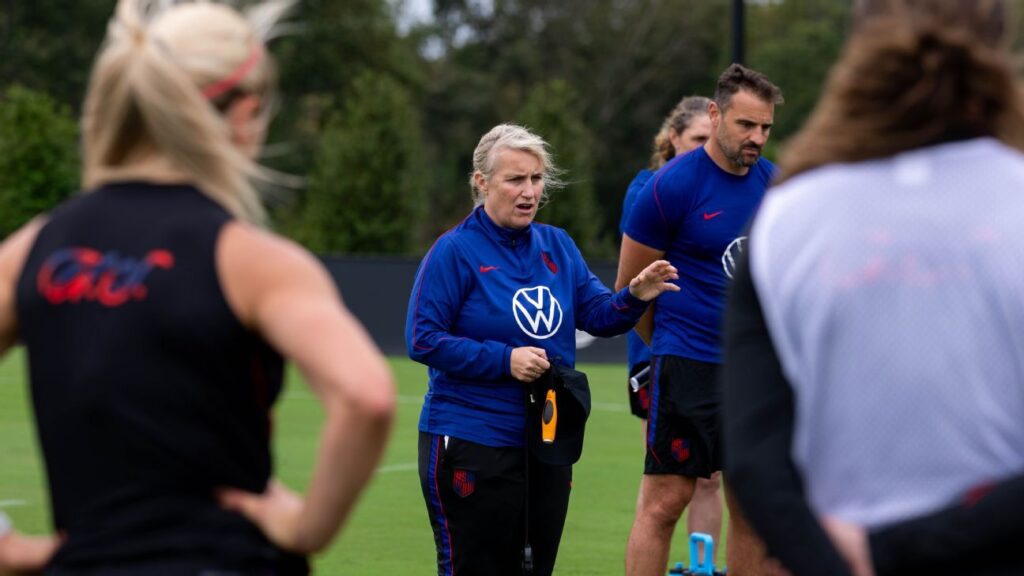
During a press briefing in Washington, Hayes emphasized that defeating Spain will require a “collective effort on both sides of the ball.” She highlighted the need for defensive solidity, precise passing, and relentless pressure in the final third, noting that the USWNT must avoid complacency against a highly disciplined opponent.
Hayes reflected on her experience at Chelsea, where she cultivated a culture of mutual trust and accountability. She urged her players to maintain focus, communicate constantly, and execute the game plan with discipline, citing recent matches where lapses in concentration led to costly mistakes.
The coach’s message underscored a broader philosophy: success in modern women’s football hinges on teamwork, adaptability, and a shared understanding that every player, from the goalkeeper to the striker, has a pivotal role in the collective outcome.
Why It Matters
A victory over Spain would reaffirm the USWNT’s status as a global contender and potentially boost their FIFA ranking, affecting seedings in forthcoming tournaments. More than a scoreboard, the match serves as a litmus test for the team’s readiness to confront top‑tier competition in the lead‑up to the 2027 World Cup.
For African women's football, the USWNT’s approach offers a blueprint for building cohesive squads. African national teams, many of which rely on diaspora talent, can adopt Hayes’s emphasis on collective play to counterbalance individual brilliance and enhance competitiveness on the world stage.
The broader trend of women’s football gaining mainstream visibility means that high‑profile matches like this attract sponsorships, media coverage, and fan engagement. This influx of resources can trickle down to African leagues, encouraging investment in grassroots development and professional pathways for female players.
Reactions
USWNT stars such as Alex Morgan and Megan Rapinoe echoed Hayes’s sentiment, expressing confidence in the team’s unity and readiness to face Spain’s tactical nous. Rapinoe noted that “every player knows their role, and we trust each other on the field.”
African football authorities have seized the opportunity to spotlight their own women's teams. The Confederation of African Football (CAF) announced a partnership with the USWNT to host a joint training camp for emerging African talent, aiming to elevate standards across the continent.
Diaspora communities, especially in the United States, celebrated Hayes’s call for collective effort. Social media buzzed with hashtags like #USWNTUnited and #AfricaInTheGame, reflecting a growing sense of shared identity among African-American fans and those following African leagues abroad.
What's Next
The USWNT will engage in a rigorous pre‑match training regimen, focusing on set‑piece execution and defensive cohesion. The coaching staff has outlined specific drills to counter Spain’s pressing style, aiming to exploit spaces behind the backline.
Following the friendly, the team will travel to Europe for a series of exhibition matches against elite clubs, providing further exposure to diverse tactical systems. These fixtures will also offer the coaching staff a chance to assess squad depth and integrate younger players into the senior setup.
In the long term, the USWNT’s performance will influence the strategic planning of African national teams as they prepare for the 2028 Olympics. The experience gained from facing a world‑class side like Spain will inform training methodologies and match preparation across the continent, reinforcing the global interconnectedness of women’s football.
Quick Answers
Why is the USWNT match against Spain significant?
It tests the team’s readiness against the world No. 1, impacts FIFA rankings, and offers a benchmark for tactical evolution in women’s football.
How does this affect African women’s football?
It provides a model for collective play, encourages investment in grassroots programs, and fosters collaboration between African federations and the USWNT.
What is Emma Hayes’s coaching philosophy?
Hayes prioritizes teamwork, communication, and adaptability, drawing on her Chelsea experience to build a cohesive, disciplined squad.
Source: www.espn.com




💬 Comments 0