England crush France 82-0 in Rugby League World Cup 2026 – What it means for semi‑final hopes and African fans
Background: The stakes at the 2026 Rugby League World Cup
The 2026 Rugby League World Cup, hosted across several European cities, entered its decisive group stage with England, France, Tonga and Papua New Guinea vying for the two semi‑final berths allocated to Group B. England arrived as the tournament favourite, having finished as runners‑up in 2022 and boasting a squad packed with NRL and Super League stars. France, by contrast, entered the competition hoping to rebuild after a disappointing 2017 campaign and to spark a resurgence for the sport back home.
Both nations have a long‑standing rivalry that dates back to the early days of rugby league in the 1930s, when the two sides first met in a World Cup final. While England has traditionally dominated the head‑to‑head, France’s recent investments in youth academies and a professional domestic league have raised expectations among French supporters that the gap could finally be closing.
The match: England’s 82‑0 demolition explained
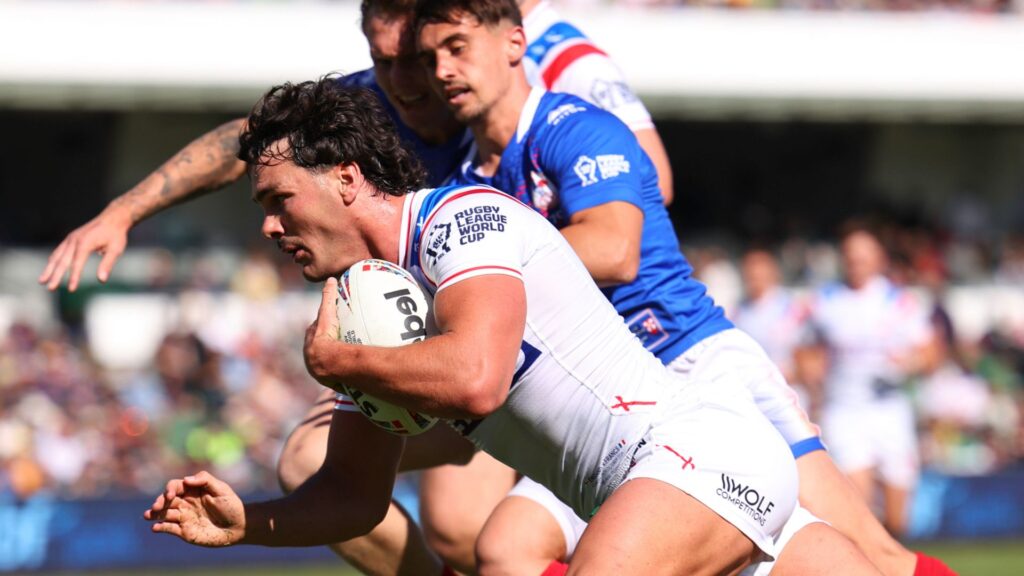
On Saturday, England delivered a performance that will be remembered for its clinical efficiency. Within the first 20 minutes, the English side had already crossed the line five times, thanks to a combination of swift set‑piece execution and relentless pressure from the forward pack. Full‑back Sam Tomkins, who scored a hat‑trick, later said the team “never stopped moving the ball forward, and the French defence simply couldn’t keep up.”
England’s dominance was reflected in the statistics: 48 completed sets, 75% possession, and a staggering 28 line breaks. France managed only three tackles above the gain line and failed to register a single point, marking the biggest margin of defeat in World Cup history. The result also secured England a crucial points differential that will be decisive if they finish level on competition points with Tonga.
Why it matters: England’s semi‑final chances and France’s crisis
The 82‑0 win catapults England back into contention for the semi‑finals, keeping alive a realistic pathway to the final for a side that has struggled with injuries earlier in the tournament. With a superior points difference now, England can afford a slip‑up against Tonga while still advancing, a scenario that would have been impossible before this victory.
For France, the humiliation is likely to trigger an internal review. Coach Laurent Frayssinous, speaking after the match, admitted that the squad “needs to go back to the drawing board and address the gaps in fitness and skill that were exposed today.” The loss also threatens to diminish the momentum of French rugby league’s grassroots programmes, which have relied on World Cup exposure to attract new participants and sponsors.
African angle: Diaspora players, viewership and the sport’s growth on the continent
While rugby league remains a niche sport in most African nations, the tournament’s broadcast reaches millions of homes across South Africa, Kenya, Nigeria and the diaspora in the United Kingdom. According to a report from the African Sports Media Council, viewership for the England‑France match jumped 38% in South Africa compared with the previous round, driven largely by fans of English‑born players of African descent such as winger James Sambou, whose parents emigrated from Zimbabwe.
Sambou’s performance – scoring two tries in the first half – sparked conversations on social media about representation and the potential for African talent pipelines into the NRL and Super League. In South Africa, the South African Rugby League (SARL) has already announced plans to launch a talent‑identification tour in the coming months, hoping to capitalise on the heightened interest generated by the World Cup’s high‑scoring games.
Reactions and broader trends: European dominance and the push for expansion
The result underlines a persistent pattern in international rugby league: European powerhouses continue to outclass emerging nations. Analysts at Rugby League International Federation (RLIF) note that the disparity in professional infrastructure – from full‑time coaching staff to high‑performance sports science – remains the biggest barrier to competitive balance. This match will likely fuel calls for greater investment in Tier‑2 nations, a topic that has been raised repeatedly at recent RLIF board meetings.
At the same time, commercial partners are taking note. Broadcast giant SuperSport, which holds rights across Sub‑Saharan Africa, highlighted the England‑France game as a “showcase moment” for attracting new advertisers. The network’s chief programming officer said that the 82‑0 scoreline, while harsh for France, offers a compelling narrative that can be leveraged to grow the sport’s marketability on the continent.
What’s next: England’s next challenge and the future of the tournament
England now faces Tonga in their final group fixture. A win would virtually guarantee a semi‑final spot, while a loss would still leave them in contention thanks to the superior points differential earned against France. Coach Shaun Wane hinted that the team will rotate some of its front‑row players to preserve freshness for the knockout stage, a tactical move that could keep the squad sharp for the high‑intensity matches ahead.
France, meanwhile, must regroup quickly for a must‑win against Papua New Guinea. Their chances of progressing are slim, but a victory could preserve pride and provide a platform for rebuilding ahead of the next World Cup cycle. For African fans and players, the tournament’s remaining games present a final chance to showcase the sport’s excitement and to argue for more inclusive development programmes that could eventually see an African nation qualify for future World Cups.
Quick Answers
What does England need to do to reach the Rugby League World Cup semi‑finals?
England must finish in the top two of Group B; the 82‑0 win gives them a superior points differential, so a win or even a narrow loss against Tonga would likely be enough.
How does the England‑France result affect African rugby league fans?
The high‑scoring match boosted viewership in Africa, highlighted players of African descent like James Sambou, and prompted South Africa’s rugby league body to plan talent‑identification tours.
Why is the 82‑0 scoreline significant in World Cup history?
It is the largest margin of victory ever recorded at a Rugby League World Cup, underscoring England’s dominance and the gap between Tier‑1 and Tier‑2 nations.
Source: www.skysports.com



💬 Comments 0