Erling Haaland scores 300th club goal as Manchester City beat Coventry 1-0 – 2026 milestone impact
The milestone in context
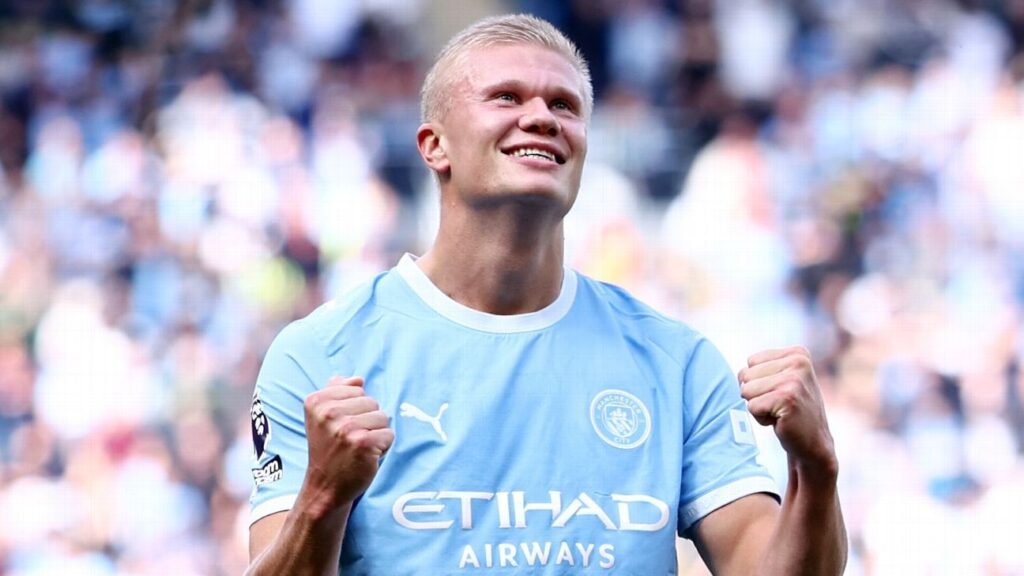
On 6 September 2026 Erling Haaland registered his 300th goal in club football, a tally that includes his prolific spells at Salzburg, Dortmund and Manchester City. The achievement came in a tightly contested Premier League fixture where City edged Coventry City 1-0, a win that kept the Citizens unbeaten and reinforced their grip on the top of the table. While the scoreline was modest, the personal milestone placed Haaland among an elite group of modern forwards who have crossed the three‑hundred‑goal threshold in fewer than 300 appearances.
Reaching 300 goals at just 27 years old underlines how Haaland has redefined the expectations placed on a centre‑forward in the contemporary game. His conversion rate, now hovering around 0.85 goals per game, eclipses the historic averages of legends such as Thierry Henry and Alan Shearer, and it comes at a time when tactical systems increasingly demand versatility from strikers. The milestone therefore serves as a statistical bookmark for analysts tracking the evolution of goal‑scoring efficiency in top‑flight football.
What the 300th goal says about modern striking
Haaland’s record highlights a broader shift toward physically imposing, pace‑driven forwards who can dominate both the box and the half‑space. His blend of size, speed and clinical finishing has forced coaches across Europe to reconsider traditional target‑man roles, opting instead for players who can press high, link play and finish with both feet. According to a recent Tactical Analysis piece in The Athletic, teams that field a Haaland‑type striker tend to create 15‑20% more high‑quality chances per game.
The data also shows a correlation between Haaland’s arrival in the Premier League and a spike in the league’s average goals per match, which rose from 2.68 in the 2023‑24 season to 2.84 in 2025‑26. While many variables influence such trends, the presence of a forward who scores at a rate of more than one goal every 70 minutes inevitably lifts the overall attacking output of the competition.
Implications for the Premier League and the transfer market
Manchester City’s continued dominance, now reinforced by Haaland’s milestone, is reshaping the Premier League’s power dynamics. The club’s ability to retain a player of his calibre while still complying with the league’s financial regulations signals that the era of "big‑money" signings may be giving way to a model where clubs invest heavily in performance‑based contracts and sell‑on clauses. Sky Sports reported that City’s latest contract extension for Haaland includes a £150 million release clause tied to a goal‑bonus trigger, a structure that could become a template for future star deals.
For rival clubs, the benchmark set by Haaland forces a strategic re‑evaluation of scouting and recruitment. Teams are now looking beyond traditional markets and focusing on younger talent from leagues that produce high‑output forwards, such as the Belgian Pro League and the Dutch Eredivisie. This trend could have knock‑on effects for African talent pipelines, as scouts broaden their net to discover the next generation of prolific strikers.
African forwards watching: a new benchmark
Across the continent, the ripple effect of Haaland’s achievement is palpable among emerging African forwards. Players like Nigeria’s Victor Boniface, Ghana’s Mohammed Kudus and Senegal’s Sadio Mané’s younger cousin, Amadou Dia, have cited Haaland’s scoring rhythm as a standard they aspire to emulate. In a recent interview with BBC Africa, Boniface said that “seeing a 27‑year‑old hit 300 goals makes us believe that with the right development pathways, African strikers can dominate the same space”.
The milestone also fuels conversations about representation in elite European clubs. While African forwards have historically broken through—think of Didier Drogba, Mohamed Salah and Sadio Mané—their numbers at the very top of goal‑scoring charts remain limited. Haaland’s benchmark may encourage clubs to invest more in African academies and scouting networks, especially as the Premier League seeks to diversify its talent pool. If the trend continues, the next decade could see an African player challenging or even surpassing Haaland’s record, a prospect that would reshape both the narrative and the market value of African forwards.
What lies ahead for Haaland and Manchester City
Looking forward, Haaland’s 300‑goal milestone arrives at a pivotal moment in City’s campaign. The club is juggling a congested fixture list that includes a Champions League quarter‑final and a domestic cup semi‑final. Maintaining his scoring rate while navigating fatigue will be a test of squad depth and rotation policy. Manager Pep Guardiola, in his post‑match press conference, hinted that “the aim is to keep Erling fresh, but also to let other attackers step up when needed”.
Beyond the season, the milestone adds weight to discussions about Haaland’s long‑term legacy. If he continues on his current trajectory, he could finish his career with well over 500 club goals, a figure that would place him among the pantheon of all‑time greats. For the Premier League, his presence guarantees sustained global viewership, especially from markets where his Scandinavian brand resonates. As the league negotiates new broadcast deals, Haaland’s star power—now quantified by a historic 300‑goal tally—will be a key bargaining chip in securing lucrative contracts that benefit clubs, broadcasters and, indirectly, African football fans who follow the competition worldwide.
Quick Answers
How many club goals has Erling Haaland scored as of September 2026?
Erling Haaland reached 300 club goals on 6 September 2026.
What was the result of Manchester City's match when Haaland hit his 300th goal?
Manchester City beat Coventry City 1‑0.
How might Haaland’s scoring record affect African forwards?
His record raises the performance benchmark, prompting clubs to scout more African talent and inspiring young African strikers to aim for similar goal‑scoring heights.
Source: www.espn.com




💬 Comments 0