FC Andorra defender Lautaro Spatz backs teammate Jesús Owono after Jesús de Miguel death, 2026 impact on African players
Background: A club at the crossroads of Europe and Africa
FC Andorra, the tiny club perched in the Pyrenees, has become a surprising hub for talent from across the continent since Gerard Piqué took over in 2019. The team now competes in Spain’s Segunda División and fields a mix of Spanish, South American and African players, many of whom see the club as a stepping‑stone to larger leagues.
One of those players is Jesús Owono, a 22‑year‑old goalkeeper born in Malabo, Equatorial Guinea, who moved to Spain as a teenager. Owono earned his first senior cap for the Equatorial Guinea national team in 2023 and quickly became a fan favourite for his reflexes and composure under pressure. His presence in Andorra’s squad highlights the growing pipeline of African talent that the club has cultivated.
What happened: The tragic death of Jesús de Miguel
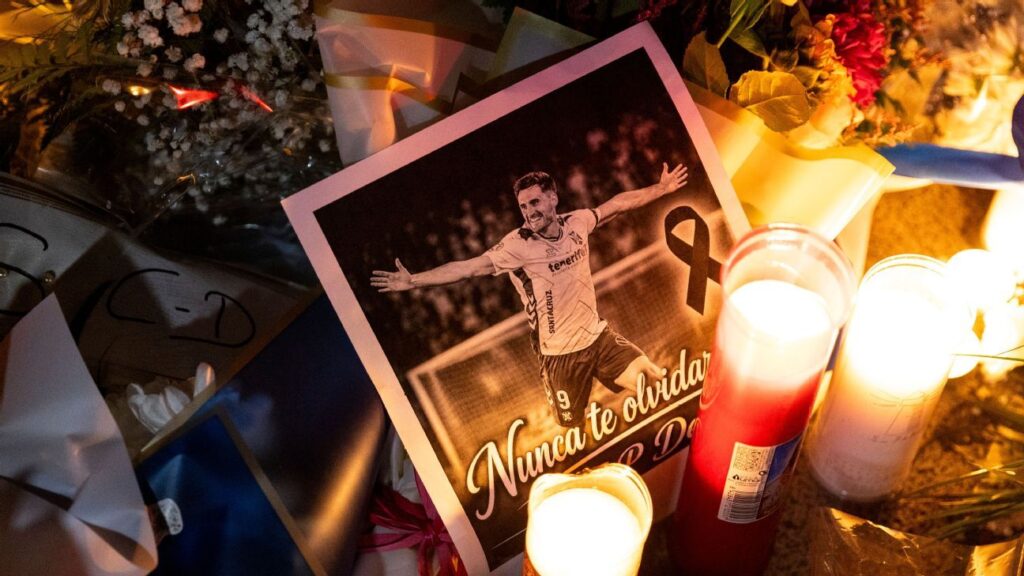
On 2 November 2026, Jesús de Miguel, a 26‑year‑old forward for CD Tenerife, was found dead after a collision with a motorist on the A‑7 highway near Santa Cruz de Tenerife. Police reports confirmed that the incident was accidental, but the sudden loss sent shockwaves through the Spanish football community.
De Miguel had been a regular fixture in Tenerife’s attacking line‑up and was widely respected for his community work in the Canary Islands. He was also a close friend of several players at neighboring clubs, including FC Andorra’s defender Lautaro Spatz, who had shared a training session with him earlier that season.
Why it matters: Mental health, team dynamics and African representation
The emotional fallout from de Miguel’s death has rippled beyond the immediate families. Lautaro Spatz publicly confirmed that his teammate Jesús Owono is “deeply affected,” a statement that underscores how tightly knit the squad is despite its multicultural makeup. In a sport where mental health is still often brushed aside, such openness can catalyse a broader conversation about support structures for players dealing with grief.
For African players like Owono, the impact is two‑fold. First, they must navigate personal sorrow while contending with the pressure to perform in a foreign league. Second, they often become informal cultural ambassadors, and their reactions can influence how African diaspora communities perceive the European football ecosystem. Owono’s visible grief may encourage clubs to provide culturally sensitive counselling services, a need that has been highlighted by recent studies on African athletes in Europe.
Broader pattern: A rise in cross‑border tragedies and the response of clubs
De Miguel’s death is not an isolated incident. Over the past three years, several players from lower‑tier Spanish clubs have been lost in road accidents, prompting the Spanish Football Federation (RFEF) to launch a safety campaign aimed at young athletes. The pattern reflects a growing concern about the welfare of players who travel long distances for training and matches, often on tight schedules.
FC Andorra’s reaction, led by Spatz’s public support, mirrors a shift in how clubs address off‑field crises. Instead of issuing a brief statement, the club has arranged a series of mental‑health workshops and invited former African internationals to speak about coping with loss. This proactive stance could set a precedent for other clubs with diverse rosters, especially those that rely on African talent to stay competitive.
What’s next: Support mechanisms and the future of African talent at Andorra
In the weeks ahead, FC Andorra plans to hold a memorial match in de Miguel’s honour, with proceeds earmarked for road‑safety charities in the Canary Islands. The club also announced a partnership with a Madrid‑based mental‑health NGO that specializes in services for African diaspora athletes, a move that could become a model for other Spanish sides.
For Owono, the coming months will be about balancing mourning with the expectations of his national team, which has a crucial World Cup qualifying campaign in 2027. If the club’s new support framework proves effective, it may help retain African players who sometimes leave European clubs early due to a lack of emotional backing. In the long run, this could strengthen the pipeline that brings African talent to the European stage, benefiting both the players and the clubs that rely on them.
Quick Answers
Who was Jesús de Miguel?
Jesús de Miguel was a 26‑year‑old forward for CD Tenerife who died in a traffic accident on 2 November 2026.
How is the death affecting FC Andorra’s goalkeeper Jesús Owono?
Owono, an Equatorial Guinean international, has said he is deeply affected, prompting the club to boost mental‑health support for its players.
What steps is FC Andorra taking after the tragedy?
The club is organising a memorial match, funding road‑safety charities, and partnering with a mental‑health NGO that serves African diaspora athletes.
Source: www.espn.com



💬 Comments 0