Granit Xhaka and Breel Embolo cleared for Switzerland after fake COVID vaccine scandal – impact on African diaspora players and football governance
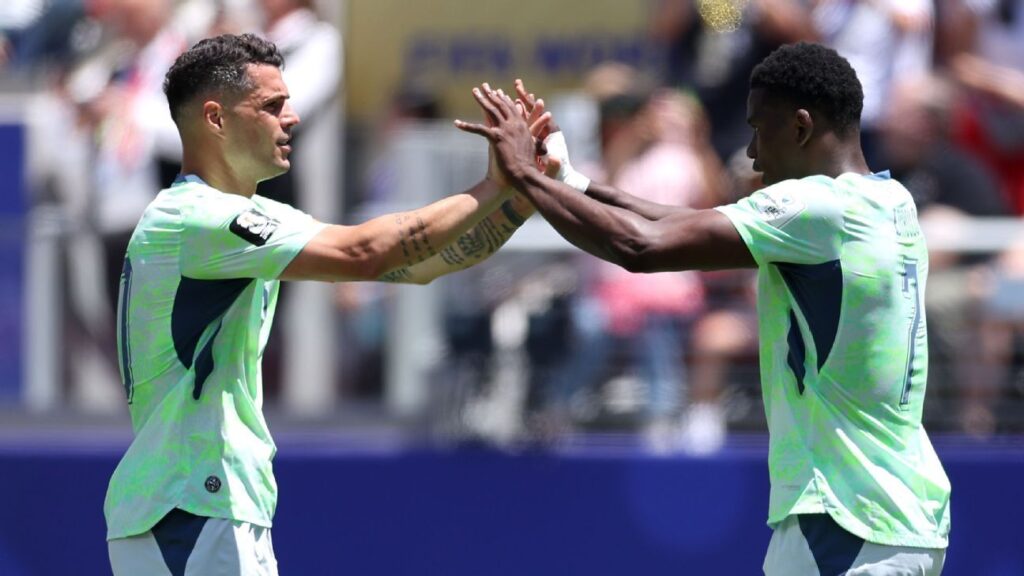
Background: the players and the controversy
Granit Xhaka, the Swiss captain who led the national side to the 2022 World Cup quarter‑finals, missed the last four internationals after admitting he had used a forged COVID‑19 vaccination certificate during the pandemic. His teammate Breel Embolo, a forward of Congolese descent, faced the same accusation and was also sidelined.
Both players are central figures in Switzerland’s squad for the upcoming Euro 2028 qualifiers. Their absence sparked intense media scrutiny and raised questions about the integrity of the team’s compliance with health protocols that were enforced across European football in 2020‑21.
The scandal uncovered and the federation’s response
The Swiss Football Association (SFV) opened an internal investigation after a whistle‑blower alerted them to irregularities in the players’ medical records. In March 2026, Xhaka voluntarily disclosed that his vaccine card had been altered, prompting the SFV to impose a four‑match ban and strip him of the captaincy.
Following a similar admission from Embolo, the SFV reinstated both athletes on Tuesday, restoring Xhaka’s captaincy and clearing Embolo to return to the squad. The association said the decision was based on the players’ cooperation and the completion of a remedial education programme on public‑health ethics.
Why it matters for the African diaspora and Swiss football
Embolo’s heritage links him to the Congolese community in Switzerland, a growing demographic that looks to football as a pathway to social mobility. His swift reinstatement is being read as a signal that the SFV wants to protect the representation of African‑origin players in the national team, especially after criticism that the federation had previously been slow to address racial bias.
For Xhaka, whose parents fled Albania, the episode underscores how players with migrant backgrounds can become flashpoints in broader debates about integration, public‑health compliance and national identity. Their return therefore carries symbolic weight for diaspora fans who see the duo as ambassadors of multicultural Switzerland.
A wider pattern of vaccine‑related fraud in sport
The Xhaka‑Embolo case is not isolated. Since 2020, several athletes across Europe and Africa have been caught using falsified vaccination documents to bypass travel restrictions. A 2025 report by the International Olympic Committee noted a 12 % rise in such violations among footballers, prompting tighter verification procedures at UEFA tournaments.
These incidents have forced governing bodies to balance public‑health safeguards with athletes’ privacy rights. In response, UEFA introduced a digital health‑pass system in 2024 that links vaccination data to a secure blockchain ledger, a move that aims to eliminate the loophole exploited by Xhaka and Embolo.
Reactions from fans, sponsors and African communities
Swiss fans were divided. A poll conducted by *Le Temps* showed that 58 % welcomed the players’ return, citing their on‑field importance, while 27 % felt the punishment had been too lenient. Major sponsors such as Nike and Swisscom issued brief statements emphasizing “zero tolerance for fraud” but also praising the players’ willingness to come clean.
In the Congolese diaspora, community leaders praised Embolo’s honesty and highlighted his role in encouraging young African talent to pursue professional football responsibly. Social‑media threads on platforms like X (formerly Twitter) celebrated the decision as a chance for “role‑models to reset the narrative around integrity and opportunity.”
What’s next: upcoming matches and potential reforms
Switzerland’s next fixture is a Euro 2028 qualifier against Italy on 12 November 2026. With Xhaka back as captain, the team hopes to regain momentum after a dip in form during his absence. Tactical analysts predict that his leadership will be crucial in stabilising a midfield that has struggled to control possession without him.
Beyond the pitch, the SFV has announced a review of its health‑policy enforcement, pledging to adopt the UEFA digital health‑pass across all national‑team activities. The federation also plans to launch a mentorship programme linking senior players of African descent with youth academies in Basel and Zurich, a move designed to channel the spotlight on positive community impact after the scandal.
Quick Answers
Why were Granit Xhaka and Breel Embolo suspended by the Swiss Football Association?
Both admitted using forged COVID‑19 vaccination certificates, breaching the SFV’s health‑protocol rules that were in place during the pandemic.
When will Xhaka and Embolo be eligible to play for Switzerland again?
They were cleared on 24 October 2026 and are eligible for the Euro 2028 qualifier against Italy on 12 November 2026.
How does the scandal affect African‑origin players in Switzerland?
The case highlights the visibility of African‑diaspora athletes and has prompted the SFV to emphasize inclusion, mentorship and stricter integrity measures for all players.
Source: www.espn.com




💬 Comments 0