Italy’s 2026 school ban on burqa and niqab announced by Meloni, foreign student caps added
Background: Italy’s growing debate on religious symbols
Since the early 2010s, Italy has witnessed a series of court rulings and municipal ordinances that limit the visibility of religious symbols in public spaces. The most cited case involved a 2017 Constitutional Court decision that upheld a ban on face coverings in public transport and government buildings, a ruling that many right‑wing parties have used as a springboard for broader cultural legislation.
Prime Minister Giorgia Meloni’s party, Fratelli d’Italia, has built its electoral platform on a narrative of “Italian values” and national identity. In the run‑up to the 2024 elections, the party repeatedly warned that unchecked immigration and multiculturalism threatened the cohesion of the school system, a message that resonated in regions with strong nationalist sentiment such as Lombardy and Veneto.
The issue is not new for the Muslim community in Italy, which comprises roughly 2.5 % of the population, many of whom are of African origin. Over the past decade, Muslim families have faced legal battles over the right to wear headscarves in public schools, with mixed outcomes that have left the community uncertain about its place in the Italian educational landscape.
The proposed ban and its specifics
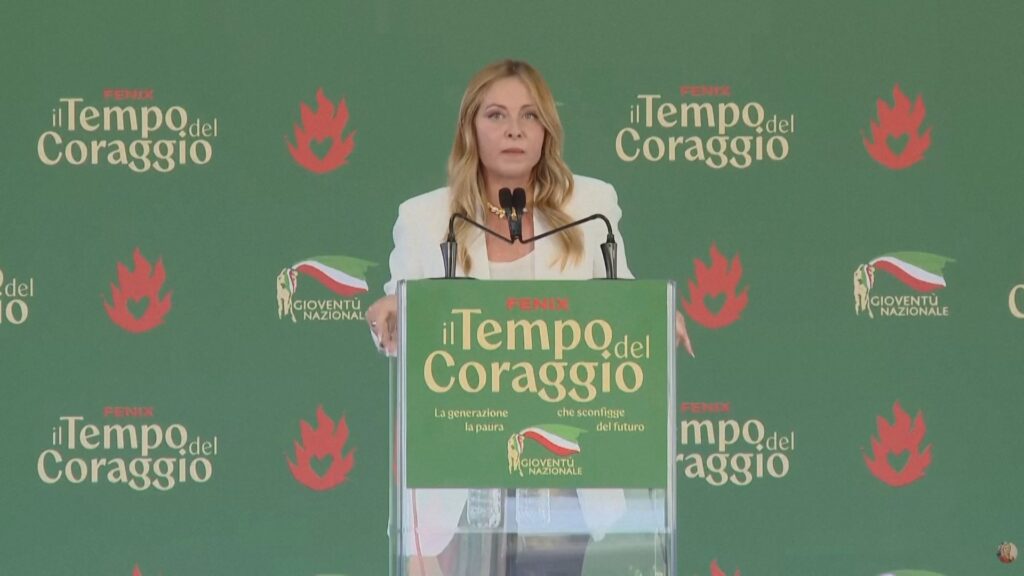
In a televised address on September 20, 2026, Meloni announced a draft decree that would prohibit the wearing of full‑face veils—burqas and niqabs—in all public and private schools from primary through secondary levels. The measure also includes a provision to limit the number of foreign‑born students to a maximum of 20 % per classroom, a figure that aligns with the government’s claim that “overcrowding” undermines pedagogical quality.
The decree outlines enforcement mechanisms: school principals would be required to report violations to local education authorities, and repeat offenders could face fines up to €2,000. Teachers who refuse to enforce the rule could be subject to disciplinary action, according to the draft text released by the Ministry of Education.
Critics argue that the cap on foreign students is a thinly veiled attempt to curb the presence of African and Asian migrants who are disproportionately represented in Italy’s public schools. The Ministry has not provided data to justify the 20 % threshold, and the policy could force schools in neighborhoods with high immigrant populations—such as Rome’s Torpignattara district or Milan’s Quarto Oggiaro—to reorganise classes or even close.
Why it matters for African migrants and the diaspora
A sizeable portion of Italy’s Muslim population originates from West and North Africa, particularly from Senegal, Nigeria, Egypt, and Morocco. For many African families, school is the primary avenue for upward mobility and integration. A ban on the burqa and niqab would force young women to choose between education and religious observance, a dilemma that could increase dropout rates among a demographic already facing employment barriers.
Remittance flows from Italy to African countries have risen steadily, reaching an estimated €4.5 billion in 2025, according to the World Bank. Any policy that threatens the educational attainment of African migrants could indirectly affect these cash flows, as lower earnings among second‑generation migrants translate into reduced money sent home.
Moreover, the foreign‑student cap could exacerbate segregation. Schools that are forced to limit enrolment of African children may resort to “tracking” students into separate streams, reinforcing stereotypes of underperformance. Diaspora organisations in Milan and Turin have warned that such measures could fuel alienation and make young people more vulnerable to radicalisation, a concern echoed by community leaders in the Nigerian diaspora association in Bologna.
Legal and political fallout across Europe
Italy’s move follows a pattern seen in France, Belgium, and the Netherlands, where governments have introduced or upheld bans on face coverings in public institutions. Legal scholars note that the European Court of Human Rights (ECHR) has so far upheld France’s 2011 ban, but each new national restriction invites fresh challenges at the continental level. Legal analysts at the European Centre for Constitutional Law predict that Italy’s decree will likely be contested before the Italian Constitutional Court and could be taken to the ECHR.
Politically, the proposal has deepened the divide between Meloni’s coalition and the centre‑left parties, which have condemned the decree as “discriminatory” and “contrary to Italy’s constitutional guarantee of religious freedom.” Opposition leader Enrico Franzetti pledged to introduce a counter‑bill that would protect the rights of religious minorities while still addressing class size concerns.
The policy also reverberates beyond Europe’s borders. African governments, including Senegal and Nigeria, have issued statements urging Italy to respect the religious rights of their citizens abroad. The African Union’s diplomatic corps in Rome has called for a “dialogue‑based approach” rather than punitive legislation, warning that harsh measures could strain diplomatic and trade relations.
What could happen next and how Africans can respond
The draft decree must still pass through the Council of Ministers and be signed into law by the President. If enacted, schools will have three months to implement the new rules, giving families a short window to adapt. Civil‑society groups are already mobilising legal aid clinics in Rome and Palermo to assist families facing enforcement actions.
African diaspora organisations are urging a coordinated response: filing collective lawsuits, lobbying Italian MPs of African descent, and launching public awareness campaigns that frame the issue as one of educational equity rather than religious freedom alone. Some NGOs are also exploring partnerships with European Union bodies to seek funding for integration projects that could offset the impact of the foreign‑student cap.
In the longer term, the debate may push African migrants to consider alternative destinations within the EU where school policies are less restrictive, such as Portugal or Spain. Monitoring migration patterns over the next two years will be crucial for policymakers in both Italy and African sending countries, as a shift could affect labour markets, remittance streams, and bilateral agreements on migration management.
Quick Answers
What does Italy’s new school ban on burqa and niqab entail?
The draft decree would forbid full‑face veils in all public and private schools and set a maximum of 20 % foreign‑born students per classroom.
Which communities are most affected by the proposed ban?
Muslim families, especially those of African origin, face the greatest impact because many women wear the burqa or niqab and a large share of foreign students in Italian schools come from Africa.
How might the ban influence African migrants in Italy?
It could increase school dropout rates among Muslim girls, limit educational opportunities for African children, and potentially reduce remittance flows to their home countries.
Source: www.aljazeera.com



💬 Comments 0