Jacob Fearnley retires injured at Vienna Open, handing Arthur Fery a second‑round spot – what it means for British tennis and the ATP tour
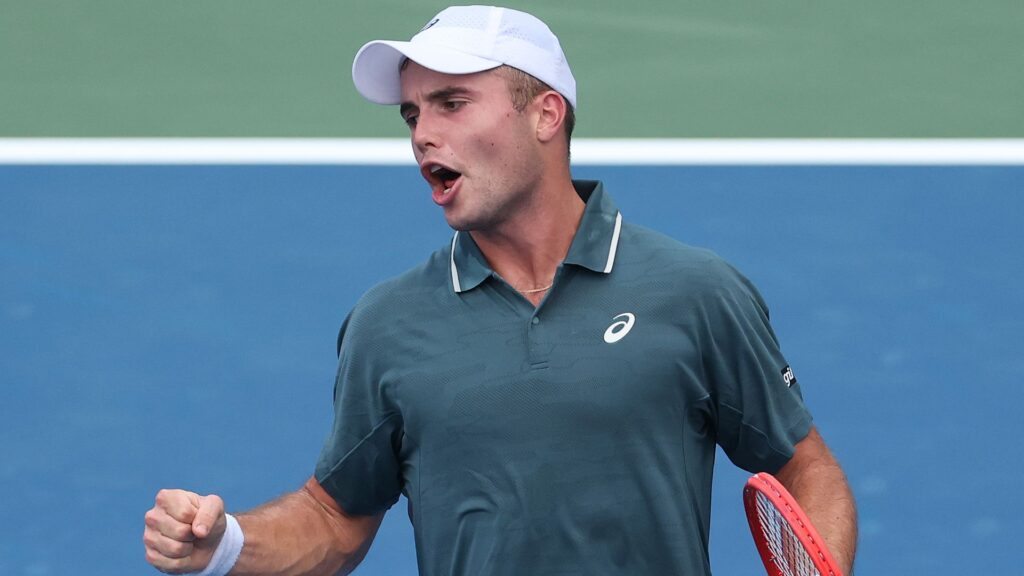
Background: Two British hopefuls meet on the ATP 500 stage
The Vienna Open, an ATP 500 tournament that attracts top‑ranked players, also offers a rare platform for lower‑ranked hopefuls to test themselves against higher competition. Jacob Fearnley, a 22‑year‑old British qualifier ranked outside the top 400, earned his main‑draw spot after a series of impressive wins in the qualifying rounds. His opponent, Arthur Fery, a 21‑year‑old compatriot hovering near the top 300, was also fighting for a breakthrough performance that could boost his ranking and confidence.
Both players have been part of the LTA’s revamped development programme, which aims to replenish the British men’s game after the era of Andy Murray. The programme provides funding, coaching, and tournament exposure, but the transition from Challenger events to ATP 500 venues remains a steep learning curve. Their meeting in Vienna was therefore seen as a litmus test for how quickly the new generation can adapt to the higher intensity and pressure of elite competition.
What happened on court: The injury retirement
The match began with Fery taking an early lead, breaking Fearnley’s serve twice to race to a 5‑1 advantage in the first set. Midway through the third game, Fearnley winced after a powerful forehand and signalled to the umpire that he could not continue. Medical staff confirmed a strained right calf, forcing him to retire and hand the set – and the match – to Fery.
While a retirement is always disappointing for the player who exits, it also underscores the physical toll that back‑to‑back matches can exact on younger athletes who are still building the endurance needed for the tour’s demanding schedule. Fearnley’s withdrawal meant he earned only a few ranking points and a modest prize‑money share, a stark contrast to the potential earnings that a full three‑set win could have delivered.
Why it matters: Rankings, earnings and the British tennis pipeline
Arthur Fery’s advancement to the second round translates into a significant jump in ATP points – roughly 45 for a first‑round win at a 500 event – which could lift him closer to the top 250. That move not only improves his seeding in future Challenger draws but also opens doors to direct entry into higher‑level tournaments, reducing his reliance on qualifying rounds.
For Fearnley, the injury highlights a broader issue for British players outside the top 200: the financial fragility of a tour life that depends heavily on prize money. According to a recent LTA report, players ranked between 300 and 500 often struggle to cover travel, coaching, and physiotherapy costs. A premature exit like this can set back a season’s budget, forcing athletes to make tough choices about which events to enter.
The incident also feeds into the ongoing debate about the LTA’s talent‑development model. Critics argue that while funding has increased, the pathway still leaves many young pros over‑exposed to high‑intensity matches without sufficient conditioning support. Proponents counter that exposure to ATP‑level competition is essential for growth, and that occasional setbacks are part of the learning curve.
Reactions: From the court, the federation and the diaspora
After the match, Fery praised his opponent’s fighting spirit, saying on social media that “Jacob gave me a tough start and I hope he recovers quickly.” The LTA issued a brief statement expressing concern over Fearnley’s injury and confirming that the federation will provide additional physiotherapy assistance during his recovery period.
Among British fans in the diaspora, particularly those in Nigeria and Ghana where tennis is gaining a foothold, the match sparked conversation about the visibility of African‑born British players. While neither athlete is of African descent, the broader narrative of under‑represented nations striving for a place on the ATP circuit resonates strongly with diaspora communities that are watching the sport’s growth back home.
Local Austrian media noted that Fery’s progression adds intrigue to the second round, as he now faces a seeded player who will be eager to avoid an upset. For the tournament organizers, a home‑grown British contender reaching later stages can boost viewership in the UK market, an increasingly valuable audience for European events.
What’s next: Recovery, ranking battles and the road to the next big break
Jacob Fearnley is expected to undergo a short rehabilitation program focused on calf strength and flexibility. Sources close to his coaching team say he plans to return to competition within three weeks, targeting a Challenger event in Spain where the surface will be less taxing on his leg. A swift comeback could salvage his season’s point tally and keep his ranking from slipping further.
Arthur Fery, meanwhile, will face the tournament’s 14th seed in the upcoming round. A win would not only double his points haul but also give him a confidence boost that could translate into deeper runs on the Challenger circuit. Analysts suggest that a strong showing in Vienna could be the catalyst for his first top‑250 finish, a milestone that often unlocks direct entry into Grand Slam qualifying draws.
For British tennis as a whole, the episode reinforces the need for a balanced approach that blends exposure with robust player welfare. The LTA has hinted at expanding its sports‑medicine network across Europe, a move that could help prevent similar retirements and keep emerging talent on a steady upward trajectory.
Quick Answers
Why did Jacob Fearnley retire from his Vienna Open match?
He suffered a strained right calf during the first set, and medical staff ruled him unable to continue.
How does Arthur Fery benefit from the win?
Fery moves into the second round, earning about 45 ATP points and a larger prize‑money share, which can improve his ranking.
What does this incident mean for British tennis development?
It highlights the physical demands on lower‑ranked players, the financial pressures they face, and the LTA’s need to strengthen medical support for emerging talent.
Source: www.skysports.com



💬 Comments 0