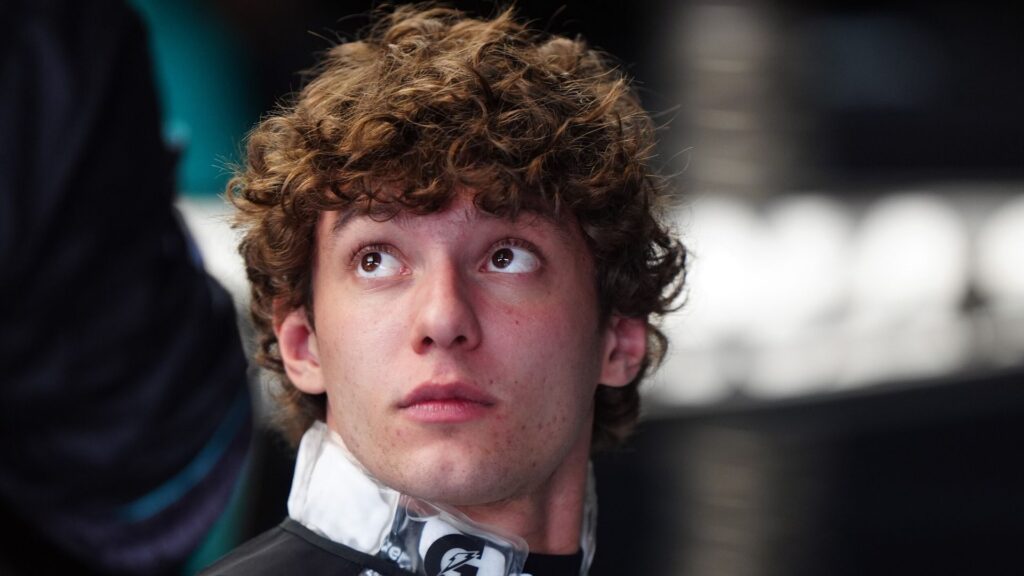
Kimi Antonelli tense before clinching F1 title at Mexico City Grand Prix 2026
Background: Antonelli’s meteoric rise to the top of F1
The 22‑year‑old Italian, Kimi Antonelli, entered the 2026 Formula 1 season as a relative unknown, having spent most of his early career in junior categories such as Formula 2 and the FIA Formula 3 Championship. A breakthrough came when he secured a mid‑season seat with the mid‑field team Alpine, impressing with a string of podium finishes that propelled him into the championship contention.
By the time the calendar reached the high‑altitude streets of Mexico City, Antonelli had amassed 210 points, leading the standings by a slim margin over his closest rival, Brazilian rookie Thiago Silva. The title fight has been defined by a blend of raw speed, strategic tyre management, and a series of weather‑induced safety car periods that have kept the points table tightly packed.
Antonelli’s composure off the track has been as much a talking point as his on‑track performance. In a pre‑race interview, he admitted feeling “more tense than usual,” a sentiment echoed by his team principal, who described the driver’s nerves as “the healthy kind of pressure that fuels a champion’s focus,” according to a post‑race briefing released by Alpine.
The Mexico City showdown: what’s at stake
The Mexico City Grand Prix is the penultimate race of the 2023‑2026 F1 calendar, and the circuit’s unique combination of altitude and tight corners makes it a decisive venue for any championship battle. A win for Antonelli would give him a 30‑point cushion with only one race remaining, effectively clinching the title even if his rival were to win the final round in Abu Dhabi.
Strategically, the race also matters for the commercial side of the sport. The Mexican market contributes roughly 5 % of F1’s global broadcast revenue, and a dramatic title decider in front of a passionate fanbase can boost viewership numbers for the season finale. Sponsors linked to Antonelli, including the Italian fashion house Dolce & Gabbana and the tech giant Samsung, are banking on the exposure to cement long‑term partnerships.
For the driver himself, securing the championship would place Antonelli among the youngest title‑winners in F1 history, joining the likes of Sebastian Vettel and Lewis Hamilton. It would also cement his status as a marketable star, opening doors to ambassadorial roles that could extend beyond the racetrack, from automotive innovation to youth sports programmes.
Why it matters for Africa and the diaspora
Although Antonelli is not African, his title chase reverberates across the continent because F1’s growth strategy has increasingly targeted African audiences. The sport’s recent partnership with the South African broadcaster SuperSport has lifted viewership by 27 % over the past two years, according to a report by the Confederation of African Football’s media department.
The race in Mexico is being streamed live on several African digital platforms, including DStv’s GO and the pan‑African streaming service Showmax. A title‑deciding drama is expected to attract record numbers of African viewers, which in turn boosts advertising revenue for brands that are keen to tap into the continent’s youthful, tech‑savvy demographic.
Moreover, the heightened attention on the championship fuels conversations about the need for an African‑based Grand Prix. The proposed Lusaka circuit, still in the feasibility stage, could benefit from the global buzz generated by a dramatic title fight, providing political and financial momentum for the project. Diaspora communities in the UK, US, and Canada have already organized watch parties, turning the race into a cultural event that unites Africans abroad around a shared sporting moment.
Broader trend: F1’s push into emerging markets
The Mexico City Grand Prix is part of a wider pattern where Formula 1 deliberately places high‑stakes races in emerging economies to diversify its fan base. Since 2020, the calendar has added venues in Saudi Arabia, Vietnam (planned), and a rotating slot for the United Arab Emirates, each designed to capture new sponsorship dollars and television audiences.
Analysts at Bloomberg note that the sport’s revenue model now relies heavily on “location‑driven media rights,” meaning that the more exciting the race is in a market with growing viewership, the higher the price broadcasters are willing to pay. Antonelli’s title battle, therefore, is not just a sporting climax but a revenue‑generating engine for the sport’s global expansion plan.
In Africa, the trend manifests through increased investment in grassroots motorsport programmes. The FIA’s “Motorsport for Development” initiative has funded karting academies in Kenya, Nigeria, and Ghana, hoping to nurture the next generation of drivers who could one day compete on the world stage. A high‑profile championship conclusion helps justify these investments to national sports ministries and private sponsors.
Reactions and what’s next after Mexico
Fans on social media have been quick to voice their support for Antonelli, with hashtags like #AntonelliChamp trending across Twitter Africa and the #F1MexicoLive dominating Instagram stories. Former South African F1 driver Jody Scheckter posted a video praising the young driver’s “raw talent and composure,” a sentiment echoed by many African motorsport influencers who see Antonelli’s success as a catalyst for their own ambitions.
If Antonelli clinches the title in Mexico, the final race in Abu Dhabi will shift from a championship showdown to a celebration of his achievement. This could influence the scheduling of post‑season events, such as the F1 Fan Festival in Lagos, which organizers have already earmarked as a platform to showcase the sport’s African outreach programmes.
Conversely, should Antonelli falter and lose the title, the narrative will likely focus on the resilience of the sport’s competitive balance. Either outcome will feed into the broader conversation about how F1 can sustain interest in markets that have historically been peripheral to its core European fan base. For African stakeholders, the key takeaway will be the proof that a compelling story—whether it involves an African driver or a dramatic title fight—can drive engagement and investment across the continent.
Quick Answers
What is at stake for Kimi Antonelli at the Mexico City Grand Prix?
A victory would give Antonelli a 30‑point lead with one race left, effectively securing the 2026 Formula 1 World Championship.
How does the F1 title fight affect African viewers?
The race is streamed on African platforms like SuperSport and Showmax, boosting viewership and advertising revenue while fueling calls for an African Grand Prix.
What could Antonelli’s win mean for the future of F1 in Africa?
A dramatic title climax can accelerate interest in motorsport across the continent, supporting grassroots programmes and strengthening the case for a future African Grand Prix.
Source: www.skysports.com




💬 Comments 0