Kohzo Tashima vs Gianni Infantino: What the 2026 FIFA Election Means for African Football
FIFA’s leadership landscape and Africa’s stake
Since Gianni Infantino took over the FIFA presidency in 2016, the organization has pursued a high‑profile agenda of expanding the World Cup, launching new revenue streams, and promising governance reforms. While some African federations have welcomed the increased prize money and the promise of more slots for the continent, many still feel sidelined in decision‑making, especially after controversial reforms to the World Cup format that reduced Africa’s representation in 2026.
The Confederation of African Football (CAF) controls 54 member associations, making it the largest continental body in world sport. Yet CAF’s influence on FIFA’s executive board has been limited, and African leaders have repeatedly called for greater voting power and transparent allocation of development funds. This historic under‑representation has turned each FIFA election into a critical moment for the continent’s football future.
The next presidential election, scheduled for March 2026, will be the first since the 2023 reform package that introduced a 20‑member FIFA Council and altered the voting weight of each confederation. The new rules mean that African votes could become decisive if the race tightens, putting the continent in a stronger bargaining position than in previous cycles.
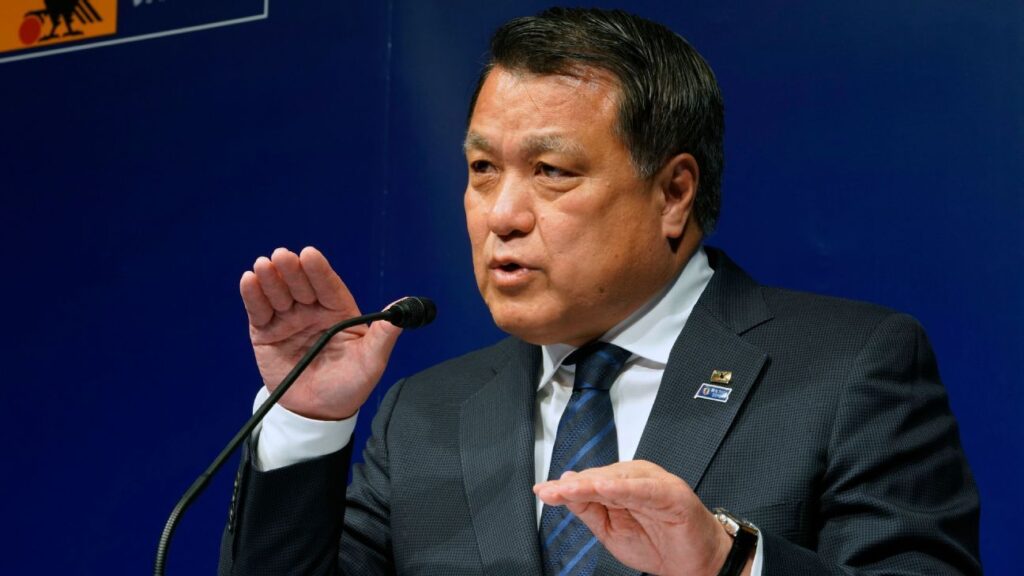
Who is Kohzo Tashima and what does he stand for?
Kohzo Tashima, a long‑time FIFA Council member from Japan, has built his reputation on championing grassroots development and digital innovation in football. He previously oversaw the Asian Football Confederation’s (AFC) technical department and was instrumental in rolling out the “Future Goal” program that introduced AI‑driven coaching tools across East Asia.
In interviews with Japanese media, Tashima has signalled a platform centred on three pillars: transparent governance, equitable distribution of commercial revenues, and a renewed focus on the women’s game. He has repeatedly warned that FIFA’s current growth model risks widening the gap between wealthy federations and those that rely on development grants, a point that resonates with many African officials.
Tashima’s candidacy is also noteworthy because it would be the first serious challenge to Infantino from a non‑European or non‑South American contender since the 1990s. While he has not yet disclosed a full manifesto, insiders say his team is preparing a detailed proposal on how to allocate the next World Cup’s broadcasting rights in a way that benefits emerging markets, including Africa.
Why the challenge matters for African football
African federations have long argued that FIFA’s revenue‑sharing formula favours Europe and the Americas, leaving the continent with a smaller slice of the lucrative World Cup and Club World Cup pots. If Tashima can persuade the Council to adopt a more balanced model, African nations could see a boost in funding for stadium upgrades, youth academies, and women’s leagues.
Tashima’s emphasis on digital tools also aligns with Africa’s rapid mobile‑internet growth. According to a 2024 report by the African Development Bank, over 60% of the continent now has reliable 4G connectivity, creating a fertile ground for data‑driven talent scouting and fan engagement platforms that Tashima has championed in Japan.
Moreover, a shift in leadership could reopen discussions on a future African World Cup bid. Infantino’s push for a 48‑team tournament in 2026 left Africa with only nine slots, sparking protests across the continent. Tashima’s promise to revisit allocation criteria may give African football leaders a new lever to negotiate a larger share for the 2030 edition.
Reactions from African bodies and the diaspora
CAF President Patrice Motsepe, who was re‑elected in 2023, welcomed the prospect of a contested FIFA election, stating that “competition can only improve the governance of our sport.” Motsepe, a South African mining magnate, has hinted that CAF will rally behind the candidate who offers the most concrete development guarantees for the continent.
Prominent African players in Europe, such as Sadio Mané and Mohamed Salah, have also weighed in through social media, urging FIFA to listen to “the voices that grow the game on the streets of Lagos, Nairobi and Accra.” Their comments reflect a broader diaspora concern that the sport’s global commercialisation should not eclipse local realities.
Grassroots organisations in Nigeria and Ghana have organised webinars to dissect the potential impact of Tashima’s proposals. Many participants expressed optimism that a Japanese challenger might bring a fresh perspective on anti‑corruption measures, a topic that still haunts African football after several high‑profile scandals in the last decade.
What’s at stake in the March 2026 vote
The March election will be decided by a 20‑member FIFA Council, with each confederation allotted a set number of seats. Africa currently holds three seats, meaning its bloc can swing the outcome if the vote splits between Infantino and Tashima. Analysts from Bloomberg Sports predict a tight race, noting that Infantino’s support remains strong among UEFA and CONMEBOL, while Tashima is courting AFC and CAF votes.
Financially, the winner will oversee the distribution of an estimated $5 billion in commercial rights for the 2026‑2030 cycle. A shift toward a more equitable split could translate into an additional $200‑300 million for CAF’s development fund, a sum that would fund dozens of new stadium projects and expand women’s leagues across the continent.
Politically, the election is also a test of FIFA’s reform credibility. The 2023 governance overhaul was meant to curb corruption, but critics argue that real change will only come with a new president willing to enforce stricter audit procedures. African stakeholders have signalled that they will monitor the new leader’s commitment to transparency as a condition for continued cooperation.
Looking ahead: scenarios and potential outcomes
If Infantino retains the presidency, the status quo on commercial revenue distribution is likely to continue, with only incremental adjustments for African interests. This could keep the current tension between CAF and FIFA alive, potentially prompting African federations to push for a separate continental revenue pool, a move that would reshape global football finance.
Should Tashima win, the immediate expectation is a renegotiation of the World Cup slot formula and a stronger push for digital inclusion projects in Africa. His background suggests he will prioritize partnerships with tech firms to create data‑rich scouting networks, which could accelerate the export of African talent to top European leagues while retaining a larger share of transfer fees for home clubs.
Regardless of the victor, the election will set the tone for the next four years of football governance. For African fans, clubs, and diaspora communities, the outcome will influence everything from the price of a World Cup ticket in Lagos to the likelihood of seeing a Nigerian city host a future global tournament.
Quick Answers
When is the FIFA presidential election scheduled?
The FIFA presidential election is set for March 2026.
How could a new FIFA president affect African football funding?
A new president could renegotiate revenue‑sharing rules, potentially increasing CAF’s development fund by $200‑300 million.
Who is Kohzo Tashima?
Kohzo Tashima is a Japanese FIFA Council member known for promoting grassroots development and digital innovation in football.
Source: www.espn.com



💬 Comments 0