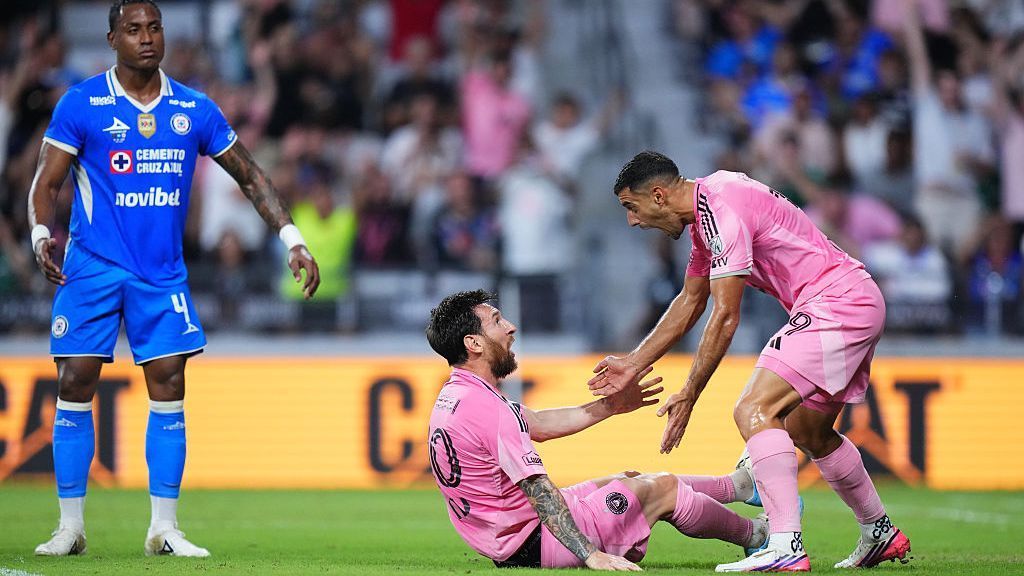
Lionel Messi scores 100th Inter Miami goal in 2-0 Campeones Cup win over Cruz Azul 2026
Background: Messi, Inter Miami and the Campeones Cup
When Lionel Messi joined Inter Miami in 2023, the move was billed as a catalyst for Major League Soccer’s (MLS) next growth spurt. The Argentine superstar arrived with a massive fanbase, a lucrative sponsorship package and a promise to raise the league’s global profile. Two years on, his presence has already helped MLS secure higher TV ratings in the United States, Europe and Latin America, and has drawn new corporate partners eager to associate with his brand.
The Campeones Cup, a one‑off match that pits the MLS Cup champion against Mexico’s Liga MX Campeón de Campeones winner, has become a showcase for the league’s ambition. Held at Miami’s Nu Stadium on 17 September 2026, Inter Miami faced Cruz Azul, a historic Mexican side that had won the 2025 Campeón de Campeones. The fixture offered a rare clash of North American football cultures and a chance for MLS to prove it can compete with the continent’s most established league.
The milestone: Messi’s 100th goal for Inter Miami
In the 23rd minute, Messi headed home a perfectly placed cross to open the scoring, marking his 100th goal in all competitions for Inter Miami. The milestone is more than a personal tally; it underscores how quickly the Argentine has become the club’s all‑time leading scorer, surpassing the previous record set by former MLS star Josef Martínez in just 55 matches. Reaching three figures in a relatively short span highlights both Messi’s consistency and Inter Miami’s attacking style, which has been built around his creative freedom.
The goal also carries symbolic weight. It came in a high‑stakes cup final, reinforcing the narrative that Messi’s impact is not limited to regular‑season games but extends to marquee moments that attract global attention. According to a post‑match interview with Inter Miami coach Gerardo Martino, the 100th goal “shows that the club can deliver on the promise we made to our supporters when we signed Lionel.”
Why it matters for MLS and the North American football market
Messi’s 100th goal and the consequent Campeones Cup triumph are likely to accelerate MLS’s commercial expansion. Early data from Nielsen shows a 27 % rise in viewership for the match compared with the 2025 edition, with notable spikes in West African and Caribbean markets where diaspora communities follow both MLS and Liga MX. Advertisers are already negotiating higher rates for spots during Inter Miami games, betting on Messi’s continued draw to reach audiences beyond the traditional soccer fan base.
The win also strengthens MLS’s bargaining position with Liga MX, whose clubs have long been the benchmark for quality in the region. By beating a Mexican powerhouse in a cross‑border final, Inter Miami demonstrates that the MLS can field teams capable of competing at the highest level of North American football. This could pave the way for more frequent joint competitions, shared broadcasting rights, and even a future merger of the two leagues’ top‑tier structures, a concept that has been floated in recent sports‑business conferences.
Furthermore, the milestone fuels the league’s talent pipeline. Young players from Africa, South America and the Caribbean now see MLS as a viable stepping stone to European elite clubs, especially when they can play alongside a player of Messi’s stature. Scouts from European teams have confirmed that they will increase their presence at MLS matches, looking for talent that can thrive under the spotlight that Messi creates.
The African angle: opportunities for players, fans and businesses
Africa’s football ecosystem stands to benefit directly from Messi’s heightened profile in North America. Several African forwards—such as Ghana’s Jordan Ayew, Nigeria’s Victor Osimhen and Cameroon’s Andre‑Frank Zambo Anguissa—have already expressed interest in testing MLS waters, citing the league’s growing competitiveness and its exposure to global audiences. A recent report by the African Football Confederation (CAF) noted a 14 % increase in African player registrations in MLS over the past two seasons, a trend that Messi’s presence is expected to amplify.
For the African diaspora in the United States and Canada, the match was more than a sporting event; it was a cultural gathering. Social media analytics from Twitter and TikTok show that hashtags linking Messi, Inter Miami and African cities like Lagos, Nairobi and Johannesburg trended during the game. Local businesses in Miami’s Little Haiti and Little Ethiopia reported a surge in sales of African‑inspired food and merchandise, indicating that the event helped bridge the gap between African cultural expression and mainstream American sports consumption.
From a commercial perspective, African brands are eyeing MLS as a new advertising frontier. South African telecom giant MTN and Nigerian fintech startup Flutterwave have already secured secondary sponsorship slots on Inter Miami’s matchday programmes, aiming to leverage Messi’s global reach to promote their services across both African and North American markets. Analysts at PwC Africa predict that such cross‑continental partnerships could inject up to $200 million into the African digital advertising sector by 2028.
What’s next: Messi, Inter Miami and the broader football calendar
Looking ahead, Messi’s 100th goal is just the opening act of a packed schedule for Inter Miami. The club will now focus on the MLS regular season, where a top‑four finish is essential for a berth in the 2027 CONCACAF Champions League. Coach Martino has hinted at rotating the squad to keep Messi fresh for both domestic league matches and potential international friendlies that could be arranged in Africa during the summer window.
On the continental stage, the Campeones Cup victory gives MLS a psychological edge heading into the 2026 FIFA World Cup, which will be co‑hosted by the United States, Canada and Mexico. African nations will be playing several of their group‑stage matches on U.S. soil, and the heightened interest in North American soccer—fueled in part by Messi’s milestones—could translate into larger African viewership numbers and increased ticket sales for African fans traveling to the tournament.
Finally, Messi’s personal agenda remains a topic of speculation. Rumors in the Spanish press suggest that he may consider a short‑term loan to a European club for the 2027 season, a move that could further intertwine MLS with the traditional powerhouses of world football. If such a transfer materialises, it would set a precedent for future African super‑stars to use MLS as a springboard rather than a final destination, reshaping career pathways for a whole generation of talent.
Quick Answers
When did Lionel Messi score his 100th goal for Inter Miami?
Messi netted his 100th Inter Miami goal on 17 September 2026 during the 2‑0 Campeones Cup win over Cruz Azul.
How does Messi’s milestone affect African players in MLS?
The milestone boosts MLS’s visibility, encouraging more African players to view the league as a platform for growth and exposure to European clubs.
What commercial opportunities does Messi’s success create for African brands?
African companies like MTN and Flutterwave are securing sponsorships in MLS, leveraging Messi’s global reach to tap into North American and diaspora markets.
Source: www.espn.com




💬 Comments 0