Liverpool sign 18‑year‑old Ivorian forward Djylian N’Guessan for 2026/27 season
Liverpool’s renewed focus on African youth talent
Since Jurgen Klopp took over in 2015, Liverpool has consistently turned to Africa for both senior stars and academy prospects. The club’s recent success with Mohamed Salah, Sadio Mané and Naby Keïta has convinced the hierarchy that the continent remains a fertile hunting ground for raw, athletic forwards who can adapt to the Premier League’s intensity.
In the past two years Liverpool’s scouting network has expanded its presence in West Africa, opening satellite offices in Abidjan and Dakar. This infrastructure allows scouts to monitor youth tournaments, school leagues and club academies more closely, shortening the time between spotting a talent and securing a pre‑contract.
The N'Guessan signing is the latest concrete outcome of that strategy. By locking the teenager down now, Liverpool avoids a bidding war that could erupt later if the player shines in the Ivorian senior league or during a youth World Cup.
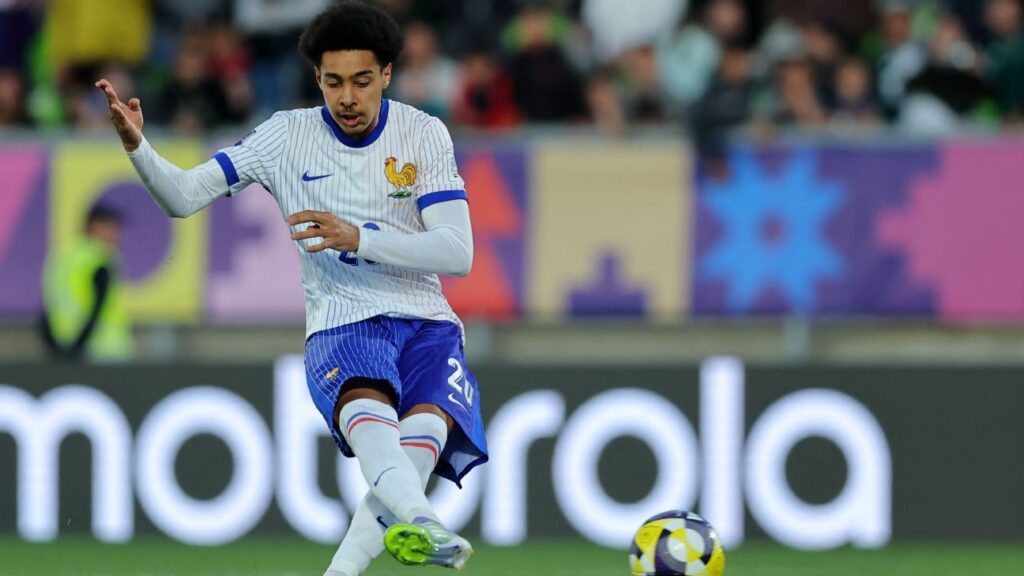
Who is Djylian N'Guessan? A profile of the 18‑year‑old forward
Djylian N'Guessan, 18, is a product of the famed ASEC Mimosas academy in Abidjan, Ivory Coast, according to African sports outlet Kick442. He broke onto the radar after netting 22 goals in the 2024 U‑18 league and impressing in the CAF Youth Champions Cup, where his pace and off‑the‑ball movement drew comparisons to a young Riyad Mahrez.
N'Guessan is primarily a left‑footed winger who can also operate as a central striker. Coaches at ASEC praise his technical ability, especially his dribbling under pressure, and his willingness to track back defensively – traits that align with Liverpool’s high‑pressing philosophy.
Although he has not yet featured for the senior Ivorian national team, he has been called up to the U‑23 side for the 2025 African Games, where he scored twice against Ghana. Those performances have cemented his reputation as one of the continent’s most promising attacking prospects for the next five years.
Why the signing matters for Anfield and for African football
For Liverpool, N'Guessan offers a low‑risk, high‑reward option to future‑proof the front line. With the club’s current attacking trio aging and the transfer market inflating, a home‑grown talent who can be integrated gradually reduces the need for a £70‑million replacement in the next two seasons.
From an African football perspective, the deal underscores a growing confidence among European clubs that investing early in the continent’s youth pipelines pays off. It also signals to local academies that there is a clear, financially viable route to Europe without the player having to leave the continent at 16, a practice that has drawn criticism from child‑protection advocates.
Economically, the transfer – reportedly a modest £1.2 million fee plus performance add‑ons – could boost ASEC’s revenue stream, allowing the academy to upgrade facilities and fund more community outreach programs. Such trickle‑down effects are often invisible in Western media but are vital for sustaining grassroots football across West Africa.
Reactions from the African diaspora and local clubs
The news sparked a wave of excitement on social media among the Ivorian diaspora in London, Paris and New York. Prominent diaspora blogger Kofi Mensah posted that N'Guessan’s arrival “reinforces the belief that our kids can make it to the biggest stages without losing their roots”.
Local Ivorian clubs, meanwhile, hailed the signing as validation of their development models. ASEC’s technical director, Yao Kouadio, told the Ivorian daily Fraternité that the deal “shows the world that our academy can produce players ready for the highest level, and it will inspire the next generation to stay committed to education and hard work”.
However, some critics warned that early European contracts can sometimes stall a player’s senior experience. Former Ivory Coast international Didier Drogba, speaking on a local radio show, cautioned that Liverpool must give N'Guessan regular game time, either through loan spells or a clear pathway to the first team, to avoid the “stagnation trap” many African youngsters have fallen into.
What lies ahead: development path and market implications
N'Guessan will join Liverpool’s Under‑23 side at the start of the 2026‑27 season, training under the club’s new youth development director, Michael Beale. The plan, as outlined in a club statement, is to integrate him into the first‑team training sessions by the winter break, contingent on his adaptation to the physicality of English football.
Should he impress, Liverpool may look to loan him to a Championship side for a season, a route successfully taken by other African prospects such as Curtis Jones’s stint at West Brom. A productive loan would not only accelerate his growth but also increase his market valuation, potentially turning a modest initial outlay into a future asset worth tens of millions.
In the broader market, the signing could encourage other Premier League clubs to deepen their scouting partnerships in Côte d’Ivoire and neighboring nations. If N'Guessan breaks through, it may trigger a new wave of early contracts for West African teenagers, reshaping transfer dynamics and prompting FIFA to revisit regulations around youth transfers to protect player welfare.
Quick Answers
When will Djylian N'Guessan be eligible to play for Liverpool's first team?
He will join Liverpool's Under‑23 squad for the 2026‑27 season and could be considered for senior matches after the winter break, depending on his development.
Which academy did Djylian N'Guessan come from?
He was developed at the ASEC Mimosas academy in Abidjan, Ivory Coast.
How much did Liverpool reportedly pay for N'Guessan?
The transfer fee is reported to be around £1.2 million, plus performance‑based add‑ons.
Source: www.espn.com



💬 Comments 0