Netherlands rail sabotage: objects on tracks halt trains, hit commuters and African freight
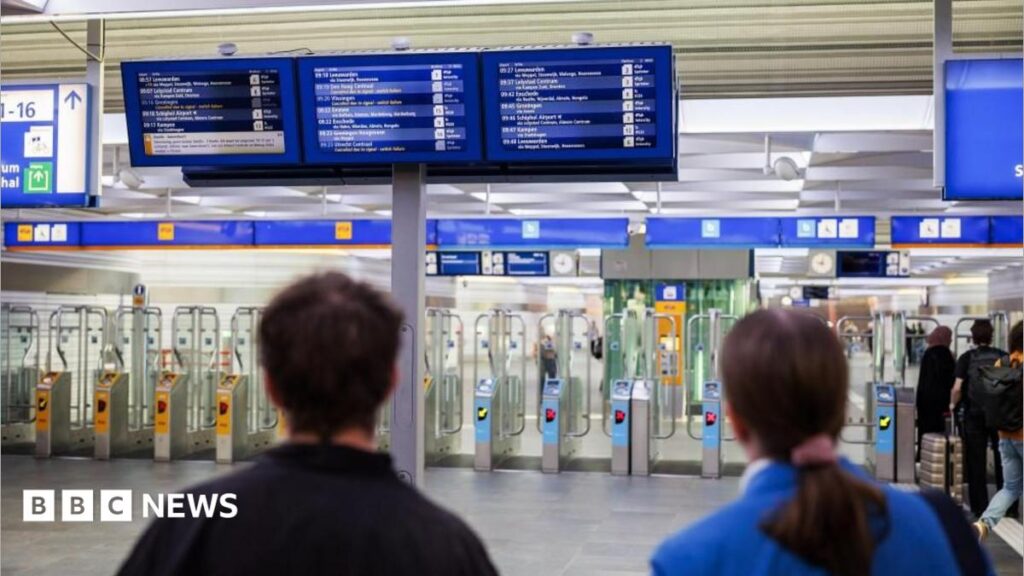
The Dutch rail network: a European and global hub
The Netherlands boasts one of the densest passenger‑rail systems in Europe, with more than 2,200 kilometres of track serving over 1.2 billion journeys a year. Its strategic position links the North Sea ports of Rotterdam and Amsterdam to the heart of the continent, making the rail corridor a backbone for both daily commuters and high‑value freight moving between Western Europe and the rest of the world.
Beyond local traffic, Dutch rail lines are integral to supply chains that connect African exporters to European markets. Commodities such as cocoa from Côte d’Ivoire, coffee from Ethiopia, and fresh horticultural produce from Kenya routinely travel by truck to Rotterdam, where they are loaded onto trains bound for inland distribution hubs. Any disruption on the rails therefore reverberates far beyond Dutch borders, touching the economies of several African nations that rely on timely access to European consumers.
Sabotage on the tracks: what unfolded on Tuesday
On Tuesday morning, railway workers discovered suspicious objects on the tracks at three separate locations – near Utrecht, in the province of Limburg and close to the high‑speed line that connects Amsterdam to the German border. The items, described by Dutch Railways (NS) as “metallic debris of unknown origin”, prompted an immediate safety shutdown of the affected sections while police and security experts launched a joint investigation.
The precautionary measures resulted in a cascade of cancellations and delays across the national timetable. By mid‑day, NS reported that more than 30 percent of scheduled services were either cancelled or running at reduced frequency. Commuters faced long waits at stations, and freight operators were forced to reroute cargo onto slower, less‑direct road corridors, inflating transport costs and delivery times.
Immediate fallout: commuters, freight and African trade
For the roughly 1.5 million daily passengers who depend on Dutch trains, the disruption translated into missed work appointments, lost school hours and a surge in demand for alternative mobility options such as car‑sharing and regional buses. The financial hit to NS is estimated at several million euros in lost ticket revenue and compensation payouts, according to an interim report from the company’s finance department.
The freight impact, however, carries a more nuanced global dimension. Rotterdam’s port handles about 12 percent of Europe’s container traffic, much of it originating from African exporters. With rail capacity constrained, shippers have had to shift cargo to trucks, adding an average of 12‑hour delay per container and raising carbon emissions. Industry observers warn that if such sabotage incidents become recurrent, they could erode the competitive advantage that Dutch logistics currently offers African producers.
A growing wave of rail disruptions across Europe
The Netherlands incident is the latest in a series of rail‑related security events that have rattled Europe over the past two years. In late 2024, Germany reported a string of “track tampering” cases that delayed ICE services, while France experienced a coordinated sabotage of high‑speed lines in early 2025. Analysts attribute the uptick to a mix of extremist activism, climate‑action groups targeting fossil‑fuel‑linked logistics, and criminal networks seeking to extort railway operators.
Security experts say the open nature of rail infrastructure – vast stretches of track that are difficult to monitor continuously – makes it an attractive target for low‑cost disruption. The European Union has responded with a draft “Railway Security Directive” that would require member states to increase surveillance, share intelligence across borders and allocate dedicated funding for rapid response units. How quickly these measures materialise could determine whether sabotage remains an occasional nuisance or evolves into a systemic risk.
Looking ahead: security, policy and African stakeholders
Dutch authorities have pledged a “zero‑tolerance” approach, vowing to accelerate the installation of sensor‑based monitoring systems along vulnerable sections of track. The Ministry of Infrastructure announced a €150 million investment plan aimed at integrating AI‑driven anomaly detection with existing CCTV networks, a move that could set a benchmark for other European rail operators.
For African exporters and diaspora communities, the key takeaway is vigilance. Trade bodies such as the African Union’s Trade and Industry Committee are urging member states to diversify logistics routes, including greater use of air freight for high‑value perishable goods and exploring alternative rail corridors through Belgium and France. Meanwhile, diaspora advocacy groups are calling on European governments to consider the broader economic fallout of rail sabotage, emphasizing that disruptions in the Netherlands ripple through supply chains that support livelihoods back home in Africa.
Quick Answers
What caused the Netherlands rail disruption on Tuesday?
Security crews found metallic objects on tracks at several locations, prompting a safety shutdown and leading to widespread train cancellations.
How does the sabotage affect African exporters?
Rail delays force cargo bound for Rotterdam to shift to trucks, adding time and cost for African producers exporting goods to Europe.
What steps is the Dutch government taking to prevent future sabotage?
It announced a €150 million plan to install AI‑driven sensors and improve surveillance across the rail network.
Source: www.bbc.co.uk




💬 Comments 0