Rayo Vallecano vs Athletic Club match halted by paper plane protest against Raúl Martín Presa – what it means for LaLiga and African players
Background: Fan unrest in Spanish football
In recent years, Spanish football has seen a surge in fan‑led protests, ranging from banner displays to coordinated chants against club owners, referees and league policies. The intensity of these actions grew after the 2023–24 season when several clubs faced financial scrutiny, prompting supporters to demand greater transparency. Rayo Vallecano, a modest Madrid‑based side, has become a flashpoint because its president, Raúl Martín Presa, is widely criticised for alleged mismanagement and a perceived lack of investment in the squad.
Athletic Club, based in Bilbao, operates under a unique Basque‑only recruitment policy, yet the club’s star forward Iñaki Williams—born in Spain to Ghanaian parents—has become a symbol of the African diaspora in European football. His prominence adds an extra layer of relevance for African fans watching LaLiga, who often look to players like Williams for representation at the highest level.
What happened on the pitch
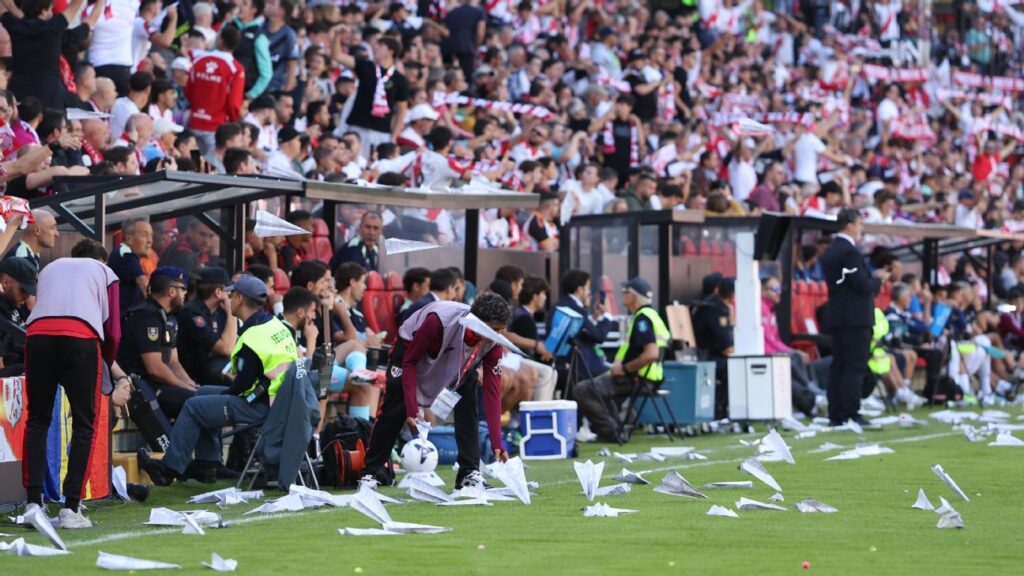
During the first half of the Saturday LaLiga fixture, a wave of paper airplanes was launched from the Rayo Vallecano supporters’ section toward the centre of the field. The makeshift projectiles were timed to coincide with a free‑kick, creating a visual spectacle that forced the referee to halt play. Within minutes, officials declared the match suspended, citing safety concerns and the inability to guarantee an uninterrupted game.
The protest was explicitly aimed at Raúl Martín Presa, whose image was projected on the stadium’s big screen as the paper planes fell. Fans shouted slogans demanding his resignation and called for a shareholder meeting. The incident marked the first time a LaLiga match has been abandoned for a coordinated fan demonstration involving paper aircraft, a tactic previously seen only in lower‑division or non‑football contexts.
Why the incident matters beyond Madrid
Beyond the immediate disruption, the protest highlights a growing willingness among European supporters to use creative, non‑violent tactics to pressure club executives. This shift mirrors similar movements in African leagues, where fans have staged sit‑ins, boycotted matches and even occupied club offices to demand accountability from owners and governing bodies. The Spanish episode could embolden African fan groups, who often lack the media platform to amplify their grievances.
For African‑born players in LaLiga, the incident raises questions about their role as cultural ambassadors. Iñaki Williams, whose Ghanaian heritage is a source of pride for many in West Africa, may find his platform expanded as media outlets in Accra, Lagos and Johannesburg cover the story. The visibility of African diaspora athletes in a protest that challenges corporate governance could inspire a new wave of activism among African footballers who wish to leverage their influence for social change.
Reactions from clubs, league officials and the diaspora
Rayo Vallecano’s board issued a brief statement condemning the “unsafe” behaviour of a minority of supporters, while promising to investigate the motives behind the protest. Athletic Club’s spokesperson expressed disappointment that the match could not continue, but praised the fans for exercising their democratic right to voice concerns, noting that the club itself has faced criticism over its restrictive recruitment policy.
LaLiga’s competition committee announced an emergency meeting to decide on possible sanctions, ranging from fines to a partial stadium closure. In the diaspora, Nigerian and Ghanaian sports blogs quickly framed the event as a “call for better governance in football,” linking it to recent protests in the Nigerian Professional Football League over unpaid wages. Social media threads from Lagos and Accra showed a surge in discussion about how African players could support fan‑led reforms.
What comes next: potential fallout and lessons for African football
If LaLiga imposes strict penalties on Rayo Vallecano, the club could face a financial hit that may affect its ability to retain key players, including its Nigerian striker, if any, for the remainder of the season. The precedent set by a top‑tier league suspending a match over a fan protest could also influence how African federations handle similar actions, possibly encouraging more structured dialogue between supporters and club executives.
For African football stakeholders, the incident serves as a reminder that fan power is not confined to local stadiums. The paper‑plane protest demonstrates that symbolic, peaceful disruption can capture global headlines, forcing governing bodies to take notice. African clubs and leagues may consider adopting formal channels for fan representation—something that the Confederation of African Football (CAF) has been urged to explore after repeated clashes between supporters and club owners in countries like South Africa and Kenya.
Quick Answers
Why was the Rayo Vallecano vs Athletic Club match suspended?
The match was halted after Rayo supporters launched paper airplanes onto the pitch in a protest against club president Raúl Martín Presa.
How could this protest affect African players in LaLiga?
The visibility of African‑heritage stars like Iñaki Williams may grow, and the incident could inspire African players to use their platforms for governance reforms.
What possible sanctions could LaLiga impose on Rayo Vallecano?
LaLiga may levy fines, enforce partial stadium closures, or order matches to be played behind closed doors, according to the league’s disciplinary guidelines.
Source: www.espn.com




💬 Comments 0