Small Things Review 2026: Zvonimir Jurić’s Island Drama with Izudin Bajrović
Background and the film’s genesis
Zvonimir Jurić, a veteran of the post‑war Bosnian theatre scene, turned to cinema with a modestly financed co‑production that brings together Croatia, Bosnia‑Herzegovina and Slovenia. The project, titled “Small Things,” was first announced at the Sarajevo Film Festival’s industry market in early 2025 and secured funding from the European Cultural Programme and a handful of regional broadcasters. Jurić’s intent, according to an interview with Cineuropa, was to capture the lingering intimacy of family gatherings that have survived decades of conflict and migration.
The script was shaped around a real‑life reunion that Jurić witnessed on the Adriatic island of Brač, where an elderly patriarch was visited by his scattered descendants after a long silence. By placing the drama on a remote island, the director amplifies the sense of isolation while also using the sea as a metaphor for the currents of memory and loss. The casting of Izudin Bajrović, a Bosnian actor whose career spans both stage and screen, adds gravitas to the role of the aging head of the family.
Production wrapped in late 2025 under strict pandemic‑era health protocols, and the final cut was edited by veteran editor Ana Kovač, who opted for a tight, chamber‑like pacing. The film’s modest runtime—just under 90 minutes—mirrors its minimalist aesthetic, letting each pause and lingering glance carry emotional weight.
What the film delivers – story and style
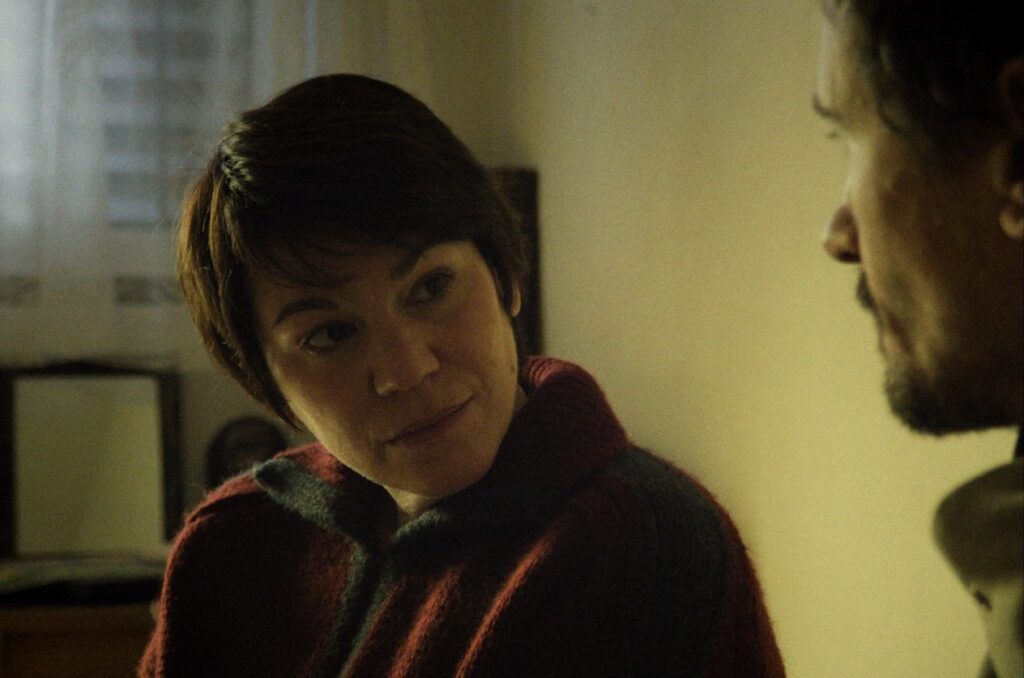
The narrative opens with giggling grandchildren teaching their grandfather, played by Bajrović, how to use a smartphone. That simple gesture sets up a clash between generations: the old man’s stoic silence meets the noisy optimism of his youthful kin. As night falls, the family gathers around a weather‑worn kitchen table, and long‑buried grievances surface in hushed arguments that feel more like rehearsed theatre than conventional cinema.
Jurić’s direction is deliberately restrained. He avoids sweeping panoramas, instead favoring static shots that linger on faces, allowing viewers to read micro‑expressions. The sound design is equally sparse, punctuated only by the creak of wooden chairs and the distant lapping of waves. This approach has drawn comparisons to the works of Serbian director Emir Kusturica’s quieter moments, yet Jurić steers clear of melodrama, opting for a “quiet devastation” that critics have praised for its authenticity.
The performances are uniformly strong. Ivana Roščić as the mother Irena balances tenderness with a weary resolve, while Marija Skaričić’s Aunt Anica provides a sardonic counterpoint that keeps the drama from becoming overly sentimental. Bajrović, in particular, commands the screen with a measured stillness that makes every sigh feel like a confession.
Why it matters for Balkan cinema and global streaming
“Small Things” arrives at a moment when Balkan filmmakers are increasingly courting international streaming platforms. Netflix and MUBI have already acquired rights to several regional titles, signaling a shift from festival‑only exposure to broader digital distribution. According to a report by Variety, the success of recent Bosnian series such as “The Bridge” has opened doors for more intimate, character‑driven stories like Jurić’s to reach global audiences.
The film’s modest budget and chamber‑drama format demonstrate that high production values are not a prerequisite for international relevance. By focusing on universal themes—family, aging, technology gaps—Jurić taps into a market that values authenticity over spectacle. This could encourage more regional producers to invest in low‑cost, high‑impact projects that can be sold to niche streaming services seeking diverse content.
Moreover, the film’s inclusion in the official competition at the 2026 Cannes Film Festival’s “Un Certain Regard” section (as announced by the festival’s press office) positions it as a cultural ambassador for the Western Balkans. Such visibility can attract foreign co‑production interest, potentially funneling new financing into the region’s fledgling film industry.
Resonances with African diaspora narratives
While the story is rooted in a Bosnian family, its core concerns echo those of many African diaspora communities. The tension between elders who cling to oral histories and younger members who navigate the digital world mirrors experiences in Nigerian, Ghanaian and Somali families spread across Europe and the United States. Scholars at the University of Lagos have noted that inter‑generational tech gaps often become symbolic battlegrounds for cultural preservation versus assimilation.
The film’s setting on an isolated island also parallels the experience of African island nations such as Zanzibar or São Tomé, where geography intensifies feelings of both seclusion and community. By portraying how a simple smartphone lesson can become a conduit for reconciling past trauma, Jurić inadvertently offers a template for African storytellers exploring similar themes of post‑colonial memory and diaspora return.
African film festivals, including the Durban International Film Festival and the African Film Festival in New York, have begun to program Balkan works that speak to shared post‑conflict realities. “Small Things” could therefore find an appreciative audience among African cinephiles who see their own histories reflected in the film’s quiet reckoning.
What’s next – festival circuit and market prospects
Following its Cannes debut, “Small Things” is slated for a run at the Toronto International Film Festival’s Contemporary World Cinema section in September 2026. Industry insiders predict that the film will attract acquisition bids from European arthouse distributors and possibly from streaming services looking to bolster their European catalogues. The film’s modest runtime makes it an attractive addition to curated collections that emphasize brevity and emotional depth.
In the Balkans, the film is already generating buzz for a limited theatrical release in Sarajevo, Zagreb and Ljubljana later this year. Box‑office analysts from the European Audiovisual Observatory estimate that a modest domestic gross of €300,000 could be achievable, given the star power of Bajrović and the growing appetite for locally produced drama.
For African markets, the film’s distributor has hinted at a simultaneous release on a pan‑African streaming platform, such as Showmax, to capitalize on the thematic overlap with African family dramas. If the film performs well in those territories, it could set a precedent for future cross‑regional collaborations, encouraging African producers to partner with Balkan creators on stories that bridge continents.
Quick Answers
What is the plot of Small Things?
The film follows an elderly Bosnian patriarch, played by Izudin Bajrović, as his scattered family reunites on an Adriatic island, confronting generational divides and unresolved grief.
Who directed Small Things?
Small Things was directed by Zvonimir Jurić, a Croatian filmmaker known for his work in theatre and film.
When and where can I watch Small Things?
The movie premiered at Cannes in May 2026 and will stream on select platforms like MUBI later in 2026, with theatrical releases in the Balkans scheduled for autumn.
Source: variety.com




💬 Comments 0