Sophia Wilson banned an extra game for hair‑pulling – Portland Thorns 2026
Background: The incident and league response
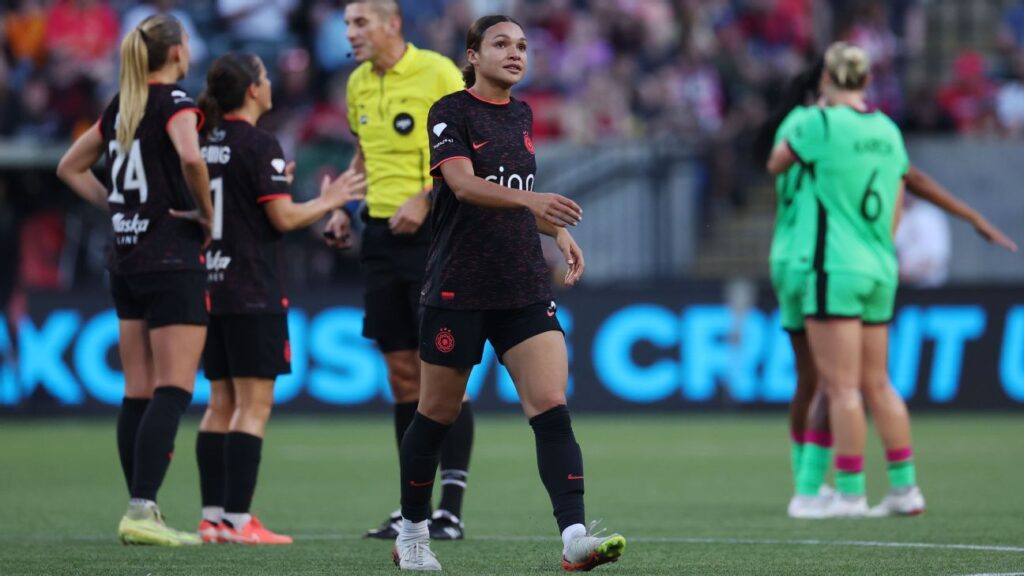
On Thursday, the National Women’s Soccer League (NWSL) announced that Portland Thorns forward Sophia Wilson will miss her next two matches after the league extended her disciplinary ban by one additional game. The sanction stems from a violent‑conduct charge after Wilson was caught pulling an opponent’s hair during a heated contest last weekend. The league’s disciplinary committee reviewed video footage and deemed the act a clear violation of its conduct code, prompting the extra suspension.
The original punishment, a one‑match ban, was handed down after the league’s standard review process, which typically involves a three‑day window for clubs to appeal. Wilson’s club, the Thorns, chose not to appeal, citing the need to move forward and focus on the upcoming fixtures. The extra game was added after the league’s senior disciplinary panel, convened under Commissioner Marla Messing, decided the incident warranted a stronger deterrent.
The decision was made public via a brief statement on the NWSL’s official website, which emphasized the league’s commitment to “zero tolerance for violent conduct, regardless of gender or stature of the player.” The statement also reminded clubs and fans that the league’s disciplinary framework aligns with FIFA’s broader regulations on player behavior.
Disciplinary trends in women’s football
Wilson’s sanction arrives at a time when women’s football is grappling with a series of high‑profile disciplinary cases. In the past twelve months, the NWSL has issued suspensions for off‑field misconduct, on‑field aggression, and breaches of the league’s anti‑harassment policy. The cumulative effect is a growing perception that the league is tightening its disciplinary net to protect player safety and preserve its brand reputation.
Experts say the league’s approach mirrors a global shift. UEFA and FIFA have both introduced stricter guidelines for violent conduct, including mandatory video‑review panels and clearer grading of offenses. In Europe, similar hair‑pulling incidents have resulted in multi‑match bans, indicating a convergence toward a universal standard. According to a recent analysis by The Athletic, the average length of suspensions for violent conduct in top‑tier women’s leagues has risen from 1.2 games in 2019 to 2.1 games in 2025.
Critics, however, argue that the NWSL’s punitive measures sometimes lack consistency. A former player quoted in The Guardian noted that “similar incidents in the men’s MLS often result in lighter penalties, suggesting a double‑standard that could undermine credibility.” While the league maintains that each case is judged on its own merits, the debate underscores the delicate balance between deterrence and fairness.
Implications for the Thorns and the NWSL
For the Portland Thorns, losing Wilson for two games could affect their push for a playoff spot. The forward has contributed five goals and three assists this season, making her a key attacking outlet. Coach Mike Norris will need to reshuffle his lineup, potentially giving more minutes to younger prospects like Maya Johnson, who has been waiting for a breakout opportunity.
From a commercial perspective, the incident draws unwanted attention to the league’s brand at a crucial time. The NWSL is in the final year of a multi‑year broadcast deal with CBS Sports, and sponsors are closely monitoring the league’s handling of player conduct. A swift, transparent response can reassure partners that the league safeguards its image, while a perception of leniency could jeopardize future revenue streams.
The extended ban also serves as a reminder to all clubs that disciplinary infractions have tangible on‑field costs. Teams that rely heavily on a single star may feel the ripple effects more acutely, prompting coaches to emphasize discipline in training sessions. In the long run, this could lead to a cultural shift where aggressive play is discouraged in favor of technical skill and sportsmanship.
African and diaspora connections: what it means for African players and fans
African talent has increasingly found a home in the NWSL, with players such as Nigerian forward Asisat Oshoala (who recently transferred to the Thorns) and Ghanaian midfielder Priscilla Mensah making headlines. Wilson’s ban highlights the league’s strict enforcement of conduct rules, a factor that African players and their agents must now weigh when considering moves to the United States.
For the African diaspora, the incident resonates beyond the pitch. Many fans in Nigeria, Kenya, and South Africa follow the NWSL through streaming platforms, and they view the league as a benchmark for professional women’s football. The visibility of disciplinary actions can influence how African leagues shape their own codes of conduct. Some officials in the South African Football Association have already cited the NWSL’s handling of violent conduct as a reference point for upcoming policy revisions.
Moreover, the media coverage of Wilson’s ban offers a platform for African journalists to discuss broader issues of gendered aggression in sport. In recent months, several African outlets have run op‑eds on how women’s football in the continent is battling both on‑field violence and off‑field misogyny. The NWSL case provides a comparative lens, encouraging dialogue about safeguarding players across continents.
What’s next: potential reforms and the road ahead
The NWSL’s disciplinary committee is slated to meet later this month to review its sanctioning guidelines. Sources close to the league say that a proposal is in the works to introduce a tiered penalty system that automatically adds an extra match for repeat offenders within a season. If adopted, this could make Wilson’s case a catalyst for broader structural change.
Players’ unions are also stepping into the conversation. The NWSL Players Association (NWSLPA) has called for clearer communication about the criteria used to assess violent conduct, arguing that transparency will help athletes understand the consequences of their actions before they happen. The union plans to hold a town‑hall meeting with representatives from African‑based players to discuss how disciplinary standards affect their career decisions.
For fans, the immediate takeaway is a reminder that passion must be balanced with respect. The league has launched an educational campaign featuring former internationals from the United States, Canada, and Africa, aimed at promoting positive competition. As the Thorns prepare for their next match without Wilson, the broader football community will be watching to see whether the league’s response curtails future incidents or simply adds another line to the growing list of disciplinary headlines.
Quick Answers
Why was Sophia Wilson banned for an extra game?
She received an additional suspension after the NWSL deemed her hair‑pulling incident a violent‑conduct violation.
How will Wilson's ban affect the Portland Thorns' season?
Missing a key forward for two games could hurt the Thorns' playoff push, forcing the coach to rely on less‑experienced attackers.
What does this ban mean for African players in the NWSL?
It underscores the league’s strict conduct policy, signalling that African players considering a move must be prepared for rigorous disciplinary standards.
Source: www.espn.com




💬 Comments 0