Thomas Tuchel’s Half-Time Masterclass: How a Quiet Chat Sparked England’s World Cup Fire
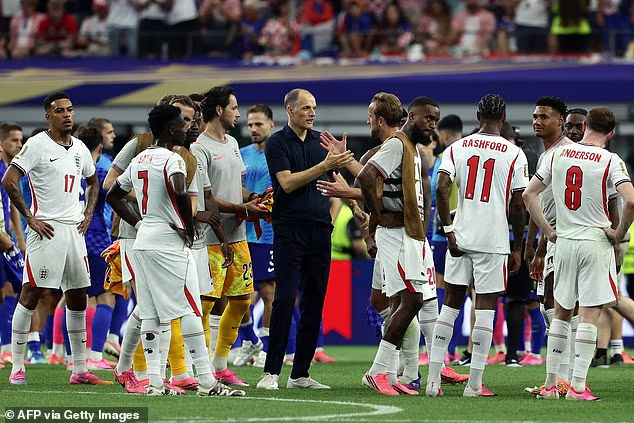
The dressing room was silent. England had just let a lead slip against Croatia again and the weight of history pressed down on the players’ shoulders. But Thomas Tuchel didn’t panic. He didn’t shout. He didn’t even stand up. Instead, the man they call “The Professor” sat down with his team, told them to breathe, and delivered the kind of half-time speech that might just change English football forever.
This isn’t just about tactics. Thomas Tuchel delivered a half-time dressing down to inspire England to victory vs Croatia, and it worked because he understood something deeper: sometimes, the best way to win is to stop overthinking and start believing. What followed was 45 minutes of football that had fans forgetting the first-half jitters and remembering why they fell in love with the game in the first place.
Before the Whistle: Why England Needed More Than a Pep Talk
England’s relationship with major tournaments is a rollercoaster of hope and heartbreak. The ghosts of past collapses leads squandered against Croatia in 2018, Italy in 2021 loomed large as the Three Lions took the field in Dallas. Gareth Southgate, for all his achievements, was often criticised for his in-game management, or lack thereof. The pattern was familiar: take the lead, retreat, and pray. It rarely ended well.
Enter Tuchel. The FA didn’t just hire a coach; they brought in a serial winner with a reputation for turning half-time deficits into full-time triumphs. At £5 million a year, the pressure was on. But Tuchel, ever the strategist, knew the problem wasn’t the system it was the mindset. Thomas Tuchel delivered a half-time dressing down to inspire England to victory vs Croatia, and in doing so, he may have rewritten the script for this tournament.
“Calm Down and Play Our Way”: The Words That Changed the Game
Tuchel’s approach was simple, almost counterintuitive. While fans at home were screaming at their screens, he told his players to sit. To breathe. To remember who they were. “I gave them quiet time for themselves,” he explained. No ranting, no tactical overhaul just a reminder: We trust you. Now go and play.
And play they did. The second half was a masterclass in what happens when a team stops fearing the moment and starts embracing it. Jude Bellingham and Marcus Rashford ran the show, but the real star was the collective shift in energy. Tuchel’s message was clear: “No matter what the result is, I want them to do it our way. Be brave. Be intense. Go for it.” Harry Kane hailed the England boss for the ‘great speech’ he gave at half-time on Wednesday, and it’s easy to see why. This wasn’t just a coach talking; it was a leader unlocking potential.
The contrast with Southgate’s era is stark. Where Southgate’s England often seemed burdened by expectation, Tuchel’s side looked liberated by it. The German’s half-time chat wasn’t about fixing mistakes it was about freeing minds. “We encouraged them to go for it, to play with more courage,” he said. And it worked. The goals flowed, the chances came, and for once, England looked like a team that believed they could win, not just one that hoped they wouldn’t lose.
What the Mainstream Missed: The Psychology of a Nation
Here’s what nobody is saying: England’s problem was never just about tactics. It was about trauma. For decades, the national team has carried the weight of a country desperate for glory, and that weight has often crushed them. Tuchel, the outsider, saw it immediately. “Sometimes if you want to get it so perfectly right, you overthink it,” he said. And in that moment, he diagnosed the issue better than any pundit or fan.
The real revolution here isn’t Tuchel’s tactics it’s his understanding of the English psyche. He didn’t just tell them to play better; he told them to stop thinking so hard. For a nation that has spent years dissecting every pass, every mistake, every “what if,” that might be the most radical idea of all. The FA didn’t just hire a coach; they hired a therapist. And if England go on to lift the World Cup, it’ll be because Tuchel helped them forget, for 90 minutes at a time, that they were England.
England’s 2026 World Cup campaign is off to a flyer, and the mood in the camp is electric. Tuchel’s half-time masterclass has set the tone: this is a team that plays with freedom, not fear. The victory over Croatia wasn’t just three points it was a statement. A declaration that this England side might finally be ready to shed the shackles of the past.
As they head back to their Kansas City base, the question isn’t whether they can win games it’s whether they can keep this newfound belief alive. Tuchel’s half-time pep talk wasn’t just about one match; it was about rewiring a team’s DNA. And if they can carry this into the knockout stages, we might just be witnessing the birth of a new England.
FREQUENTLY ASKED QUESTIONS
[Why did England hire Thomas Tuchel?] Thomas Tuchel was brought in to bring a winning mentality and tactical flexibility to an England side that had struggled in big moments. With a track record of success at clubs like Chelsea and Bayern Munich, the FA hoped his leadership could finally get the Three Lions over the line at major tournaments. His half-time talk against Croatia showed exactly why he knows how to inspire a team when it matters most.
[What did Thomas Tuchel say at half-time vs Croatia?] Tuchel kept it simple but powerful. He told his players to calm down, trust themselves, and play with courage. Thomas Tuchel delivered a half-time dressing down to inspire England to victory vs Croatia, focusing on mindset over tactics. His message was clear: stop overthinking, start believing.
[How much is Thomas Tuchel earning as England manager?] Reports suggest Tuchel is earning around £5 million a year as England manager a hefty price tag, but one the FA is betting will pay off. For a nation desperate for success, it’s a gamble they’re willing to take.
[Is Tuchel’s approach really that different from Southgate’s?] Yes. While Southgate was often criticised for being too cautious in big games, Tuchel’s philosophy is all about aggression and belief. Where Southgate’s England retreated, Tuchel’s side attacks. The early signs suggest it’s working.
[Can England win the 2026 World Cup with Tuchel?] It’s early days, but the omens are good. Tuchel’s ability to manage moments and minds could be the missing piece. If England can maintain this fearless approach, they’ve got a real shot.
For years, England’s story at major tournaments has been one of “what if.” What if they’d held on? What if they’d been braver? What if they’d believed? Tuchel’s half-time chat against Croatia might just be the moment that changes the narrative. Because for the first time in a long time, England didn’t just hope. They knew.


💬 Comments 0