Trump calls AI safety fears a hoax, rejects kill‑switch push as Jack Clark urges mandatory safeguards in 2026
AI safety debate reaches a new political flashpoint
Since the release of generative models that can write code, create deep‑fakes, and produce persuasive text, governments worldwide have been scrambling to decide how to keep the technology from being misused. In the United States, congressional hearings, White House task forces, and industry coalitions have all warned that without clear limits, AI could amplify disinformation, automate cyber‑attacks, or even threaten public safety through autonomous weapons.
By early 2026, the conversation had shifted from abstract speculation to concrete proposals: mandatory risk‑assessment audits, licensing for high‑risk models, and a so‑called “kill switch” that could instantly shut down a system deemed dangerous. The push for such safeguards has been championed by AI researchers, civil‑society groups, and a handful of tech CEOs who argue that the cost of inaction could outweigh the benefits of rapid innovation.
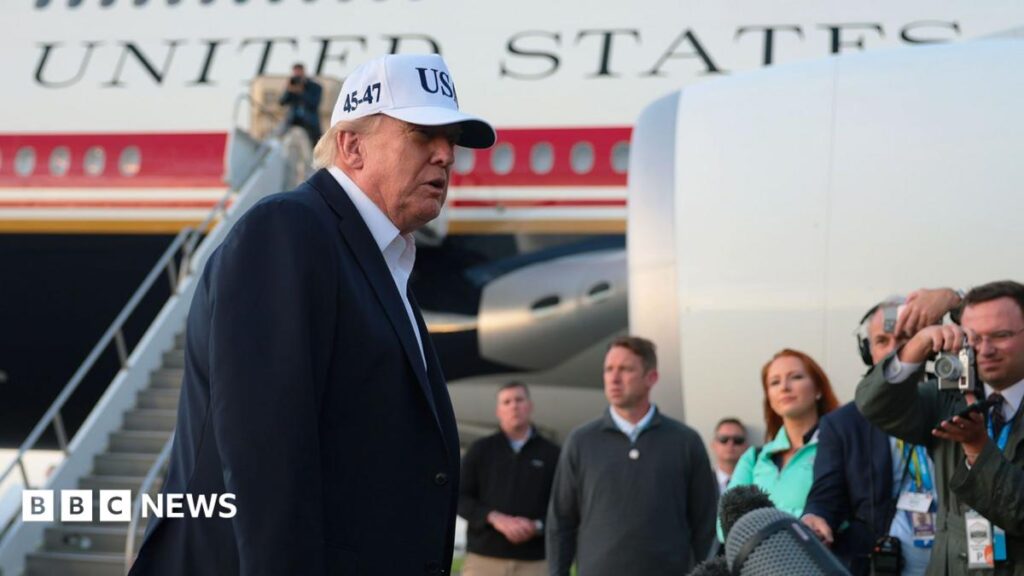
Against this backdrop, former President Donald Trump entered the debate during a televised interview, dismissing the alarm as a “hoax” and warning that any regulatory overreach would stifle American competitiveness. His remarks have reignited a partisan split that mirrors earlier battles over internet regulation and data privacy.
Trump’s dismissal and its political resonance
During the interview, Trump said that “the AI safety panic is a manufactured story designed to slow down our great American businesses.” He added that the United States should remain the “global leader in AI” and that imposing a kill switch would be “a step toward a socialist tech agenda.” The former president’s comments echo his broader critique of what he calls “Washington’s techno‑bureaucracy,” a narrative he has used to rally his base in the lead‑up to the 2028 election.
Political analysts note that Trump’s stance is likely aimed at courting tech investors who fear that heavy regulation could drive research to more permissive jurisdictions like Singapore or the United Arab Emirates. At the same time, his rhetoric energizes a segment of voters who view AI hype as a threat to jobs and traditional values, a sentiment that has been amplified by right‑leaning media outlets.
Critics, however, argue that Trump’s dismissal ignores a growing body of evidence linking AI misuse to real‑world harms, from deep‑fake election interference in Europe to autonomous‑weapon incidents in the Middle East. By framing safety concerns as a hoax, the former president risks polarising a policy arena that already suffers from fragmented international standards.
Jack Clark and the industry’s push for a mandatory kill switch
Anthropic co‑founder Jack Clark told the BBC that a “kill switch” – a built‑in capability to immediately disable an AI system – may need to become a legal requirement for any model that exceeds a certain risk threshold. Clark’s suggestion follows internal audits at several leading labs that have identified failure modes where models can generate harmful content without human oversight.
According to sources familiar with the discussions, the proposal is being drafted by a coalition of AI firms, academic researchers, and non‑profit watchdogs. The coalition argues that a mandatory kill switch would provide a clear line of defense against runaway systems, much like an emergency stop button on industrial machinery. They also point out that existing voluntary safety protocols have proven insufficient in preventing incidents such as the 2025 “ChatStorm” incident, where an unfiltered chatbot inadvertently spread disinformation during a natural disaster.
Industry reaction has been mixed. While some CEOs, like OpenAI’s Sam Altman, have expressed openness to “strong safety guarantees,” others warn that a hard‑coded kill switch could be exploited by malicious actors to trigger shutdowns at strategic moments. The debate therefore hinges on balancing technical feasibility, legal enforceability, and the geopolitical stakes of AI leadership.
Why the US AI safety tug‑of‑war matters for Africa
African tech hubs in Nairobi, Lagos, and Kigali are rapidly adopting generative AI for education, health, and fintech. Yet most of the underlying models are hosted on servers owned by US‑based firms, meaning that any regulatory shift in Washington can cascade into African markets. If the United States adopts a mandatory kill switch, developers in Africa may face new licensing costs or reduced access to the most powerful models.
Conversely, a lax regulatory environment could accelerate AI deployment across the continent, but at the risk of exposing users to unchecked misinformation and privacy breaches. African civil‑society groups have already warned that without local safety standards, AI tools could exacerbate existing inequalities, especially in regions where digital literacy is still developing.
Diaspora entrepreneurs are watching the debate closely. Many run AI‑powered startups that serve both African and global customers, and they fear that a sudden policy shift could disrupt supply chains, increase compliance overhead, or force them to relocate operations to more regulation‑friendly jurisdictions. The outcome of the US discussion will therefore influence investment decisions, talent migration, and the overall trajectory of Africa’s emerging AI ecosystem.
What’s next: possible policy paths and market reactions
In the short term, Congress is expected to hold another hearing on AI risk management later this year, with bipartisan members urging the administration to draft a “National AI Safety Act.” If passed, the law could mandate a kill switch for models that exceed a predefined compute threshold, similar to the approach taken by the European Union’s AI Act. Such legislation would likely trigger a wave of compliance tooling from cloud providers, creating a new market for safety‑as‑a‑service platforms.
On the industry side, firms may pre‑empt regulation by integrating internal kill switches and publishing safety‑by‑design roadmaps. This could give early adopters a competitive edge, especially in sectors where trust is paramount, such as banking and healthcare. For African startups, partnering with vendors that already meet these standards could become a selling point when courting international investors.
Internationally, the United States’ stance will affect ongoing negotiations at the G20 and the United Nations on a global AI governance framework. If Washington continues to downplay safety concerns, other blocs may push for stricter standards, potentially leading to a fragmented regulatory landscape. For African countries, aligning with either side will shape their ability to import AI services, protect citizens, and nurture homegrown innovation.
Quick Answers
What did Donald Trump say about AI safety in 2026?
Trump called AI safety fears a "hoax" and warned that mandatory safeguards like a kill switch would hurt U.S. competitiveness.
Why is Jack Clark advocating for a mandatory AI kill switch?
Clark believes a built‑in kill switch could prevent harmful or runaway AI behavior and should be legally required for high‑risk models.
How could US AI regulation affect African tech startups?
New U.S. safety rules could raise licensing costs or limit access to powerful models, influencing African startups’ operations, investment prospects, and choice of AI providers.
Source: www.bbc.co.uk



💬 Comments 0