Trump‑Xi Washington Meeting 2026: Implications for US‑China Rivalry and African Trade
Background: Trump’s comeback and Xi’s diplomatic agenda
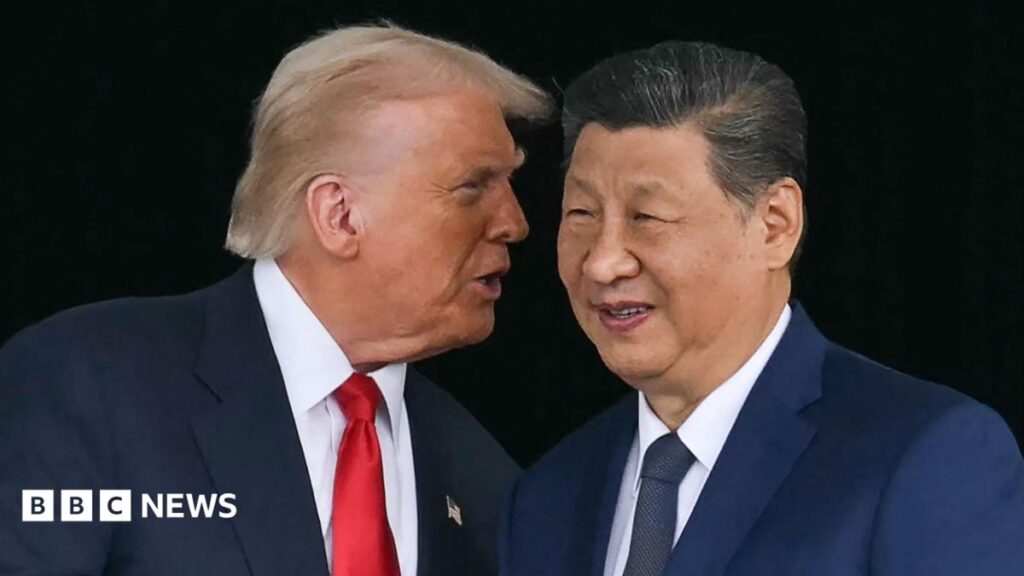
Former President Donald Trump announced his return to the political stage in early 2025, positioning himself as a hard‑line negotiator on trade and security. By mid‑2026 he had secured a surprise invitation to meet Chinese President Xi Jinping in Washington, a move that caught both Capitol Hill and Beijing off guard. The meeting is scheduled for September 30, the first face‑to‑face encounter between the two leaders since Xi’s 2022 summit with Joe Biden.
For Xi, the visit is part of a broader diplomatic push to stabilise relations after a year of heightened tensions over Taiwan, semiconductor bans and the South China Sea. Chinese officials have framed the dialogue as a chance to “reset” the bilateral relationship and to discuss cooperation on climate, global health and the looming debt crisis in developing nations. Sources close to the Chinese foreign ministry say the agenda will also include discussions on the Belt and Road Initiative’s next phase in Africa.
Trump’s campaign rhetoric has repeatedly framed China as the United States’ chief economic rival, promising tariffs and “fair‑play” trade deals. His advisers argue that a direct summit could force Beijing to concede on technology transfers and intellectual‑property theft, while critics warn the meeting could legitimize Xi’s authoritarian model at a time when democratic values are under pressure worldwide.
Why the US‑China rivalry matters beyond Washington
The United States and China together account for roughly 40 % of global GDP, and their strategic choices ripple through supply chains, capital markets and security architectures. A thaw—or a further chill—will affect everything from semiconductor production in Taiwan to the price of soybeans in Brazil. According to a Brookings Institution analysis released in July, any shift in tariffs or export controls could move global commodity prices by up to 5 % within six months.
Beyond economics, the meeting is a litmus test for the future of multilateral institutions. Both leaders have hinted at reforming the World Trade Organization and the United Nations Security Council, proposals that would reshape how developing countries, especially those in Africa, voice their interests. The outcome could either reinforce a rules‑based order that favours smaller economies, or accelerate a bifurcated world where nations must choose between the American or Chinese sphere of influence.
Security concerns also loom large. The United States has increased its naval presence in the Indo‑Pacific, while China has accelerated its militarisation of artificial islands. Analysts at the Center for Strategic and International Studies warn that a mis‑step in the talks could trigger a new arms race, forcing African states to navigate competing security assistance offers from both powers.
Ripple effects on African economies and investment flows
Africa sits at the crossroads of the US‑China contest, attracting billions of dollars in infrastructure financing from Beijing and growing trade ties with Washington. In 2024, Chinese loans accounted for roughly 30 % of new infrastructure projects on the continent, while US private‑sector investment in renewable energy reached a record US$12 billion, according to the African Development Bank.
If the Washington summit yields a de‑escalation, Chinese firms could face stricter export‑control rules on high‑tech components, potentially slowing the rollout of 5G networks and smart‑grid projects in Kenya, Nigeria and Ethiopia. Conversely, a hard‑line US stance might push African governments to lean more heavily on Chinese financing, deepening debt‑dependency concerns that have already sparked protests in countries like Zambia and the Democratic Republic of Congo.
Trade patterns could also shift. The United States has been courting African cocoa, coffee and cotton producers to offset Chinese market dominance. A successful US‑China dialogue might preserve existing tariffs, keeping African exporters reliant on Chinese buyers for over 40 % of their export revenue, as reported by the International Trade Centre. The stakes are therefore not just diplomatic but directly tied to farmers’ livelihoods and regional fiscal stability.
Diaspora optics: African‑American and overseas Chinese perspectives
African‑American voters, who form a crucial swing bloc in US elections, are watching the summit for signals on civil‑rights enforcement and immigration policy. Trump’s past rhetoric on “law and order” has alienated many Black communities, yet his promise of “America First” trade deals is touted as a way to create jobs in manufacturing hubs that historically employed large numbers of African‑American workers. Community leaders in Detroit and Atlanta have organised town‑hall meetings to gauge how any new trade agreements could affect local employment.
The Chinese diaspora in the United States, estimated at over 5 million, also feels the pressure. Many overseas Chinese run small‑businesses that import goods from mainland factories. A hardening of US import rules could raise costs for these entrepreneurs, while a diplomatic breakthrough might ease visa restrictions for Chinese students and researchers, a group that contributes significantly to US STEM fields. According to a poll by the Pew Research Center, 62 % of Chinese‑American respondents said US‑China relations directly impact their economic wellbeing.
In Africa, diaspora remittances from both regions remain a lifeline. The World Bank estimates that African migrants in the US sent US$55 billion home in 2025, while Chinese expatriates in Africa contributed an estimated US$2 billion in intra‑continental investment. Any policy shift that alters exchange rates, banking regulations or travel restrictions will reverberate through these cash flows, influencing household consumption and small‑business growth across the continent.
What could happen next: scenarios and policy levers
Optimists envision a “managed competition” outcome, where both sides agree to a limited set of trade concessions, maintain strategic stability in the Indo‑Pacific, and cooperate on climate finance for African nations. In such a scenario, the African Development Bank could launch a joint US‑China green‑bond facility, unlocking up to US$20 billion for renewable‑energy projects across Sub‑Saharan Africa.
A more pessimistic scenario would see the summit collapse over disagreements on Taiwan or technology bans, prompting the United States to double down on sanctions against Chinese firms. African countries might then face a “de‑risking” wave, as Western banks withdraw credit lines, leaving China as the primary source of financing. This could accelerate debt‑relief negotiations and push regional blocs like the African Continental Free Trade Area to seek alternative partners, such as the European Union or India.
Policymakers in Abuja, Nairobi and Accra are already preparing contingency plans. Ministries of trade have drafted “dual‑track” strategies that keep both US and Chinese supply chains viable, while central banks are monitoring foreign‑exchange volatility that often follows major geopolitical announcements. The coming weeks will therefore be a test of diplomatic agility for African leaders who must balance great‑power overtures with domestic development priorities.
Quick Answers
When is the Trump‑Xi meeting scheduled to take place?
The summit is set for September 30, 2026, at the U.S. Capitol’s West Wing.
How could the US‑China talks affect African trade?
Changes in tariffs, technology rules or financing terms could shift African exports toward either the U.S. or China, influencing commodity prices and infrastructure funding.
What are the possible outcomes of the summit for African investors?
A diplomatic breakthrough could unlock joint green‑bond financing, while a breakdown might push African countries to rely more on Chinese loans and face higher debt‑service costs.
Source: www.bbc.co.uk



💬 Comments 0