UEFA waits for FIFA’s response to Infantino queries as 24‑hour deadline looms – implications for African football 2026
Background: A strained partnership between UEFA and FIFA
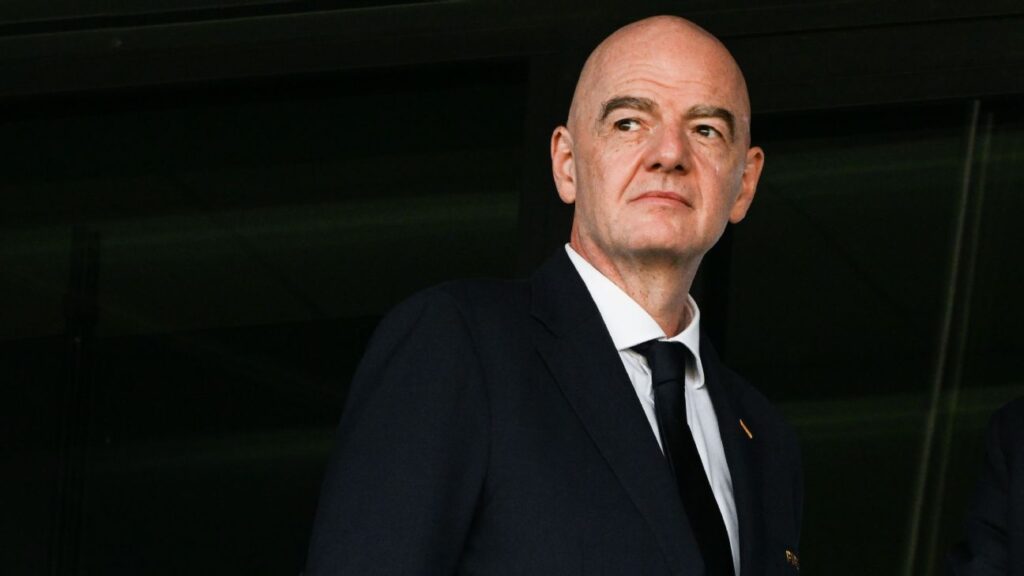
Since Gianni Infantino took over FIFA in 2016, his administration has been marked by both ambitious expansion projects and a series of governance controversies. UEFA, Europe’s governing body for football, has traditionally been FIFA’s closest partner, but disagreements over World Cup formats, financial transparency, and disciplinary procedures have increasingly put the two organisations at odds. The latest friction surfaced when UEFA compiled a list of detailed questions about Infantino’s decisions, seeking clarification before the next major tournament cycle.
The timing of the inquiry is crucial. UEFA is preparing for the 2026 World Cup, which will be co‑hosted by the United States, Canada and Mexico, and it wants assurance that FIFA’s policies will not disrupt qualification pathways for European nations. Moreover, the European body is wary of potential rule changes that could affect club‑international calendars, a subject that has already sparked heated debates in recent UEFA Congresses.
Historically, disputes between the two bodies have been resolved quietly, often through behind‑the‑scenes negotiations. However, the current request for written answers, coupled with a public deadline, signals a shift toward greater accountability and a willingness by UEFA to press for transparency on issues that could reshape the global football landscape.
The unanswered questions: What UEFA is demanding
UEFA’s questionnaire covers ten distinct topics, ranging from the criteria used to select host nations for future tournaments to the financial distribution model for World Cup revenues. Among the most contentious points are requests for a detailed breakdown of the $1.5 billion prize‑money pool allocated to each confederation, and an explanation of the decision‑making process behind the proposed 48‑team World Cup format introduced in 2022.
Another focal area is disciplinary jurisdiction. UEFA wants to know how FIFA intends to handle cases where national federations breach anti‑doping regulations or human‑rights standards, especially after the controversy surrounding Qatar’s 2022 World Cup legacy projects. The European body also seeks clarification on the role of the newly created FIFA Council in overseeing continental competitions, a structure that some critics argue dilutes the influence of regional confederations.
Finally, UEFA asked for a timeline for the implementation of the “global governance reform” that Infantino promised at the 2023 FIFA Congress. The reform is meant to address concerns about corruption, but its exact milestones remain vague, prompting UEFA to request concrete dates and measurable benchmarks.
Why the silence matters for African football
African nations, represented by the Confederation of African Football (CAF), stand to feel the ripple effects of any unresolved dispute between UEFA and FIFA. The distribution of World Cup revenues is a lifeline for many African federations, funding everything from youth academies to stadium upgrades. If FIFA’s financial model remains opaque, CAF’s ability to negotiate better terms for its members could be severely hampered, leaving African football development under‑funded.
Beyond money, the question of host‑nation selection is critical. Africa’s bid to host the 2030 World Cup – a joint effort involving Egypt, Ghana, and Kenya – hinges on FIFA’s willingness to rotate the tournament beyond Europe and the Americas. UEFA’s push for clarity on selection criteria could either open a transparent pathway for an African bid or reinforce the perception that the continent is sidelined in favor of more lucrative markets.
The disciplinary framework also has direct implications for African players and clubs. Recent cases involving alleged match‑fixing in West African leagues have highlighted the need for a consistent, globally‑enforced sanctioning system. Without a clear FIFA stance, CAF may struggle to enforce penalties uniformly, risking the credibility of its competitions and the safety of its athletes.
A broader pattern: Governance battles across the football world
The UEFA‑FIFA standoff is part of a larger trend of continental bodies demanding more say in global football governance. In South America, CONMEBOL has publicly criticized FIFA’s handling of the 2025 Copa América calendar, while in Asia, the AFC has called for a revamp of the Asian Cup qualification process. These movements reflect a growing dissatisfaction with what many see as a Euro‑centric decision‑making hierarchy that often marginalises other regions.
The push for transparency aligns with wider calls for reform that have been amplified by recent investigative reports from outlets like The Guardian and Al Jazeera. Those investigations uncovered irregularities in the allocation of development funds to African and Caribbean federations, prompting civil‑society groups to lobby for stricter audit mechanisms. UEFA’s request for written answers can therefore be read as a strategic move to set a precedent that may force FIFA to adopt more rigorous reporting standards globally.
For African stakeholders, the pattern underscores a critical opportunity. By aligning with other confederations, CAF could leverage collective bargaining power to secure a seat at the table when FIFA drafts future statutes. The outcome of UEFA’s demand may either embolden African leaders to press for similar accountability or, if ignored, reinforce the narrative that the global game remains dominated by a handful of powerful actors.
What’s next: Possible scenarios and their impact on the continent
If FIFA meets UEFA’s deadline and provides comprehensive answers, the immediate effect could be a de‑escalation of tensions and a clearer roadmap for the 2026 World Cup logistics. A transparent revenue‑sharing model would give CAF concrete data to negotiate its own share, potentially unlocking new funding streams for grassroots projects across Nigeria, South Africa, and the diaspora‑driven leagues in Europe.
Conversely, a delayed or partial response could fuel speculation that FIFA is reluctant to expose internal decision‑making processes. In that case, African federations may intensify their own calls for reform, possibly leading to a coordinated “African football summit” aimed at presenting a unified stance on governance, revenue, and host‑nation eligibility. Such a summit could attract media attention in Lagos, Nairobi, and Johannesburg, galvanising public support for a more equitable football ecosystem.
Regardless of the immediate outcome, the episode will likely shape the narrative around the 2030 World Cup bid. A transparent, rule‑based selection process could boost confidence among African investors and governments, encouraging them to commit resources to stadium construction and infrastructure upgrades. If the process remains opaque, the continent may face another round of disappointment, reinforcing the need for alternative strategies such as regional tournaments or a strengthened African Club Champions League to maintain fan engagement.
Quick Answers
What specific questions did UEFA ask FIFA about Infantino's presidency?
UEFA requested details on World Cup revenue distribution, the criteria for host‑nation selection, disciplinary jurisdiction, and a timeline for the promised global governance reforms.
How could the UEFA‑FIFA dispute affect African football in the near future?
Unclear revenue rules and host‑selection criteria could limit CAF’s bargaining power, jeopardise funding for development projects, and influence the viability of Africa’s 2030 World Cup bid.
When is the deadline for FIFA to answer UEFA's questions?
FIFA must respond by the end of the 24‑hour deadline that expires on November 3, 2026.
Source: www.espn.com


💬 Comments 0