17 dead in Wedela township shooting near Johannesburg, South Africa, 2026
Background: Violence in Johannesburg’s townships
Johannesburg’s sprawling townships have long been flashpoints for gang‑related violence, illegal firearms trafficking, and socioeconomic strain. According to the South African Institute of Race Relations, homicide rates in the Gauteng province have risen by 12% over the past two years, with the majority of killings linked to organized crime groups competing for control of drug routes and informal economies. The dense, informal settlements that grew around the city during the apartheid era still suffer from inadequate policing, limited public services, and high youth unemployment, creating a fertile environment for lethal confrontations.
In recent months, several high‑profile incidents have underscored the fragility of security in the region. A February 2026 raid on a suspected weapons stash in Soweto resulted in a shoot‑out that left five officers injured, while a March clash between rival gangs in Alexandra claimed ten lives. These events have prompted the national government to pledge a “zero‑tolerance” approach, yet critics argue that the response has been reactive rather than strategic, focusing on arrests without addressing the root causes of the violence.
The Wedela township, situated southwest of Johannesburg, epitomises these challenges. Though officially classified as a mixed‑use residential area, it has become a corridor for illicit trade due to its proximity to major highways linking the city to the industrial heartland of the Witwatersrand. Community leaders have repeatedly warned that the lack of youth development programs and the prevalence of illegal firearms have turned the suburb into a “time bomb” waiting to explode.
The Wedela shooting: what we know
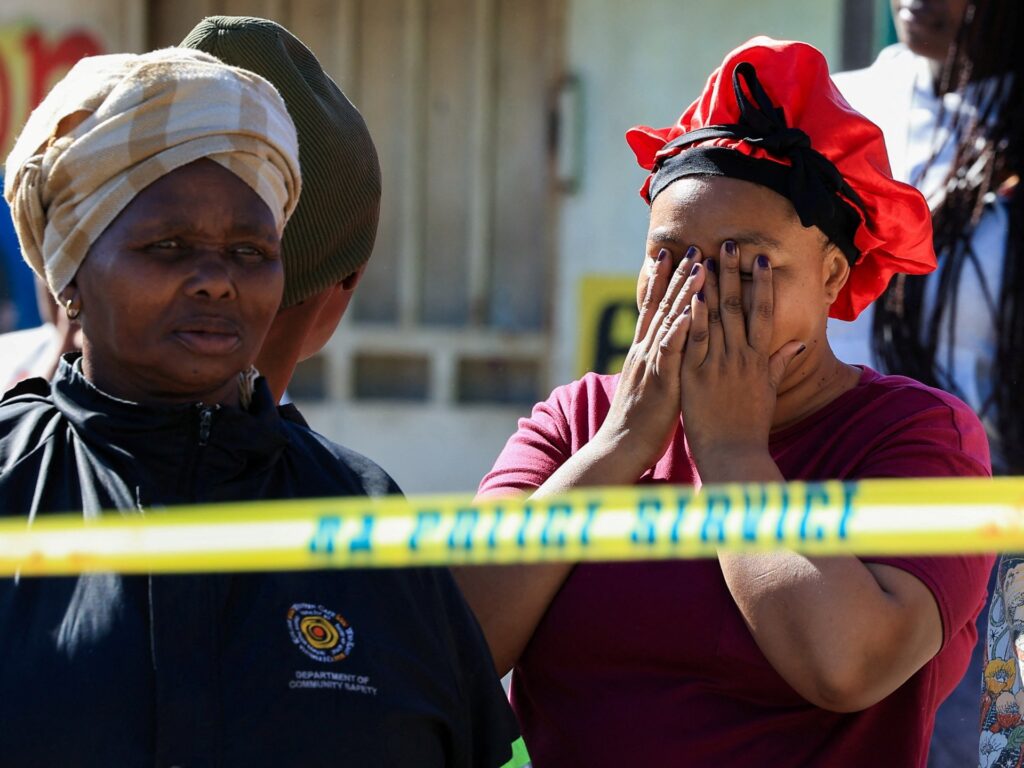
On the night of 26 September 2026, emergency medical services declared 17 victims dead at the scene of a mass shooting in Wedela township. Police reports indicate that the victims ranged in age from early teens to late fifties, and were largely members of the same extended family who had gathered for a birthday celebration, according to local eyewitnesses. The attack was carried out with automatic weapons, and the perpetrators fled the scene in two white pickup trucks, leaving behind a scene described by a resident as “a massacre on a scale we have never seen here.”
The South African Police Service (SAPS) quickly identified eight suspects believed to be linked to a local criminal syndicate that has been implicated in previous robberies and drug trafficking operations. Sources within the SAPS say the suspects are thought to have fled toward the neighboring town of Vanderbijlpark, where a coordinated road‑block operation is being prepared. While the police have not released the names of the alleged shooters, they have confirmed that all eight are currently on the national wanted list and that a reward of 100,000 rand has been offered for information leading to their arrest.
Investigators are also probing the possibility that the shooting was retaliation for a recent robbery at a nearby informal market, an incident that reportedly involved the same group of suspects. If confirmed, the Wedela attack could be part of a broader pattern of escalating vendettas between rival gangs, a hypothesis supported by a forensic analysis that linked the ballistics to weapons recovered in a previous raid on a known arms smuggling ring in the province.
Why the toll matters for South Africa’s security agenda
The loss of 17 lives in a single incident is a stark reminder of how gun violence can destabilise entire communities and strain an already overburdened criminal‑justice system. Analysts at the Institute for Security Studies argue that mass shootings such as Wedela expose the limits of South Africa’s current firearms control framework, which, despite the 2000 Firearms Control Act, still allows illegal weapons to circulate through porous borders and informal markets. The incident may therefore accelerate calls for stricter licensing, more comprehensive background checks, and a revamp of the disarmament‑and‑re‑registration (DARR) programme that has stalled since 2022.
Politically, the shooting arrives at a critical juncture for President Cyril Ramaphosa’s administration, which is grappling with public pressure to curb crime ahead of the 2027 general elections. Opposition parties, notably the Democratic Alliance, have seized on the tragedy to demand a parliamentary inquiry into police effectiveness and resource allocation. In a televised interview on SABC News, the Minister of Police, Bheki Cele, promised “swift justice” and pledged to deploy additional crime‑prevention units to Gauteng, but opposition lawmakers warned that without structural reforms, such measures amount to “band‑aid on a bleeding wound.”
Economically, the incident could deter investment in the region. Johannesburg’s reputation as the economic engine of Africa depends on a perception of relative safety for both local entrepreneurs and foreign investors. A spike in high‑profile violence often translates into higher insurance premiums, reduced tourism, and a slowdown in small‑business growth—factors that disproportionately affect township economies where informal traders already operate on razor‑thin margins.
Community response and diaspora concerns
In the immediate aftermath, community leaders in Wedela organised a candle‑light vigil that drew over 300 mourners, many of whom are members of the South African diaspora who returned for the funeral. Social media platforms were flooded with tributes, and a hashtag #WedelaWeRemember trended across Twitter and Instagram, highlighting a collective grief that transcended local boundaries. The diaspora’s reaction underscores how such tragedies resonate beyond South Africa’s borders, prompting South Africans abroad to lobby their host‑country governments for increased support in tackling trans‑national crime networks that often feed local violence.
Local NGOs, including the Youth Empowerment Initiative, have called for an urgent expansion of youth outreach programmes, arguing that the loss of so many young people signals a failure to provide viable alternatives to gang affiliation. The group announced plans to launch a series of after‑school workshops focused on vocational training and mental‑health counseling, funded in part by a diaspora crowdfunding campaign that raised over 250,000 rand within 48 hours. Such grassroots efforts are viewed by experts as essential complements to state‑led security measures, especially in areas where police presence is limited.
Religious organisations, too, have stepped in. The Anglican Diocese of Johannesburg issued a statement urging the government to “address the systemic injustices that breed violence,” while simultaneously offering counseling services to the bereaved families. For many in the diaspora, these local faith‑based interventions provide a familiar point of connection, reinforcing the notion that community resilience can be a powerful antidote to the trauma of mass violence.
What comes next: police hunt and policy debate
The police hunt for the eight suspects is now the focal point of national headlines. SAPS has announced a multi‑agency task force that includes the Hawks anti‑corruption unit and the National Directorate of Public Prosecutions, aiming to bring the alleged perpetrators to trial within six months. Sources inside the task force say that surveillance drones and mobile command units have been deployed along the suspected escape routes, and that the operation will be coordinated with the South African National Defence Force if the suspects cross provincial borders.
Beyond the immediate manhunt, the Wedela tragedy is expected to reignite a policy debate that has been simmering for years: the balance between punitive policing and community‑based prevention. Civil‑society coalitions are pushing for a legislative amendment that would allocate a larger share of the national budget to community policing units, which operate on a model of local recruitment and neighborhood engagement. Proponents argue that such units are better positioned to gather intelligence and defuse conflicts before they erupt into violence.
Finally, the incident may have implications for regional security cooperation. South Africa’s participation in the Southern African Development Community (SADC) security framework could be leveraged to address cross‑border arms smuggling, a factor that investigators suspect played a role in the Wedela shooting. If the government embraces a more collaborative approach, it could set a precedent for other SADC members grappling with similar spikes in organized crime, thereby turning a local tragedy into a catalyst for broader continental reform.
Quick Answers
How many people were killed in the Wedela township shooting?
Seventeen victims were declared dead at the scene of the Wedela shooting on 26 September 2026.
Who are the suspects in the Wedela shooting?
Police say eight suspects linked to a local criminal syndicate are being hunted, and a reward of 100,000 rand is offered for information.
What actions is the South African government taking after the shooting?
The government has launched a multi‑agency task force to locate the suspects and is pledging additional crime‑prevention units in Gauteng, while opposition calls for broader security reforms.
Source: www.aljazeera.com



💬 Comments 0