2026 DR Congo school fire in Bukavu kills over 20 children – cause, response & fallout
Background: Bukavu’s fragile security and education landscape
Bukavu, the capital of South Kivu province, sits on the eastern edge of the Democratic Republic of Congo (DRC) and has been a flashpoint of rebel activity for more than a decade. The city’s schools operate under constant threat from armed groups, intermittent power cuts and limited state oversight, which together erode basic safety standards that many children in more stable regions take for granted.
Even before the tragedy, enrollment rates in South Kivu lagged national averages, with UNICEF reporting that only 68 % of primary‑age children were regularly attending school in 2024. The limited resources allocated to school infrastructure mean many classrooms rely on makeshift wiring and outdated equipment, creating a ticking time‑bomb for fire hazards.
What happened: The fire, stampede and immediate toll
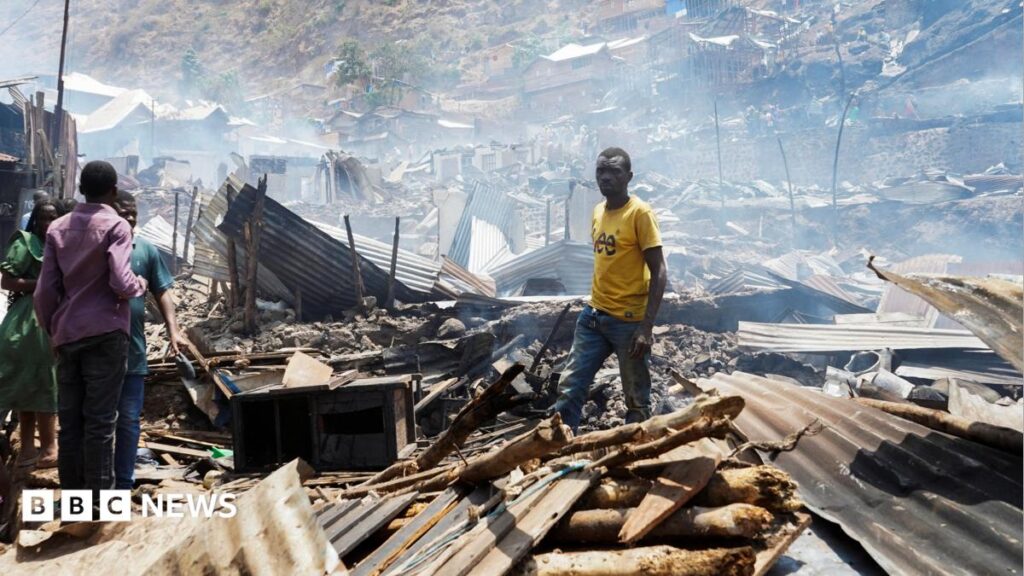
On the morning of 9 September 2026, a fire broke out simultaneously in two adjoining school buildings in the densely populated Kiroka district of Bukavu. Local officials said an overloaded electrical circuit ignited a ceiling panel, and the flames quickly spread through the wooden structures that house most classrooms.
Panic erupted as teachers tried to evacuate pupils. According to eyewitnesses, a narrow hallway became a choke point, and a stampede ensued, trapping children against locked doors. By the time firefighters arrived – delayed by road blockades imposed by nearby militia – the blaze had already consumed most of the ground floor.
The provincial health directorate confirmed that more than 20 children lost their lives, with dozens more injured. Several teachers also suffered burns and respiratory injuries, highlighting how the tragedy struck both students and the adult staff tasked with their protection.
Why it matters: Human capital loss and regional instability
Each child lost represents a direct hit to the DRC’s already fragile human capital pipeline. The World Bank estimates that every year of schooling forgone costs the country roughly 10 % of future earnings per child; a sudden loss of a generation of learners compounds this deficit and deepens poverty cycles in the eastern provinces.
Beyond the economic calculus, the fire amplifies a broader pattern of civilian vulnerability in conflict‑ridden eastern DRC. Schools have repeatedly been targeted or caught in cross‑fire, and the Bukavu incident underscores how everyday infrastructure can become a casualty of chronic insecurity, eroding public confidence in the state’s ability to protect its citizens.
The tragedy also risks fuelling displacement. Families grieving the loss of their children may join the already sizable refugee flow toward Rwanda and Uganda, straining host‑community resources and adding another layer to the humanitarian crisis that the United Nations Office for the Coordination of Humanitarian Affairs (OCHA) has flagged as “critical” for the region.
Reactions: Government, NGOs, diaspora and the international community
President Félix Tshisekedi’s office issued a statement of condolence and pledged a “swift, transparent investigation,” while the Ministry of Education announced an emergency fund of 200 million Congolese francs to support affected families. Critics, however, argue that past promises of school safety reforms have largely gone unimplemented, a sentiment echoed by local teachers’ unions.
International NGOs moved quickly. Save the Children dispatched a rapid‑response team to provide trauma counselling and temporary learning spaces, and UNICEF called for an urgent review of electrical safety standards in all schools across the volatile eastern provinces. The European Union’s humanitarian arm announced an additional €5 million for fire‑prevention equipment, but warned that funding will be contingent on demonstrable improvements in governance.
The Congolese diaspora, particularly in Canada and France, rallied on social media, launching a crowdfunding campaign that raised over $250,000 within 48 hours. Community leaders emphasized that the diaspora’s financial contributions could fill gaps left by delayed state aid, while also demanding accountability from officials in Kinshasa.
What’s next: Investigations, policy reforms and aid priorities
A joint commission comprising the Ministry of Interior, the national police and independent experts is slated to begin its inquiry next week. Early reports suggest the investigation will focus on electrical compliance, building permits and the role of armed groups in restricting emergency access.
If the probe confirms systemic negligence, civil‑society groups have warned they will push for the adoption of the African Union’s “Safe Schools Initiative,” which calls for mandatory fire‑safety audits, teacher training on evacuation protocols and the installation of fire‑extinguishing systems in all public schools by 2028.
In the short term, humanitarian actors are prioritising three actions: (1) setting up temporary classrooms to prevent a learning gap, (2) providing psychosocial support to surviving students and staff, and (3) distributing solar‑powered lighting kits to reduce reliance on hazardous wiring. Successful implementation could become a model for other conflict‑affected African states grappling with similar safety challenges.
Quick Answers
How many children were killed in the Bukavu school fire?
More than 20 children died, according to local officials.
What triggered the fire at the Bukavu schools?
Authorities say a short‑circuit in an electrical panel sparked the blaze, though investigations are ongoing.
What steps is the DRC government taking after the tragedy?
The government has promised a probe, pledged emergency aid, and announced plans to improve school safety standards.
Source: www.bbc.co.uk




💬 Comments 0