AI bubble fears grow as UK data‑centre debt tops £30bn, African tech investors 2026
The hidden financiers of the AI surge
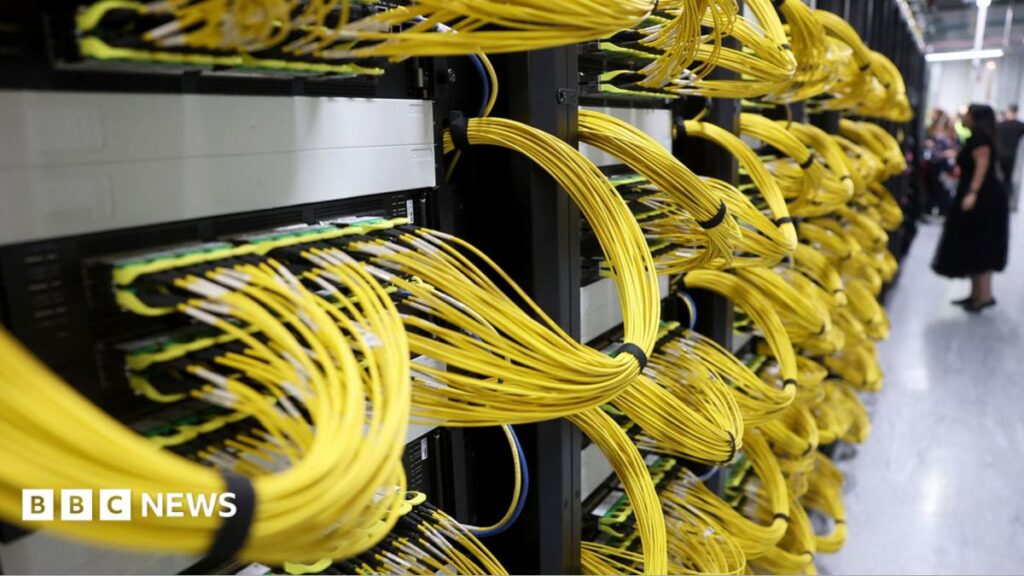
When headlines shout about the latest generative‑AI breakthrough, most readers picture silicon‑chip engineers and big‑tech CEOs. What they rarely see are the dozens of mid‑size financing firms that have quietly funded the construction of the data‑centres that power these models. In the United Kingdom, a cluster of specialist lenders, private‑equity funds and infrastructure trusts have been extending credit to companies that own or operate server farms, often on terms that hinge on projected AI demand staying high for years to come. These firms are not household names; they operate under the radar, but together they have amassed a portfolio of debt that now exceeds £30 billion, according to a recent report by the Financial Times.
The surge in AI‑related workloads has forced data‑centre operators to expand capacity at breakneck speed. To meet that demand, many have turned to debt financing rather than equity, because the former preserves ownership and allows rapid scaling. The resulting debt structure is heavily front‑loaded: large loans are taken out now, with repayment schedules that assume AI‑driven revenue streams will grow exponentially. If those revenue forecasts fall short, the debt load could become unsustainable, sparking a wave of defaults that would reverberate through the broader tech‑financing ecosystem.
How data‑centre debt is building a fragile foundation
The scale of borrowing is unusual for an industry that historically relied on long‑term, low‑interest bonds issued by utilities or telecoms. In the last 18 months, at least ten UK‑based data‑centre operators have taken on new loans ranging from £500 million to £5 billion each, often with covenants tied to AI‑related utilization rates. Analysts at Bloomberg have warned that a modest slowdown in AI spending—say a 10‑15 percent dip—could trigger covenant breaches, forcing lenders to demand immediate repayments or impose higher interest rates.
Compounding the risk is the fact that many of these facilities are built on speculative land deals, with developers counting on future AI‑centric tenants to fill the racks. If AI hype cools, the vacancy rates could rise, cutting rental income and leaving operators scrambling to service debt. In the United States, a similar pattern played out during the 2021 cloud‑computing boom, when several data‑centre projects stalled and lenders took heavy losses. The UK market now mirrors that vulnerability, but with a far larger debt pile.
Why the bubble worries matter for Africa’s tech ambitions
African tech hubs, from Nairobi’s “Silicon Savannah” to Lagos’s burgeoning fintech scene, have been eyeing the same AI wave that fuels Western data‑centre expansion. Venture capital firms based in South Africa and Kenya have begun allocating capital to AI‑focused startups, many of which need high‑performance compute at affordable rates. The prevailing model for accessing that compute is to lease capacity from overseas data‑centres, a practice that has become cheaper as global supply grew during the AI boom.
If the UK data‑centre debt bubble bursts, the immediate fallout could be a sharp rise in leasing costs as operators try to recoup losses. African startups that rely on imported cloud services would feel the pinch, potentially slowing product development and delaying funding rounds. Moreover, several African sovereign wealth funds and diaspora investors have recently placed money into UK data‑centre projects, attracted by the promise of high yields. A wave of defaults could erode those returns, reducing the pool of capital that African investors can redeploy into local infrastructure projects, such as the new data‑centre parks being built in Kenya’s Konza Technopolis or Nigeria’s Lagos Free Zone.
Reactions from investors, regulators and African entrepreneurs
London‑based lenders have begun tightening underwriting standards, with some refusing to fund new AI‑specific racks until usage forecasts can be independently verified. The Bank of England, in a recent speech, warned that “excessive leverage in the data‑centre sector could pose systemic risks if AI demand contracts,” and signalled that supervisory stress‑tests may soon include AI‑related exposure. Meanwhile, African venture capitalists are diversifying their compute strategy, negotiating longer‑term contracts with European providers that include price‑cap clauses, and even exploring partnerships to build locally‑owned edge‑computing nodes.
Diaspora tech founders are also taking note. A Nigerian AI‑driven health‑tech startup, for example, announced plans to shift part of its workload to a newly‑opened data‑centre in Nairobi, citing both latency advantages and a desire to hedge against volatility in the European market. This move reflects a broader trend of African firms seeking to “regionalise” their cloud footprint, a shift that could accelerate domestic data‑centre investment if the global bubble shows signs of deflating.
What could happen next – scenarios and strategies
If AI spending plateaus, lenders may push for restructuring deals that convert part of the debt into equity, giving them a stake in the data‑centre assets. Such conversions could open the door for African sovereign funds to acquire equity positions at a discount, turning a crisis into a long‑term ownership opportunity. Conversely, a rapid contraction could force some operators into bankruptcy, freeing up real‑estate assets that local governments could repurpose for public‑sector cloud initiatives, a prospect that has already been floated in South Africa’s Department of Communications.
For African investors and entrepreneurs, the prudent path is to build resilience now. That means negotiating multi‑year contracts with price floors, investing in local edge infrastructure to reduce reliance on overseas racks, and monitoring the health of the UK data‑centre debt market through specialist analytics platforms. By doing so, African tech ecosystems can avoid being caught off‑guard by a potential AI‑bubble correction and instead position themselves as the next frontier for sustainable, AI‑enabled growth.
Quick Answers
What is the total amount of debt held by UK data‑centre firms linked to AI growth?
The combined debt of UK data‑centre operators tied to AI demand now exceeds £30 billion.
How could a slowdown in AI spending affect African tech startups?
A slowdown could raise cloud‑leasing costs and reduce returns for African investors who have stakes in UK data‑centres, limiting funding for local AI projects.
Are African countries planning their own data‑centre expansions?
Yes, nations like Kenya and Nigeria are developing new data‑centre parks to host edge‑computing nodes and reduce dependence on overseas providers.
Source: www.bbc.co.uk




💬 Comments 0