Amazon Air cargo plane overshoots Miami runway, damages aircraft – Sep 2026
Amazon Air’s rapid expansion and the Miami hub
Since launching its dedicated freight arm in 2016, Amazon Air has grown from a handful of leased aircraft to a fleet of more than 80 planes, positioning the company as a direct rival to traditional carriers such as FedEx and UPS. The strategy hinges on a network of regional hubs that can shuttle packages across the United States in a matter of hours, and Miami International Airport (MIA) is a cornerstone of that network because of its proximity to Latin America and the Caribbean, as well as its capacity to handle high‑volume cargo flights.
Miami’s role has become even more critical after Amazon announced in early 2025 that it would use the airport as a launchpad for a new “South‑America to North‑America” corridor, aiming to shorten delivery times for customers in Brazil, Colombia and other emerging markets. The airport’s runway 9L/27R, measuring 12,000 feet, is one of the longest in the region, making it the preferred landing strip for the heavy‑payload Boeing 767‑300F and 777F freighters that Amazon operates.
What happened on September 6, 2026
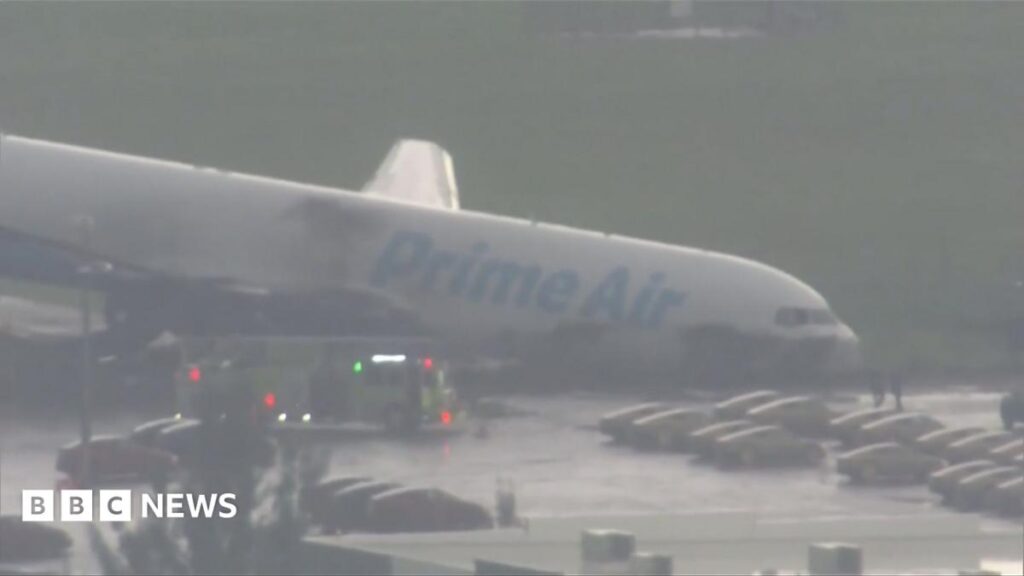
At approximately 02:17 a.m. local time, an Amazon Air Boeing 767‑300F attempted to land on runway 9L during a low‑visibility thunderstorm. According to the Miami‑Dade Police Department, the aircraft touched down several hundred feet beyond the optimal touchdown zone, failed to decelerate in time, and overshot the runway’s end, coming to a stop on the adjacent grass area. The impact ripped the rear landing gear and caused minor structural damage to the fuselage, but there were no injuries among the two pilots or the ground crew.
Airport officials quickly closed the runway for safety inspections and to clear debris. Amazon’s operations center in Seattle issued a statement confirming that the flight was diverted to a nearby cargo terminal for a thorough examination, and that the airline would work with the Federal Aviation Administration (FAA) to determine the cause. Early speculation points to a combination of wet runway conditions, possible gust‑induced wind shear, and a brief loss of thrust, though the final report is still pending.
Why the incident matters beyond the tarmac
The overshoot raises questions about the strain that Amazon’s aggressive flight schedules are placing on pilots and infrastructure. Industry analysts note that the company’s push for same‑day delivery has led to tighter turnaround times, often requiring crews to operate in marginal weather windows that traditional carriers might avoid. If the FAA finds systemic issues, Amazon could face tighter slot restrictions at busy airports like MIA, which would ripple through its broader logistics network and potentially delay shipments to millions of U.S. consumers.
From a safety perspective, the event adds to a string of cargo‑plane incidents worldwide in the past two years, including a DHL freighter that suffered a runway excursion in Dubai and a FedEx aircraft that experienced a hard landing in Frankfurt. These occurrences have prompted regulators in Europe and Asia to call for stricter fatigue‑management policies for cargo pilots, a conversation that is now being echoed in the United States as the sector’s traffic volume approaches pre‑pandemic levels.
The African angle: how a Miami mishap could echo on the continent
While the crash occurred on U.S. soil, its fallout could affect African exporters that rely on Amazon’s trans‑Atlantic freight routes. In 2024, Amazon announced a partnership with Lagos‑based logistics startup Kobo360 to funnel Nigerian manufactured goods through its Miami hub for faster distribution to North America and Europe. Any prolonged runway closure or operational slowdown at MIA could delay these shipments, raising costs for African SMEs already navigating thin profit margins.
Moreover, Amazon’s growing air‑cargo footprint is part of a larger trend of global e‑commerce giants seeking to bypass traditional maritime lanes that dominate African trade. If safety concerns force Amazon to re‑evaluate its hub strategy, the company might accelerate plans for a dedicated cargo facility in Johannesburg or Nairobi—both of which have been touted as future African gateways. Such a shift would reshape cargo flows, potentially offering new export corridors for African agricultural products but also intensifying competition for local carriers like Ethiopian Airlines Cargo.
What’s next: investigations, possible reforms, and industry outlook
The FAA has opened a formal investigation under its Aviation Safety Action Program, with a preliminary report expected within 90 days. In parallel, Amazon’s internal safety board is reviewing pilot logs, weather data, and aircraft maintenance records to pinpoint any procedural lapses. Sources close to the company say that Amazon may temporarily reduce night‑time arrivals at Miami while the runway is inspected and repaired, a move that could shave a few hours off its promised delivery windows.
Looking ahead, the incident could accelerate discussions about a unified cargo‑pilot fatigue standard in the United States, an initiative championed by the International Air Transport Association (IATA). For Amazon, the episode is likely to prompt a reassessment of its “always‑on” logistics model, balancing speed with the operational resilience that regulators and customers alike expect. How the airline adapts will be a bellwether for the broader e‑commerce logistics sector, especially for markets that depend on rapid, air‑borne supply chains.
Quick Answers
What caused the Amazon Air plane to overshoot the runway in Miami?
Preliminary reports suggest wet runway conditions, possible wind shear, and a brief loss of thrust contributed to the overshoot, but the FAA investigation is still ongoing.
Will the Miami runway closure affect Amazon deliveries in Africa?
If the runway stays closed for an extended period, shipments routed through Miami—especially those from Nigerian exporters partnered with Amazon—could face delays, raising costs for African sellers.
What could change for Amazon Air after this incident?
Amazon may tighten night‑time landing schedules at Miami, review pilot fatigue policies, and possibly speed up plans for new African cargo hubs to diversify its network.
Source: www.bbc.co.uk




💬 Comments 0