Arsenal’s Leah Williamson Penalty Right: VAR Review Explains Women’s Champions League Rule
Background: The Incident and the Rule
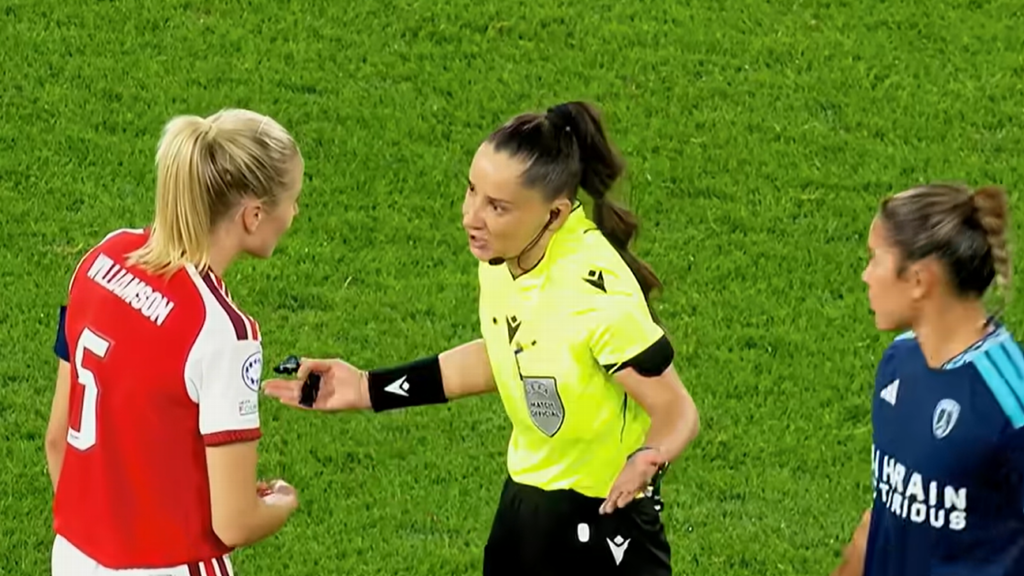
During the second leg of the Women’s Champions League quarter‑final, Arsenal’s captain Leah Williamson lifted the ball with her hands after a goal‑kick was awarded to Barcelona. The referee immediately pointed to the penalty spot, a decision that left many fans and pundits baffled.
The rule in question is Law 12 of the Laws of the Game, which states that a player may not handle the ball to prevent a goal‑kick from being taken. The handling offense is punishable by an indirect free‑kick for the opposing side, but if the infraction occurs inside the penalty area, the referee must award a penalty kick. This nuance is often missed by casual observers.
The incident sparked a heated debate on social media, with some accusing the officials of over‑reaching. However, the subsequent VAR review clarified that the decision was grounded in the letter of the law, not an arbitrary call.
What the VAR Decision Entailed
UEFA’s VAR protocol allows the on‑field referee to request a review for any potential “clear and obvious error” related to a handling offence. In this case, the VAR team replayed the incident from multiple angles, confirming that Williamson’s hand made contact with the ball before it was kicked.
The video showed that the ball had already left the goalkeeper’s hands and was rolling toward the goal‑kick spot when Williamson intervened. Because the ball was still in play and inside the penalty area, the rule mandated a penalty rather than a simple indirect free‑kick.
After the review, the referee confirmed the penalty, and Barcelona’s forward scored from the spot. The decision was later endorsed by UEFA’s Refereeing Committee, which released a brief statement noting that the correct application of Law 12 had been upheld.
Why the Penalty Was Technically Correct
The core of the rule is intent: a player who deliberately handles the ball to gain an advantage is penalised. Williamson’s action—picking the ball up—clearly fit that definition, even if her motive was to protect a teammate or to slow the restart.
Furthermore, the location of the offence matters. The Laws of the Game specify that a handling offence inside the penalty area results in a penalty kick. Because the ball had not yet been placed for the goal‑kick, the area was still considered part of open play, making the penalty the correct sanction.
Critics who argued that an indirect free‑kick would have been fair overlook the fact that the ball was already inside the penalty box when the handling occurred. The rule does not differentiate between a deliberate foul and a clumsy touch in that zone; the penalty is automatic.
Implications for Women’s Football and African Viewership
The controversy underscores how VAR decisions can shape public perception of women’s football. In markets like Nigeria, Kenya and South Africa, where streaming of UEFA women’s matches is growing, a clear explanation of the rule helps build credibility and encourages deeper engagement.
African fans have increasingly followed Arsenal Women, partly because of the club’s outreach programmes and the presence of African‑born talent in the broader Arsenal ecosystem. A transparent VAR process reassures these viewers that the competition is governed by the same rigorous standards as the men’s game.
Beyond viewership, the incident may influence how CAF (the Confederation of African Football) approaches VAR implementation in its own women’s club tournaments. Officials in Egypt and Morocco have cited UEFA’s handling of similar cases as a benchmark for training referees across the continent.
What Comes Next: VAR Protocols and Future Matches
UEFA has announced a review of its VAR guidelines to ensure that handling offences inside the penalty area are communicated more clearly to fans during broadcasts. Expect on‑screen graphics that explain the law in real time, a move that could reduce confusion in future high‑stakes matches.
For Arsenal, the incident serves as a reminder to educate players on the nuances of the Laws of the Game. Coaching staff are likely to incorporate scenario‑based drills that highlight prohibited handling actions during set‑piece situations.
In the broader context, the episode may accelerate discussions about standardising VAR training across all continents. African refereeing bodies have already expressed interest in joint workshops with UEFA, aiming to raise the technical level of officiating in the rapidly expanding women’s game.
Quick Answers
What rule did Leah Williamson break to receive a penalty?
She handled the ball inside her own penalty area before a goal‑kick could be taken, violating Law 12, which mandates a penalty for a handling offence in that zone.
How does VAR work in the Women’s Champions League?
VAR reviews any clear and obvious error related to goals, penalties, red cards and handling offences, using multiple camera angles to advise the on‑field referee.
Will this decision affect African women’s clubs in CAF competitions?
The ruling is prompting CAF to align its own VAR protocols with UEFA, meaning African clubs may see similar strict enforcement of handling rules in future tournaments.
Source: www.espn.com




💬 Comments 0