El Salvador deploys 2,000 troops to Haiti in 2026 mission to rescue four missing soldiers
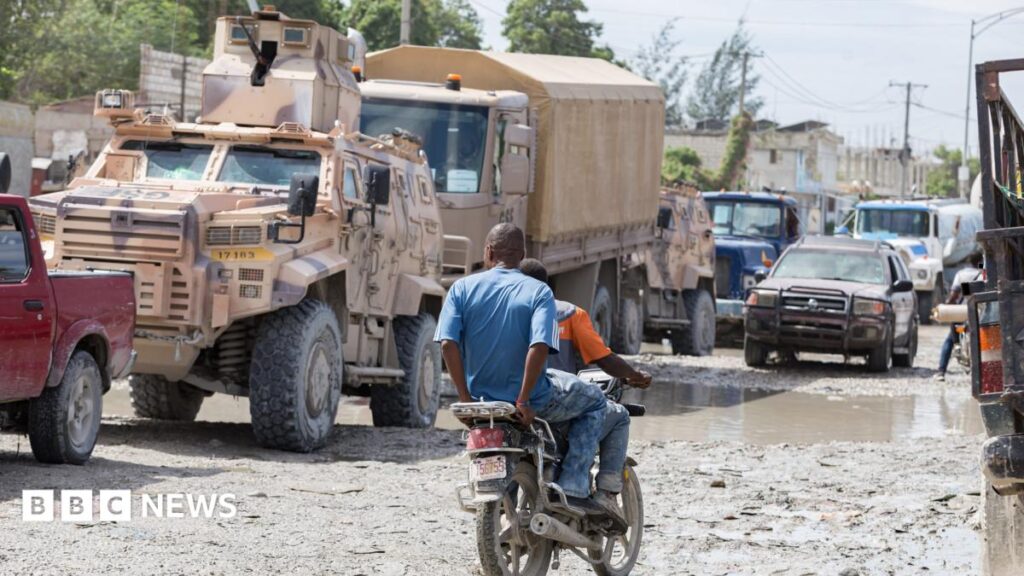
Haiti’s security vacuum and the multinational force
Since the collapse of the Haitian National Police in early 2024, the country has been plagued by gang‑controlled neighborhoods, rampant kidnappings and a humanitarian crisis that has drawn the attention of the United Nations and a coalition of foreign militaries. The UN‑backed Multinational Security Support Mission (MSSM), originally led by Kenya, has been tasked with stabilising the capital, Port‑au‑Prince, and protecting critical infrastructure. By mid‑2026 the force comprised roughly 5,000 soldiers from Kenya, the United States, Canada, and several Caribbean states, but gaps in manpower and logistics have persisted.
El Salvador entered the mission in March 2026 after President Nayib Bukele pledged to contribute “elite” troops to help restore order. Bukele’s decision was framed as a demonstration of the country’s growing security export model, which has already seen Salvadoran police deployed to Honduras and Guatemala. The Salvadoran contingent, known as the “Territorial Guard”, is equipped with modern small‑arms and a reputation for rapid, hard‑line operations against organized crime.
The ambush and El Salvador’s rapid deployment
On 23 October 2026, a patrol of four Salvadoran soldiers on a routine convoy near the outskirts of Port‑au‑Prince was hit by an improvised‑explosive device followed by small‑arms fire, an attack that local witnesses described as a coordinated ambush by a gang known as “G9”. Two of the soldiers were killed on the spot, while the other two went missing in the chaos. The incident sparked immediate concern within the MSSM command, which feared a potential escalation if the gang felt emboldened.
Within 24 hours, the Salvadoran Ministry of Defense announced the dispatch of an additional 2,000 troops to Haiti, citing the need to locate and retrieve the missing soldiers and to reinforce the security perimeter around the capital. According to a statement from the Salvadoran armed forces, the reinforcements include a mechanised infantry battalion, a medical team, and a small contingent of engineers tasked with improving road access for rescue operations.
Regional politics: why a Central American army is stepping in
Bukele’s decision to send a sizable force to the Caribbean is part of a broader strategy to position El Salvador as a security hub for the Global South. Analysts at the Wilson Center note that the move allows Bukele to showcase his “law‑and‑order” brand abroad, while also securing political goodwill from the United States, which has been eager to see more partners share the burden of Haitian stabilization.
The deployment also reflects a shifting pattern in which non‑traditional actors—such as Kenya’s earlier involvement—are filling voids left by traditional Western powers. By contributing troops, El Salvador hopes to gain leverage in future UN peace‑keeping negotiations and to secure economic concessions, such as preferential trade agreements with Caribbean nations, according to sources close to the Salvadoran foreign ministry.
Ripple effects for Haitian civilians and the African diaspora
For ordinary Haitians, the arrival of 2,000 additional foreign soldiers is a double‑edged sword. On one hand, the increased security presence raises hopes of reduced gang violence and safer access to markets and schools. On the other, past experiences with foreign forces have sometimes led to heavy‑handed tactics, civilian casualties and strained community relations. Local NGOs, many of which are run by members of the Haitian‑African diaspora in the United States and Canada, warn that any misstep could undermine trust in humanitarian aid programs that already operate under precarious conditions.
The Haitian diaspora in West Africa—particularly in Ghana’s Accra and Senegal’s Dakar, where small communities of Haitian entrepreneurs have set up restaurants and cultural centres—has been closely monitoring the situation. According to a report by the African Diaspora Forum, a resurgence of violence in Haiti could trigger a new wave of migration, placing additional pressure on African countries that have recently opened limited visa pathways for Caribbean nationals seeking work or education.
Looking ahead: rescue prospects and the future of foreign troops in Haiti
Early indications suggest that the added Salvadoran troops have already improved search‑and‑rescue capabilities. Drone footage released by the MSSM shows coordinated sweeps of the area where the ambush occurred, and a joint task force of Salvadoran engineers and Kenyan engineers is working to clear debris that may be blocking access routes. However, sources close to the mission say that locating the two missing soldiers remains challenging because the gang has likely moved them to a concealed safe house outside the city limits.
Beyond the immediate rescue, the deployment raises questions about the long‑term composition of the multinational force. With El Salvador’s contingent now accounting for roughly 30 % of the MSSM’s ground troops, some observers fear a potential over‑reliance on a single foreign power whose domestic politics could shift abruptly. The United Nations has called for a review of the mission’s mandate later this year, aiming to balance security objectives with respect for Haitian sovereignty—a debate that will undoubtedly affect future contributions from both African and Latin American partners.
Quick Answers
How many troops did El Salvador send to Haiti in 2026?
El Salvador deployed an additional 2,000 soldiers to Haiti after the ambush on 23 October 2026.
What caused the four Salvadoran soldiers to go missing?
The soldiers were ambushed by a gang near Port‑au‑Prince, resulting in two deaths and two soldiers disappearing during the attack.
What is the broader mission of foreign troops in Haiti?
Foreign forces are part of a UN‑backed Multinational Security Support Mission aimed at stabilising Haiti’s capital and curbing gang violence.
Source: www.bbc.co.uk

💬 Comments 0