FIFA agrees in principle to federation payments from record 2026 World Cup windfall, Gianni Infantino says
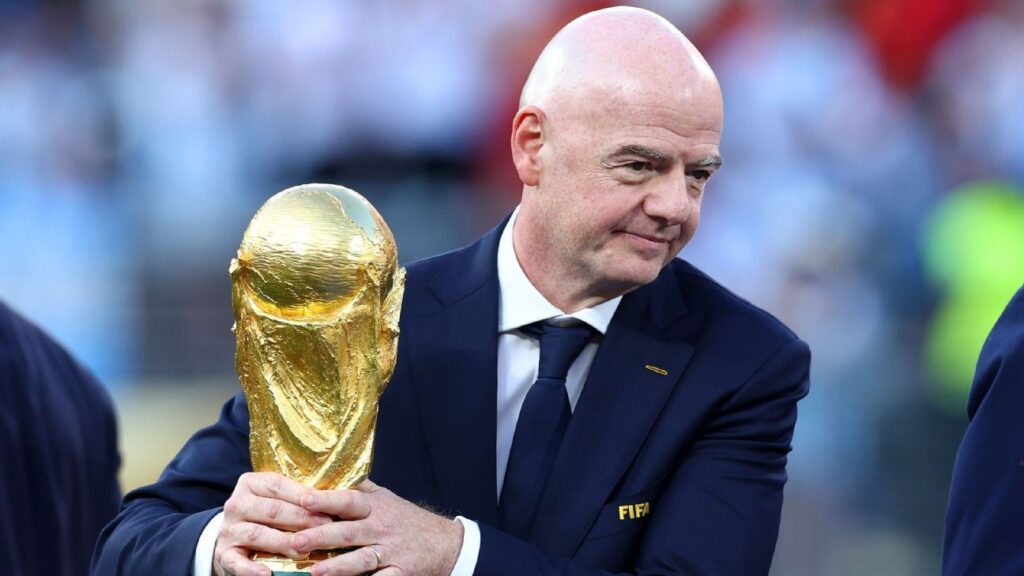
Record World Cup revenues spark a new funding proposal
The 2026 World Cup, co‑hosted by the United States, Canada and Mexico, is on track to become the most lucrative edition in history, with projected commercial revenues topping $12 billion, according to FIFA’s financial outlook. The unprecedented cash flow has prompted UEFA and CONCACAF to draft a tentative plan that would channel a share of the surplus directly to national football federations worldwide.
FIFA president Gianni Infantino publicly endorsed the idea during a press briefing in Zurich, describing it as a "step toward a fairer distribution of the sport’s wealth." While the proposal is still in the negotiation phase, the principle of earmarking a portion of the windfall for member associations has now been secured, setting the stage for a potential overhaul of how football’s global finances are allocated.
Why the cash could be a game‑changer for African football
For the Confederation of African Football (CAF) and its 54 member associations, the promise of additional funding arrives at a critical juncture. Many African federations rely heavily on limited government subsidies and sporadic sponsorships, leaving development programmes for youth, women's football and infrastructure under‑funded. An infusion of even a modest percentage of the World Cup surplus could bridge funding gaps that have long hampered competitive progress.
If the distribution formula mirrors UEFA’s recent model – which earmarks 5 % of net tournament revenue for member federations – African federations could collectively receive upwards of $300 million over the next four years. That pool, when divided proportionally, would give smaller nations like Burundi or Lesotho a few million dollars each, enough to upgrade training facilities, launch grassroots leagues, and support women's national teams ahead of the 2027 Africa Women’s Cup of Nations.
Historical context: past grievances and missed opportunities
African football officials have repeatedly voiced frustration over what they see as an uneven playing field in FIFA’s revenue sharing. In 2021, CAF President Patrice Motsepe warned that African federations were “systematically left out of the financial loop” when FIFA allocated broadcasting and marketing revenues. The lack of a transparent, formula‑based distribution has been cited as a factor in the continent’s limited representation in later stages of major tournaments.
The new proposal, however, could address those grievances if it includes clear criteria such as performance‑based bonuses, gender‑equity allocations, and a baseline grant for all members. Critics caution that without binding commitments, the agreement may remain symbolic. Nonetheless, the fact that FIFA’s top brass has signalled willingness to act marks a departure from the status‑quo of ad‑hoc disbursements.
Reactions from African federations, clubs and the diaspora
National federations across the continent have welcomed the news with cautious optimism. The Nigerian Football Federation released a statement saying the potential funds could “accelerate the professionalisation of our domestic leagues and provide a sustainable pathway for young talent.” Similar sentiments were echoed by the South African Football Association, which highlighted the need for dedicated resources for women’s football.
The African diaspora, particularly in Europe and North America, is also watching closely. Many diaspora‑based investors and talent scouts see the funding as a catalyst for a stronger export market of African players. An expanded financial base could enable clubs to retain promising youngsters longer, thereby increasing the value of future transfer fees that benefit both clubs and national teams.
What’s next: distribution mechanics and potential roadblocks
The next phase will involve detailed negotiations on the exact percentage of the windfall to be allocated, the formula for splitting the money, and oversight mechanisms. FIFA has indicated that a joint committee comprising representatives from UEFA, CONCACAF, CAF and other confederations will draft the final framework by early 2027, ahead of the 2028 African Cup of Nations.
Potential obstacles include differing fiscal priorities among confederations, concerns over corruption, and the need to align the disbursement schedule with national budgeting cycles. Moreover, some African analysts warn that a one‑off cash injection could create dependency unless paired with capacity‑building programmes that ensure the money is spent on long‑term development rather than short‑term fixes.
Quick Answers
How much money could African football federations receive from the 2026 World Cup windfall?
If FIFA adopts a 5 % allocation model, African federations could collectively receive around $300 million over the next four years.
When will the distribution formula for the World Cup surplus be finalised?
FIFA aims to have a final distribution framework in place by early 2027, before the 2028 Africa Cup of Nations.
Why is the proposed funding especially important for women's football in Africa?
Additional funds can support dedicated women’s leagues, coaching education and tournament hosting, helping close the gender‑gap highlighted by CAF’s recent development plans.
Source: www.espn.com




💬 Comments 0