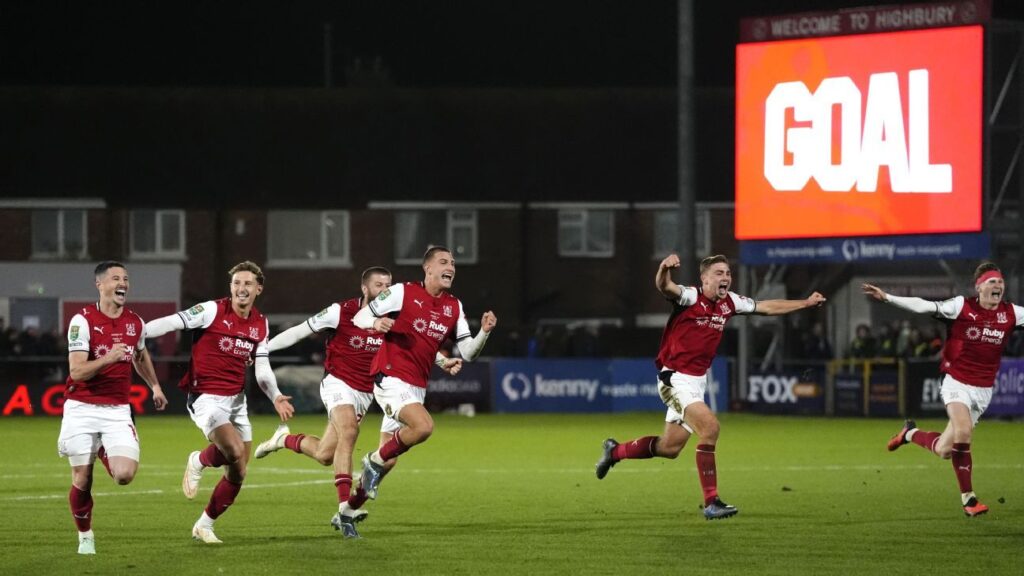
Fleetwood Town 1-0 Arsenal upset in 2026 League Cup – why it matters for African fans
Background: The League Cup’s reputation for giant‑killings
Since its inception in 1960, England’s League Cup – now called the Carabao Cup for sponsorship reasons – has been a stage where lower‑division clubs can test themselves against the country’s elite. Unlike the FA Cup, the competition’s schedule favours early‑round matches at the smaller clubs’ grounds, giving underdogs a home‑field edge and a chance to draw larger crowds than they normally would. Over the decades, moments such as Lincoln City’s 2‑1 win over Burnley in 2017 or Sutton United’s 3‑2 triumph over Coventry City in 2020 have cemented the cup’s “David vs. Goliath” narrative.
These upsets are more than just headline‑grabbers; they serve as a financial lifeline for clubs outside the Premier League. Gate receipts, broadcast royalties and the ensuing media buzz can boost a club’s annual budget by several hundred thousand pounds, a sum that can mean the difference between survival and administration for many League One and Two sides.
The shock: Fleetwood Town’s 1‑0 victory over Arsenal
On 27 October 2026, Fleetwood Town, a League One side based in Lancashire, travelled to the Emirates Stadium and held Arsenal to a 0‑0 draw before clinching a 1‑0 win in extra time through a late header from midfielder Sam O'Connor. The result sent shockwaves through the football world, prompting ESPN to label it “the biggest upset in League Cup history”. While Arsenal entered the match as heavy favourites, missing several first‑team regulars due to injury, the tactical discipline of Fleetwood’s manager, Scott Brown, proved decisive.
The win not only eliminated a top‑five Premier League club but also guaranteed Fleetwood a place in the quarter‑finals, where they will face another Premier League opponent. For a club whose average attendance hovers around 5,000, the exposure generated by the upset is expected to attract new sponsors and increase merchandise sales dramatically.
Why the upset matters beyond the scoreline
Financially, the victory unlocks a share of the competition’s prize fund that could cover roughly 30 % of Fleetwood’s operating costs for the season, according to the club’s latest financial report. Moreover, the televised match delivered a spike in viewership that outperformed many Premier League fixtures, showing broadcasters that lower‑tier clubs can generate compelling content that keeps audiences glued.
From a sporting perspective, the result highlights the growing tactical sophistication in the lower leagues. Managers like Brown are increasingly adopting data‑driven approaches, employing pressing patterns and set‑piece routines that rival those of top‑flight teams. This evolution narrows the performance gap and makes cup competitions more unpredictable, which in turn fuels fan interest across all levels of English football.
African connections: players, markets and diaspora enthusiasm
One of the most compelling angles for African readers is the presence of several African‑born players in Fleetwood’s squad, most notably Nigerian winger Chukwudi Okonkwo, who scored the winning assist in the previous round. Okonkwo’s performances have already attracted attention from clubs in the South African Premier Division and the Egyptian league, illustrating how a high‑profile cup upset can accelerate the scouting of African talent in lower‑tier English football.
The diaspora community in the UK, which includes a sizable Nigerian and Ghanaian population, turned out in large numbers to watch the match, both at the Emirates and via streaming platforms. Social media chatter from Lagos, Nairobi and Accra showed a surge in engagement, with fans celebrating the underdog narrative that resonates deeply across African football cultures, where cup competitions often provide the only route for smaller clubs to gain continental recognition.
What the upset could mean for the competition’s future
If the buzz surrounding Fleetwood’s triumph translates into higher television ratings, the League Cup may see a renegotiation of its broadcast deals, potentially securing more revenue for clubs in the lower divisions. This would align the competition more closely with the FA Cup’s model, where “giant killings” are a key selling point for sponsors and advertisers.
The result may also prompt the Premier League clubs to reassess how they approach early‑round cup games. Some analysts, such as former England midfielder Emile Heskey, argue that top clubs will field stronger line‑ups to avoid the reputational damage of another upset, which could, paradoxically, diminish the very unpredictability that makes the cup special.
Reactions and early analysis
Arsenal’s manager, Mikel Arteta, admitted after the match that the team “underestimated the opponent” and pledged to use the defeat as a learning experience ahead of the Premier League fixtures. In contrast, Fleetwood’s Scott Brown praised his players’ “mental toughness” and hinted that the club could aim for promotion to the Championship if the momentum continues.
Fans across Africa have taken to Twitter with hashtags like #FleetwoodShock and #AfricanGiants, celebrating the win as a reminder that football’s biggest stories are not confined to the elite clubs. Several African sports blogs have already run feature pieces on how the upset could open doors for more African players to showcase themselves on English television.
Quick Answers
What was the final score of Fleetwood Town vs Arsenal in the 2026 League Cup?
Fleetwood Town won 1‑0 after extra time.
How does the upset affect African players in lower‑league English clubs?
The win highlights African talent like Nigerian winger Chukwudi Okonkwo, increasing scouting interest from clubs across Africa.
Will this result change how Premier League clubs approach the League Cup?
Analysts say top clubs may field stronger line‑ups to avoid similar upsets, potentially altering the competition’s dynamics.
Source: www.espn.com




💬 Comments 0