France 2026 student protests see 400+ arrests over school funding, diaspora eyes impact
Background: A simmering crisis in French secondary education
Since the start of the 2026 academic year, French high schools have been grappling with chronic under‑funding, outdated facilities and a perceived neglect of student voices. The Ministry of National Education announced a modest budget increase in March, but unions and parent‑teacher associations argued it fell short of the €2 billion shortfall identified by the Inspectorate. The discontent has been building for months, echoing the 2023 nationwide walk‑outs over exam reforms.
The spark this time came from a coalition of student unions in Île‑de‑France, who organized a sit‑in at the Lycée Henri‑Matisse in Paris to demand immediate repairs to heating systems and the reinstatement of extracurricular funding. Social media hashtags like #EcolesEnPanne and #NosVoixOntValeur trended across Twitter and TikTok, mobilising thousands of pupils across the country and drawing attention to a generation that feels sidelined by a bureaucracy perceived as out of touch.
Escalation and the wave of detentions
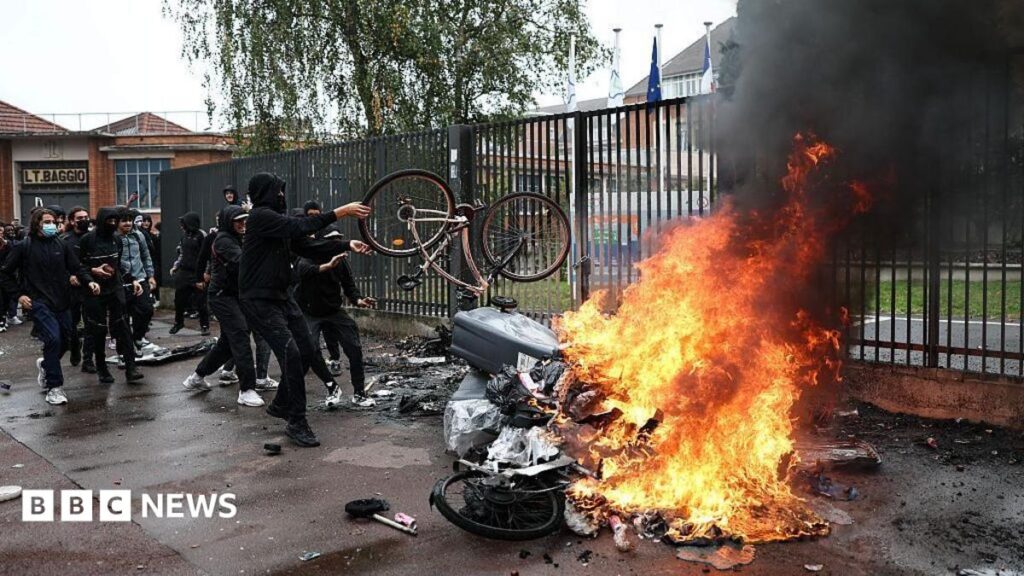
What began as peaceful assemblies turned volatile on September 26 when police deployed tear‑gas and water‑cannons to disperse a crowd of roughly 2,000 students gathered outside the Ministry’s headquarters. According to a statement from the Paris Police Prefecture, officers were responding to barricades and attempts to breach the building’s perimeter. The confrontation resulted in more than 400 students being placed in custody, many of them under the age of 18, marking the largest single‑day arrest count in French protest history since the 2005 riots.
Human‑rights NGOs such as Amnesty International quickly condemned the heavy‑handed approach, urging the French government to respect the right to peaceful assembly and to release all minors detained without charge. Families of the arrested reported that many were held in temporary holding cells for up to 48 hours before being transferred to juvenile facilities, sparking a fresh debate over the proportionality of law‑enforcement tactics in youth protests.
Why the protests matter beyond the schoolyard
The unrest underscores a broader societal tension: a growing gap between France’s youth and the state’s capacity to meet their basic needs. Economists warn that chronic under‑investment in education could erode human‑capital formation, ultimately weakening France’s competitiveness in a rapidly digitising global economy. Moreover, the protests have forced the government to confront a political backlash that could affect the upcoming municipal elections in early 2027, where education policy is already a key campaign theme.
Politically, the episode has emboldened opposition parties, particularly La France Insoumise, which has pledged to allocate an additional €3 billion to secondary schools if it gains a parliamentary majority. The protests also revive memories of the 2019 “Gilets Jaunes” movement, suggesting that fiscal grievances can quickly morph into wider challenges to the legitimacy of the Republic’s social contract.
African diaspora and francophone Africa watch closely
France’s African diaspora, estimated at over 5 million people, feels the ripple effects of the protests acutely. Many children of immigrants from Senegal, Mali and the Democratic Republic of Congo attend the very high schools now on strike, and parents fear that prolonged disruptions could jeopardise their children’s chances of entering the competitive French university system. Community organisations in Paris’s 18th arrondissement have organised legal aid clinics to assist detained students, highlighting the intersection of education activism and immigrant rights.
Beyond the borders of France, francophone African nations are observing the unrest as a cautionary tale. Countries like Côte d’Ivoire and Cameroon, which have recently undertaken their own school‑infrastructure upgrades, are wary that similar budget constraints could ignite comparable dissent. Scholars at the University of Dakar note that the French protest model may inspire youth movements across West Africa, where students have already taken to the streets in Ghana and Nigeria demanding better internet access and safer school environments.
What comes next: possible scenarios and policy paths
In the short term, the Ministry has announced a provisional “Emergency School Funding Package” of €500 million, aimed at repairing heating systems and restoring extracurricular budgets in the most affected institutions. However, critics argue that the sum is a stop‑gap measure that fails to address systemic under‑funding. Negotiations between student unions and the government are slated to resume next week, with the possibility of a national strike that could halt classes across the country for up to a week.
Long‑term solutions may involve a restructuring of the education budget, greater decentralisation of school financing to regional authorities, and the introduction of a student‑representative council within the Ministry. If the protests sustain momentum, they could catalyse legislative reforms that reshape how France allocates resources to its secondary schools, potentially setting a precedent for other European nations grappling with similar fiscal pressures. For African stakeholders, the outcome will signal whether France can maintain its reputation as a destination for quality education and a reliable partner in francophone development projects.
Quick Answers
How many students were detained during the September 2026 French school protests?
More than 400 students, many under 18, were taken into police custody during the escalation on September 26, 2026.
What are the main demands of the protesting French high‑school students?
They are calling for immediate repairs to school infrastructure, restoration of extracurricular funding, and a larger, transparent increase in the education budget.
How might the protests affect African diaspora students in France?
Disruptions could jeopardise their exam preparation and university admission prospects, while community groups are mobilising legal aid to support detained students.
Source: www.bbc.co.uk




💬 Comments 0