Genesis GV90 2026 Luxury EV Launch: Hyundai’s Flagship Enters U.S., Impact on Africa
Background: Genesis’s pivot to electric luxury
Genesis, Hyundai’s premium marque, has spent the last few years reshaping its identity from a traditional gasoline‑powered sedan maker to a serious contender in the electric‑vehicle (EV) arena. The brand’s first all‑electric model, the GV70 EV, arrived in 2023, but it was positioned as a compact crossover, leaving a gap at the top‑end of its lineup.
Industry analysts note that the luxury EV segment is now dominated by a handful of players—Tesla, Mercedes‑EQ, and Porsche—leaving room for new entrants that can combine high‑tech features with a distinct design language. Hyundai’s decision to launch the GV90 as a flagship EV signals its ambition to claim a slice of that premium market.
The GV90 follows a broader strategy across Hyundai Motor Group, which has pledged to roll out 23 EVs globally by 2027. By expanding Genesis to seven models in the United States, the group aims to leverage economies of scale while differentiating its luxury arm from its mass‑market offerings.
What the GV90 brings: design, specs and market positioning
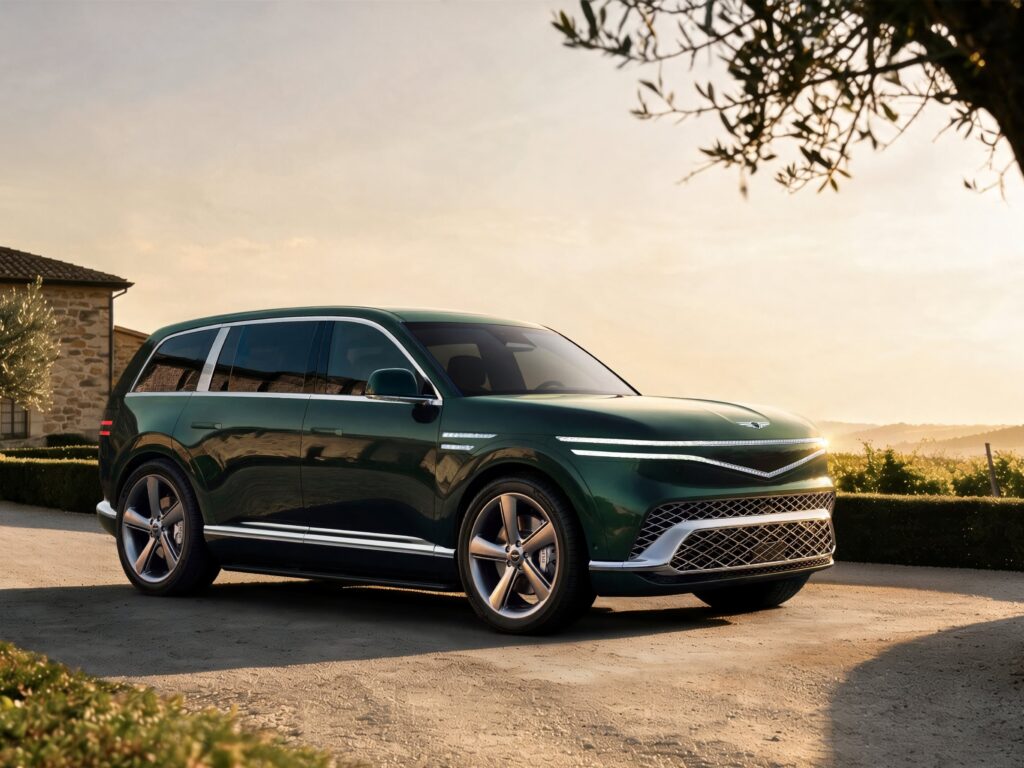
The GV90 adopts a new “Athletic Elegance” design language that departs from Genesis’s previous restrained aesthetic. Its sleek silhouette, illuminated grille and a cabin that blends sustainable materials with a 15‑inch curved glass display aim to attract buyers who value both style and sustainability.
Under the hood, the GV90 is powered by a dual‑motor setup delivering roughly 400 horsepower and a claimed 300‑mile EPA range, putting it on par with the Tesla Model Y Performance and the Mercedes‑EQ EQA. Fast‑charging capability of up to 250 kW means the battery can be topped up from 10 to 80 percent in about 30 minutes, according to Hyundai’s specifications.
Pricing is set between $65,000 and $85,000, positioning the GV90 just below the entry‑level Tesla Model X and slightly above the Mercedes‑EQ EQB. This price bracket targets affluent professionals and early adopters who are willing to pay a premium for a brand that promises a blend of Korean engineering and luxury craftsmanship.
Why it matters: reshaping the luxury EV race
The GV90’s launch underscores a shifting competitive landscape where traditional automakers are no longer content to chase the low‑end EV market. By entering the luxury segment, Hyundai signals confidence that it can meet the performance expectations and brand cachet required to win over discerning customers.
Analysts from Bloomberg argue that Hyundai’s deep supply‑chain relationships and its early investments in battery technology give it a cost advantage over newer entrants. If the GV90 can deliver on its promised range and quality, it could force rivals to accelerate their own premium EV rollouts, potentially compressing profit margins across the segment.
From a macro perspective, the GV90 adds to the growing diversity of EV choices available to American consumers, which could help accelerate overall EV adoption rates. The U.S. Energy Information Administration projects that EVs will account for 30 % of new vehicle sales by 2030; a broader luxury offering may push higher‑income buyers into the market sooner.
African angle: opportunities and challenges for the continent
While the GV90 is initially aimed at the U.S., its introduction has ripple effects for African markets that are beginning to embrace electric mobility. South Africa, Kenya and Nigeria have announced incentives for EV imports, and a luxury model like the GV90 could become a status symbol for the continent’s growing affluent class.
Hyundai already operates an assembly plant in South Africa that produces the Creta and Tucson for the local market. Sources say the company is evaluating whether to assemble certain Genesis components locally to avoid high import duties, a move that could create skilled jobs and lower the final price of the GV90 for African buyers.
The diaspora also plays a role: Nigerians and Ghanaians living in Europe and North America are increasingly purchasing high‑end EVs and may influence brand perception back home. If the GV90 gains a reputation for reliability and prestige, it could spur demand for premium EVs across African diaspora networks, encouraging local dealerships to stock Genesis models.
What’s next: rollout, competition and future models
The GV90 is slated to hit U.S. showrooms in the fourth quarter of 2026, with pre‑orders already opening on Genesis’s website. Hyundai plans to export the model to Europe and the Middle East later in 2027, and talks are ongoing about a right‑hand‑drive version for markets such as Australia and Japan.
Competitors are unlikely to sit idle. Tesla’s refreshed Model Y, slated for a 2027 refresh, and the upcoming Mercedes‑EQ EQE SUV are expected to launch within months of the GV90, setting up a crowded premium EV battlefield. Success will hinge on brand perception, after‑sales service networks, and the ability to deliver on range promises.
Looking ahead, Hyundai has hinted that a second‑generation electric Genesis sedan could arrive by 2028, potentially sharing the same platform as the GV90. If the flagship proves popular, it may accelerate Hyundai’s broader EV roadmap, including plans for a dedicated Genesis EV factory in the United States.
Quick Answers
What is the Genesis GV90?
The Genesis GV90 is Hyundai’s new flagship luxury electric SUV, offering up to 400 hp, a 300‑mile EPA range, and a price between $65,000 and $85,000.
When will the GV90 be available in the United States?
The GV90 is expected to arrive at U.S. dealerships in the fourth quarter of 2026.
How could the GV90 affect African electric‑vehicle markets?
Its launch may spur interest among affluent African buyers and diaspora communities, encourage local assembly to reduce tariffs, and create new jobs in emerging EV supply chains.
Source: www.cnbc.com




💬 Comments 0