Germany says Russia behind Leipzig drone attack on Aug 4 2026, near Ukrainian cargo planes
Background: Russian covert operations in Europe
Since the start of the war in Ukraine, Moscow has increasingly turned to asymmetric tactics beyond the battlefield, targeting critical infrastructure and supply chains across the continent. Intelligence agencies in several EU states have warned that Russian actors are using commercial‑grade drones, cyber tools and disguised operatives to disrupt logistics that support Kyiv’s war effort. These activities have ranged from sabotage of energy pipelines in Germany to attempts at hijacking maritime cargo destined for Ukrainian ports, creating a climate of heightened security alerts at airports, rail yards and seaports.
The German Federal Office for the Protection of the Constitution (Bundesamt für Verfassungsschutz) has published annual reports documenting a steady rise in suspected Russian‑linked drone sightings near strategic sites. According to a 2025 briefing, the number of intercepted or defused drones at German airports doubled between 2023 and 2024, with many bearing payloads that could cause serious damage. This pattern reflects a broader Kremlin strategy to pressure European allies by threatening the very arteries that keep humanitarian aid flowing to Ukraine.
For European policymakers, the challenge is twofold: protecting domestic safety while ensuring that sanctions and aid channels remain functional. The Leipzig incident fits into a larger tapestry of covert actions that aim to erode confidence in European security guarantees, especially as the EU debates deeper defence integration and a possible European rapid‑response drone‑defence unit.
The Leipzig incident: what happened
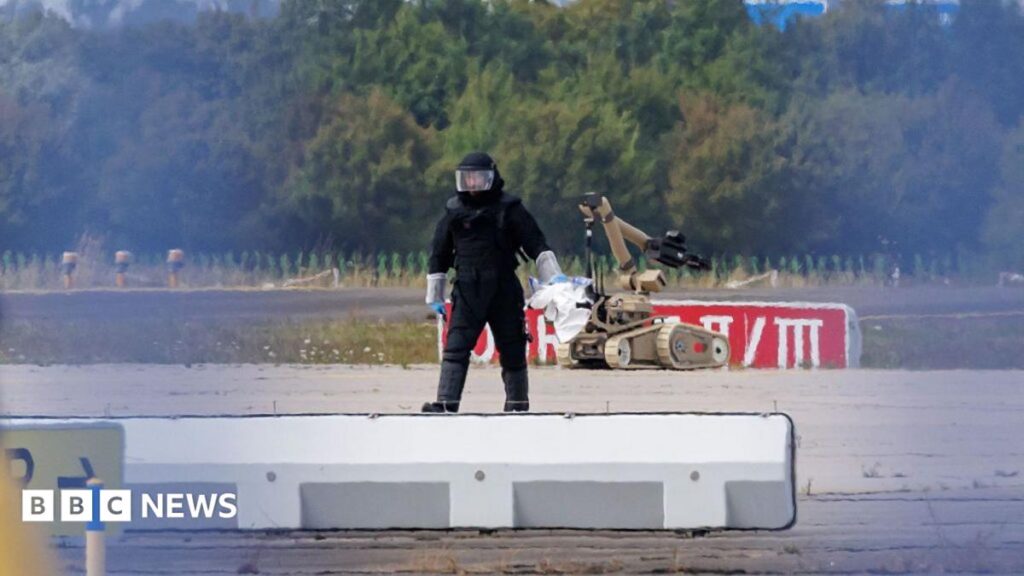
On 4 August 2026, security personnel at Leipzig/Halle Airport discovered a small quad‑copter loaded with an explosive device hidden near the parking apron used by Ukrainian cargo operators. The drone was found just minutes after a routine patrol spotted an unfamiliar object hovering close to the runway where several Antonov An‑26 aircraft, chartered by Ukrainian humanitarian agencies, were being serviced. Bomb disposal units safely detonated the device, confirming that it contained a low‑order explosive capable of damaging an aircraft wing or fuel line.
German officials quickly linked the device to Russian intelligence after forensic analysis revealed components traced to a supplier in the Kaliningrad enclave, a region known for housing Russian military‑grade drone technology. A senior spokesperson for the Federal Ministry of the Interior said the attack was “part of a coordinated effort to intimidate Ukrainian logistical operations on European soil.” The statement was echoed by NATO’s Allied Air Command, which called the episode “a stark reminder that the conflict’s reach extends far beyond the front lines.”
The Ukrainian cargo flights operating from Leipzig are part of a broader humanitarian corridor that delivers food, medical supplies and reconstruction materials to war‑torn regions in eastern Ukraine. While the drone never detonated, the incident forced the temporary suspension of all Ukrainian cargo operations at the airport, delaying shipments that were scheduled to leave within 48 hours.
Why the attack matters for Europe and Africa
Europe’s response to the Leipzig drone strike will shape the security calculus for all nations that rely on Ukrainian grain exports. Ukraine supplies roughly 12 percent of the world’s wheat, with a large share destined for African markets such as Nigeria, Egypt and Kenya. Any disruption to Ukrainian cargo flights, even those based in Germany, can ripple through the global grain supply chain, potentially inflating food prices on the continent already grappling with climate‑related shortages.
African diaspora communities in Germany have also felt the indirect impact of such attacks. Many Ukrainian‑run logistics firms employ migrants from Nigeria, Ghana and Senegal as ground crew, and a sudden halt to flights threatens their livelihoods. Moreover, the incident has reignited discussions in African trade ministries about diversifying grain import sources to reduce dependence on a single, conflict‑prone exporter. Some policymakers in Accra and Abuja are now urging the EU to expedite alternative grain corridors through the Mediterranean.
From a security standpoint, the use of low‑cost drones to threaten civilian infrastructure signals a shift that could affect African airports as well. Several African states are already investing in counter‑drone technologies after witnessing similar threats in West Africa’s oil facilities. The Leipzig episode provides a case study for how a relatively inexpensive UAV can be weaponised to target supply chains, prompting African regulators to reassess their own air‑field protection protocols.
Reactions and the road ahead
German Chancellor Olaf Scholz condemned the attack as “an act of aggression that will not be tolerated,” and announced a €150 million boost to the nation’s drone‑defence research programme. The funding is earmarked for radar‑based detection systems and automated neutralisation tools that can be deployed at medium‑size airports across the country. Opposition parties, however, warned that the money could be better spent on bolstering civil‑defence shelters for citizens living near high‑risk sites.
In Kyiv, the Ministry of Foreign Affairs called the incident “another reminder of Russia’s willingness to strike far beyond its borders.” Ukrainian officials urged the EU to grant faster clearance for humanitarian flights and to consider a joint European‑Ukrainian air‑bridge that would bypass vulnerable hubs. The United Nations World Food Programme, which coordinates much of the grain aid, said it is reviewing contingency plans to reroute shipments through ports in the Black Sea once they become safe again.
Looking forward, analysts predict that Russia will continue to exploit drone technology as a low‑risk, high‑impact tool. A 2026 report by the International Institute for Strategic Studies notes that Moscow’s “deniable” drone campaigns are likely to intensify as Western sanctions tighten. For African nations, the lesson is clear: securing supply‑chain nodes—whether at sea, on land or in the air—requires collaborative intelligence sharing and investment in counter‑UAS capabilities that can protect both local and global food security.
Quick Answers
Who is suspected of behind the Leipzig airport drone attack?
German authorities say the drone was linked to Russian intelligence based on component analysis.
How could the attack affect food supplies in Africa?
Disruptions to Ukrainian cargo flights can delay grain shipments that feed millions in Africa, potentially raising food prices.
What steps is Germany taking to prevent future drone attacks?
Berlin announced a €150 million investment in radar and automated counter‑drone systems for airports.
Source: www.bbc.co.uk




💬 Comments 0