Gianni Infantino’s Nigeria U20 cameo fuels 2027 re‑election bid and African football debate
Background: Infantino, UEFA and the looming FIFA election
Since taking office in 2016, Gianni Infantino has reshaped FIFA’s commercial landscape, securing lucrative broadcasting deals and expanding the tournament calendar. His ambition, however, has repeatedly clashed with UEFA, which accuses the president of over‑reaching into European affairs, especially after the controversial expansion of the Club World Cup. The tension escalated in early 2026 when UEFA chief‑executive Aleksander Čeferin publicly warned that the sport’s governance needed a “new direction”, setting the stage for a contentious election cycle slated for 2027.
The 2027 presidential race is already shaping up as a referendum on Infantino’s legacy. While several former administrators have floated the idea of a “clean‑sheet” candidate, none have secured the backing of the powerful continental confederations. In this context, every public appearance by Infantino is scrutinised for political signalling, making his recent stop at the U20 World Cup in Nigeria a calculated move rather than a mere fan‑fare.
The cameo: What happened at the Nigeria U20 World Cup match
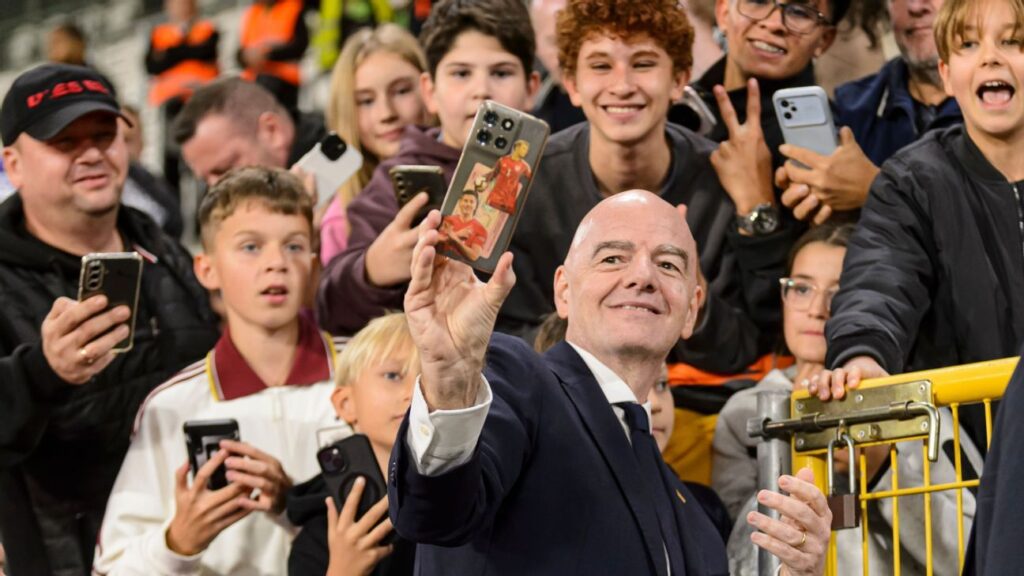
On 24 September 2026, Infantino arrived at the Abuja National Stadium for the Group C clash between Nigeria’s U20 side and Brazil’s youngsters. Dressed in a navy suit and sporting a bright red FIFA pin, he greeted the young Nigerian captain, praised the “vibrant energy of African football”, and took part in a brief on‑stage ceremony that included the unveiling of a new grassroots funding initiative worth €12 million for the continent.
The president’s presence was captured in a series of social‑media clips that quickly went viral across the continent. In one moment, Infantino pointed to the Nigerian fans and declared that “the future of the beautiful game lives here”. The remarks were later echoed in a press release that highlighted FIFA’s commitment to “increase the number of competitive matches for African youth teams” ahead of the 2026 senior World Cup.
Why it matters for African football
Africa’s football ecosystem has long suffered from under‑investment, especially at the youth level where scouting networks and training facilities lag behind Europe and South America. Infantino’s €12 million pledge, if fully deployed, could fund regional academies, improve coaching licences, and expand the CAF‑organized U‑23 tournament. This would not only raise the continent’s talent pool but also create a pipeline of players ready for the 2026 World Cup, where Nigeria is expected to qualify for the first time since 2018.
Beyond the money, the cameo signals a diplomatic shift. By aligning himself with a high‑profile African event, Infantino is attempting to win the goodwill of CAF’s 54 member associations, many of which hold decisive votes at the FIFA Congress. As analysts from The Africa Report note, “African federations have become kingmakers in FIFA elections, and a visible commitment to youth development can tilt the balance in Infantino’s favour” (The Africa Report, 2026).
Reactions from African stakeholders
CAF President Patrice Motsepe welcomed the funding but cautioned against “political grandstanding”. In an interview with Premium Times, Motsepe said the money must be tied to transparent monitoring mechanisms, otherwise it risks becoming another “unfulfilled promise” that has haunted African football for decades. Meanwhile, the Nigerian Football Federation (NFF) issued a statement calling the president’s visit “a historic endorsement of Nigeria’s youth programme”, and pledged to allocate part of the grant to refurbish the Abuja training complex.
Opposition voices, however, remain skeptical. Former Nigerian international Nwankwo Kanu, speaking on a local radio show, argued that “real change comes from consistent support, not one‑off appearances”. Similarly, a coalition of African journalists, writing for the online portal African Football Insight, warned that Infantino’s timing—just months before the election—could be interpreted as vote‑buying, potentially eroding trust in FIFA’s governance.
What’s next: Election dynamics and the African agenda
The next few months will see intensified lobbying across all six FIFA confederations. In Africa, CAF’s upcoming executive committee meeting in Nairobi will likely address the distribution framework for the new youth fund, while also debating whether to endorse Infantino’s candidacy or field a challenger. Sources close to the CAF leadership say that a unified African endorsement could be decisive, given that the combined voting weight of the continent exceeds 30 % of the total FIFA electorate (Reuters, 2026).
For Infantino, the Nigeria cameo is just one piece of a broader strategy that includes high‑profile visits to South America, Asia and the Middle East. His ability to convert these gestures into concrete policy outcomes will be the litmus test for his re‑election bid. If African federations feel the promised investments materialise, they may become his staunchest allies; if not, the backlash could fuel a new reform movement that threatens his second term.
Quick Answers
What amount did FIFA pledge for African youth football at the Nigeria U20 World Cup?
FIFA announced a €12 million fund to support grassroots and academy projects across Africa.
How could Infantino’s appearance in Nigeria affect his 2027 re‑election?
By courting African federations, whose combined votes represent over 30 % of the FIFA electorate, Infantino hopes to secure crucial support for his bid.
When is the next CAF executive committee meeting to discuss the new funding?
The meeting is scheduled for November 2026 in Nairobi, Kenya.
Source: www.espn.com




💬 Comments 0