Gianni Infantino’s undisclosed $1.72 million 2024 payment sparks FIFA breach concerns
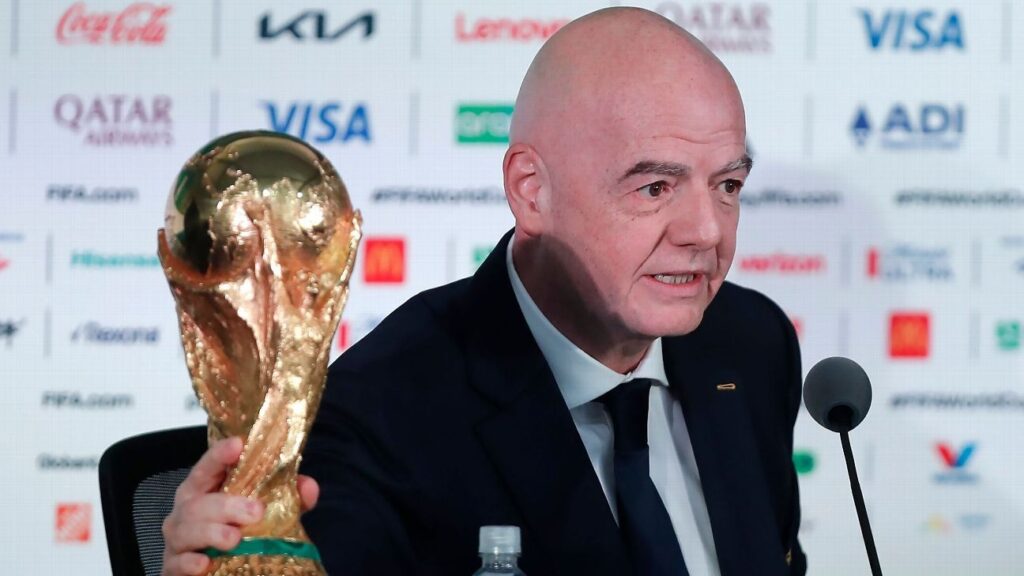
Background: Infantino’s salary and FIFA’s financial rules
Gianni Infantino has been FIFA’s president since 2016, and his remuneration is publicly disclosed in the organization’s annual reports. For 2024, the official documents list a base salary of roughly $3.6 million, a figure that is already higher than most national federation heads in the world. FIFA’s statutes require any additional compensation, bonuses, or special allowances to be recorded in the same filing, ensuring transparency for member associations and sponsors.
The governing body’s financial code also obliges the president to avoid conflicts of interest and to declare any external income that could influence decision‑making. These rules were tightened after the 2015 corruption scandal that led to the indictment of several senior officials, and they form the backbone of FIFA’s credibility with its 211 member associations, many of which are from Africa.
The uncovered payment and how it came to light
An internal filing with the United States Internal Revenue Service, obtained by a European investigative outlet, shows that Infantino received an extra $1.72 million for the 2024 fiscal year. The payment appears as a “special performance bonus” tied to the successful delivery of the 2026 World Cup partnership agreements, but it was not listed in FIFA’s public financial statements.
The discrepancy was flagged when tax analysts compared the IRS data with FIFA’s published accounts. Because the bonus was omitted, it technically breaches Article 5 of FIFA’s Governance Regulations, which mandates full disclosure of all remuneration above a certain threshold. FIFA has not yet issued a formal comment, though a spokesperson said the organization is reviewing the filing for “administrative accuracy.”
Why the breach matters for African football
African nations rely on FIFA’s development funds, which are allocated based on transparent governance criteria. If the president’s earnings are hidden, it raises doubts about how the remaining pool of money is distributed among the 54 African member associations. Many of those federations have complained in recent years about delayed payments for grassroots projects and women’s football programmes.
Moreover, the timing is critical because the Confederation of African Football (CAF) is preparing for its 2027 presidential election. Candidates are already campaigning on promises of “cleaner finance” and “greater accountability.” An undisclosed payment to the global chief could become a bargaining chip, influencing voting blocs and potentially reshaping the power dynamics between CAF and FIFA.
A pattern of governance crises in world football
Infantino’s alleged pay‑off is the latest in a series of financial controversies that have plagued football’s governing bodies. In 2023, UEFA faced criticism for a secretive €5 million “legacy fund” tied to the Euro 2024 host city contracts, while the Asian Football Confederation was accused of funneling sponsorship money into private accounts. These incidents illustrate a broader trend: the sport’s global expansion is outpacing the ability of its institutions to enforce consistent oversight.
For African stakeholders, the pattern is especially concerning because many of the continent’s leagues operate on razor‑thin margins. When top‑level governance appears opaque, sponsors and investors become wary, potentially limiting the flow of foreign capital that fuels stadium upgrades, youth academies, and broadcast deals across the continent.
Potential fallout and next steps for FIFA
If FIFA’s Ethics Committee confirms that the $1.72 million bonus breached the organization’s rules, the president could face sanctions ranging from a formal reprimand to a suspension. Such a move would be unprecedented for a sitting FIFA president and could trigger a constitutional crisis within the body, forcing a special congress to address leadership legitimacy.
The immediate practical impact would be a renewed call for independent audits of all senior officials’ remuneration. Several African federations have already pledged to support a “transparent finance” amendment at the upcoming FIFA Congress in Doha, hoping to lock in stricter disclosure thresholds for all member‑state executives.
What African voices are saying
Representatives from the South African Football Association (SAFA) told local media that the scandal underscores the need for “real African representation in FIFA’s financial decision‑making.” They argue that without a seat at the table, African members remain vulnerable to decisions that affect the distribution of World Cup revenue streams, which have grown to over $6 billion for the 2026 edition.
Diaspora football entrepreneurs in the UK and the United States echoed similar concerns, noting that many African‑run clubs depend on FIFA’s solidarity payments to meet payroll. A lack of confidence in the governing body could push those clubs to seek alternative funding models, such as private equity or crowd‑sourced ownership, fundamentally altering the continent’s football ecosystem.
Quick Answers
Did Gianni Infantino break FIFA’s financial rules with the $1.72 million payment?
According to the IRS filing, the extra payment was not disclosed in FIFA’s public accounts, which breaches the organization’s requirement for full remuneration transparency.
How could this scandal affect African football development funds?
Hidden payments raise doubts about the fairness of FIFA’s fund allocation, potentially delaying or reducing the money that African federations receive for grassroots and women’s programmes.
What actions might FIFA take if the breach is confirmed?
The Ethics Committee could impose sanctions on Infantino and order comprehensive audits, while a special congress may be convened to amend financial disclosure rules.
Source: www.espn.com




💬 Comments 0