Google Adds Natural Language Prompts to Discovery Feed 2026 – Impact on African Creators
Background: How Google’s Discovery Feed Works
The Discovery feed, launched in 2018, uses a combination of machine learning and user behavior signals to surface news, videos, and other content directly on the Google app’s home screen. It aggregates stories from thousands of publishers and relies on implicit data such as clicks, dwell time, and search queries to rank items. The feed has become a primary source of news for many users worldwide, especially in regions where traditional news apps are fragmented.
While the algorithm was praised for its breadth, critics noted that it often favored globally dominant media outlets, leaving niche or local voices underrepresented. Users could manually remove stories they disliked, but there was no direct way to tell the feed what they wanted to see. This limitation prompted calls for greater control and transparency in content curation, especially as AI-driven personalization became more sophisticated.
The New Feature: Natural Language Prompts
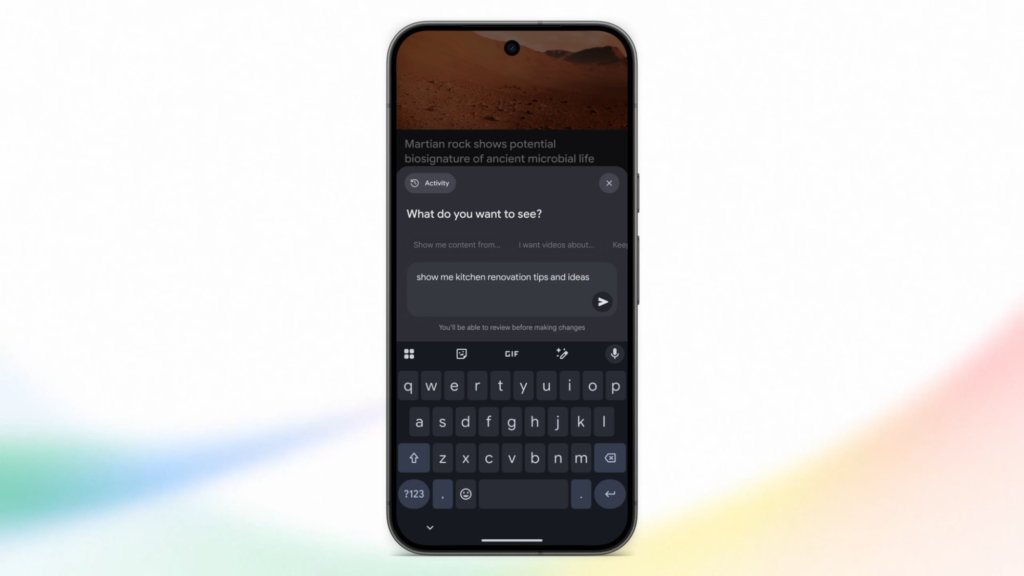
On 14 August 2026, Google announced that users will soon be able to type or speak natural language prompts to tailor the Discovery feed. According to the company’s blog post, the feature leverages OpenAI‑style language models to interpret queries like “Show me tech news from Africa” or “Give me stories about women entrepreneurs in Lagos.” The system will then filter and rank content based on the user’s intent, rather than relying solely on passive signals.
The update is rolled out in phases, starting with the United States and the United Kingdom. Google says the prompts will work across all supported languages and devices, including Android, iOS, and the web. Early beta testers reported that the feed responded quickly, although occasional inaccuracies in interpreting nuanced queries were noted. Google emphasizes that the prompts will not replace the existing recommendation engine but will act as an additional layer of personalization.
Why It Matters: Personalization and Algorithmic Trust
Personalization has long been a double-edged sword. On one hand, it enhances user experience by surfacing relevant content; on the other, it can reinforce echo chambers and reduce exposure to diverse viewpoints. By allowing users to explicitly state their preferences, Google is attempting to give users more agency over the content they consume. This move could improve algorithmic transparency and reduce the “filter bubble” effect that critics have long warned about.
From a business perspective, the feature could drive higher engagement for publishers who can tailor their stories to meet specific audience queries. Advertisers, too, may find the new prompts useful for targeting niche segments, as the feed can now surface content that aligns with precise demographic or topical interests. However, the success of this approach hinges on how well the language model understands regional dialects and cultural nuances, a challenge that will test the limits of current AI technology.
African Implications: Language, Representation, and Market Opportunities
For Africa, the introduction of natural language prompts could level the playing field for local media. Currently, many African stories are underrepresented on global feeds due to language barriers and limited indexing. If the prompts can accurately process local languages—such as Yoruba, Swahili, or Amharic—users in Africa could ask for news in their native tongue, thereby increasing visibility for regional outlets.
Moreover, content creators who focus on niche African topics—like sustainable agriculture in Ghana or fintech innovations in Nairobi—may now reach audiences that previously had to rely on international aggregators. This could spur investment in African journalism and digital storytelling, as publishers can demonstrate higher engagement metrics tied to user‑defined prompts. Yet, there is a risk that the technology may still default to English or French, reinforcing linguistic hierarchies if not properly calibrated.
What’s Next: Regulation, User Control, and the Future of AI Curation
The rollout of natural language prompts raises regulatory questions. Data protection authorities in the EU and other jurisdictions are already scrutinizing how AI models handle personal data. If the prompts rely on user queries that reveal sensitive interests, Google may need to enhance its privacy disclosures and provide opt‑out mechanisms. African regulators, such as Nigeria’s National Information Technology Development Agency, could adopt similar standards to protect local users.
Looking ahead, the feed’s evolution may involve hybrid models that combine explicit prompts with implicit signals, creating a more balanced recommendation system. Some experts predict that future updates will allow users to set “content filters” that block entire categories—such as political content—while still receiving personalized stories. For African media ecosystems, this could mean greater control over how their narratives are presented to both local and global audiences.
Quick Answers
What is the Google Discovery feed?
It is a personalized content carousel in the Google app that surfaces news, videos, and other stories based on user behavior and preferences.
How do natural language prompts work in the feed?
Users type or speak a query, and a language model interprets it to filter and rank stories that match the requested topic or language.
Will this feature affect African news outlets?
Yes, it can increase visibility for local stories if the prompts accurately recognize African languages and topics, giving creators a broader audience.
Source: lifehacker.com




💬 Comments 0