Hebron demolition orders after two Israeli soldiers killed by Palestinian gunmen, 2026
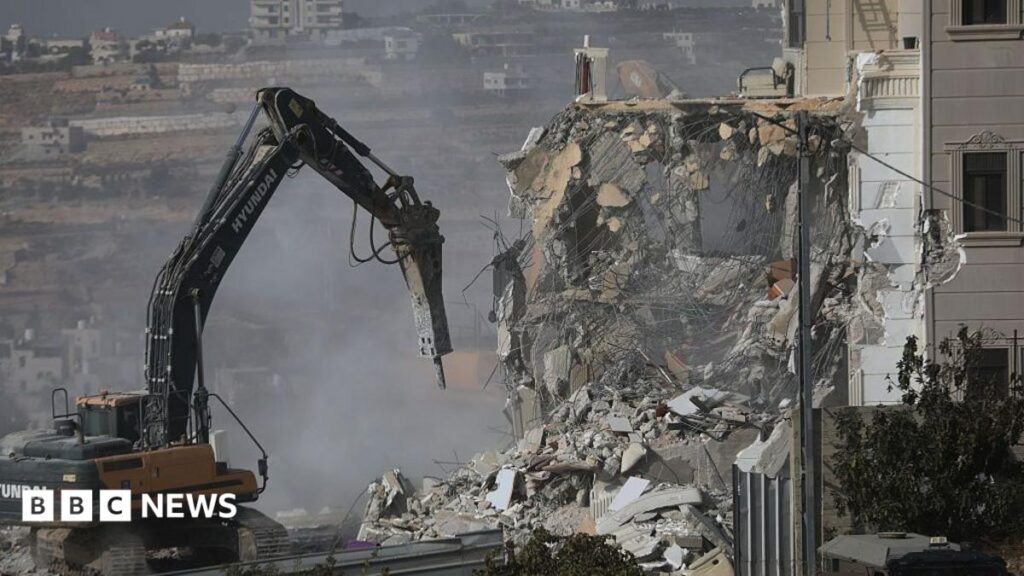
Background: demolition policy and Hebron’s volatility
Since the early 2000s, Israel has used house demolitions as a punitive tool, arguing that it deters attacks by removing the families of suspected militants. Human‑rights groups, however, say the practice breaches international law because it punishes civilians for the actions of others. Hebron, a flashpoint city in the occupied West Bank, has seen repeated cycles of violence, settlement expansion, and demolition orders, making it a micro‑cosm of the broader conflict.
The city is split by a network of Israeli settlements housing roughly 30,000 settlers alongside a Palestinian population of about 200,000. The presence of a heavy Israeli military and police footprint has created a daily reality of checkpoints, curfews, and frequent clashes. Past demolition campaigns have targeted both structures linked to alleged militants and homes deemed “illegal” under Israeli planning rules, often sparking protests across the Arab world.
The trigger: two soldiers killed at a Hebron checkpoint
On Friday morning, two Israeli Defense Forces (IDF) soldiers were shot dead by two Palestinian gunmen at a checkpoint outside Hebron, according to the Israeli army’s statement. The attack, described as a coordinated ambush, involved automatic weapons and resulted in the immediate lockdown of the surrounding area. Israeli officials labeled the incident a “terrorist attack” and vowed a swift response.
Palestinian sources, quoted by local media, claimed the gunmen were members of a militant faction operating in the city’s southern districts. The incident marked the deadliest loss of Israeli soldiers in the West Bank in over a decade and reignited calls from the Israeli government for punitive measures against the community where the assailants were believed to live.
Immediate response: demolition orders hit Hebron neighborhoods
Within hours of the shooting, Israeli engineers began dismantling several stone houses in the al‑Husein and al‑Rashid neighborhoods, areas already under scrutiny for “unauthorized” construction. The army announced that the demolitions were a “necessary security measure” aimed at preventing future attacks, a rationale it has used repeatedly since the early 2000s.
The demolitions were carried out under a night‑time curfew, with bulldozers moving while residents were forced to stay indoors. International observers, including the United Nations Office for the Coordination of Humanitarian Affairs (OCHA), reported that at least 15 families were displaced, many of whom had no alternative housing. Human‑rights NGOs warned that the rapid demolition could amount to collective punishment, a charge Israel rejects.
Regional ripple effects and African connections
The demolition drive reverberated beyond the Israeli‑Palestinian arena. Several African nations, most notably South Africa, have historically drawn parallels between Israel’s settlement policies and apartheid‑era land dispossession. South Africa’s Department of International Relations issued a statement condemning “the use of collective punishment in Hebron” and called for an urgent UN investigation.
African diaspora groups in Europe and North America organized solidarity protests in cities such as London, Paris, and New York, linking the Hebron demolitions to broader struggles against land grabs on the continent. In Lagos, a coalition of Nigerian student unions staged a sit‑in at the Israeli embassy, demanding an end to punitive demolitions. The episode also revived discussions in the African Union about adopting a common position on the Israeli‑Palestinian conflict, a move that could affect diplomatic and trade relations with Israel.
What’s next: legal battles, settlement expansion and African interest
Legal experts say the demolitions are likely to be challenged in Israel’s Supreme Court, where past cases have produced mixed outcomes. While some demolition orders have been halted after petitions by Israeli NGOs, the current security narrative gives the military considerable leeway. Meanwhile, settlement authorities have announced plans to expand housing in the nearby Gush Etzion bloc, a move that could further inflame tensions.
For African stakeholders, the situation underscores the importance of monitoring how Israel’s security policies intersect with international law and human‑rights advocacy. African investors in Israeli tech and agriculture may face reputational pressure from civil‑society campaigns, while African NGOs could leverage the Hebron case to amplify calls for a unified African stance at the UN. The next few weeks will reveal whether diplomatic pressure, legal challenges, or on‑the‑ground resistance will shape the trajectory of Hebron’s demolition saga.
Quick Answers
Why did Israel order demolitions in Hebron after the soldiers were killed?
Israel said the demolitions were a security measure intended to deter future attacks by targeting homes linked to the gunmen, a policy it has used repeatedly in the West Bank.
How are African countries reacting to the Hebron demolitions?
South Africa condemned the action as collective punishment, and Nigerian student groups staged protests, while the African Union is debating a coordinated diplomatic response.
What legal options exist for Palestinians affected by the demolitions?
Affected families can petition Israel’s Supreme Court to halt or reverse the demolitions, though success depends on the court’s assessment of security versus humanitarian concerns.
Source: www.bbc.co.uk




💬 Comments 0