Iranian attacks damage US bases in Iraq – wrecked air force plane, 2026 images show extent
Background: Iran‑US hostility reaches a new flashpoint
The latest Iranian strike on U.S. facilities in Iraq follows a months‑long pattern of tit‑for‑tat moves that began after Washington’s 2025 drone‑kill operation near Tehran. Tehran has repeatedly warned that any perceived aggression will be answered with “proportional” force, a phrase that now appears to have moved from rhetoric to kinetic action. The attacks, which were launched on the night of 14 September 2026, targeted three U.S. installations that host coalition forces and logistical hubs supporting operations against the Islamic State remnants in the region.
While the Iranian Revolutionary Guard’s (IRGC) missile and drone barrage was aimed at a limited set of sites, the timing coincided with a high‑profile visit by senior U.S. officials to the Middle East, suggesting a calculated effort to maximize political shock. The strikes were the first to cause visible damage to U.S. air assets in the area, a development that analysts say could shift the calculus of future engagements.
What the images reveal: wrecked aircraft and shattered infrastructure
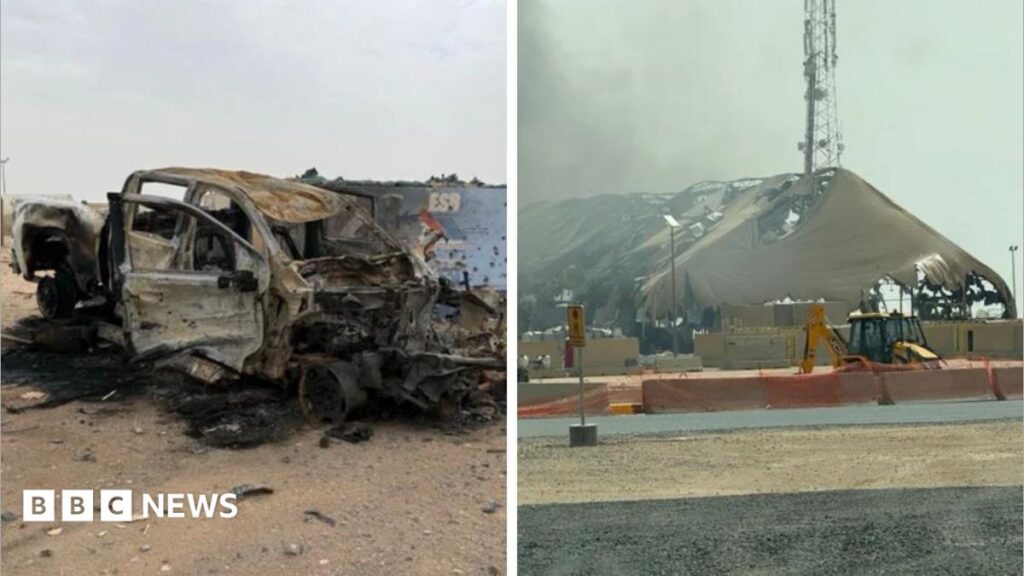
CBS News, working with the BBC’s regional bureau, released a series of high‑resolution photos that show a U.S. Air Force C‑130 Hercules with a shattered fuselage, its tail section twisted beyond repair. The aircraft, stationed at Al Asad Airbase for transport missions, appears to have been hit by a precision‑guided missile that struck the wing fuel tank, igniting a fire that gutted the rear half of the plane.
The same visual dossier includes collapsed barracks, cratered parking lots, and a partially demolished command building at the Erbil Joint Base. Satellite analysts have confirmed that the damage is consistent with a combination of medium‑range ballistic missiles and loitering munitions. No U.S. personnel were reported killed, but several service members suffered non‑life‑threatening injuries, according to an unofficial statement from the Pentagon’s Central Command.
Strategic stakes for the United States and its allies
Beyond the immediate material loss, the attacks raise questions about the vulnerability of forward‑deployed U.S. forces in a region where Iran’s missile range now comfortably covers most bases in Iraq and Syria. Military planners have long relied on the perception that U.S. air defenses could deter or intercept such threats, but the visible damage suggests gaps that may need rapid reinforcement.
The incident also puts pressure on NATO partners and regional allies who share intelligence and logistics with Washington. Countries like the United Kingdom and Australia have troops stationed nearby, and any escalation could force them to reassess force protection protocols, potentially slowing joint counter‑terrorism operations that have been critical to regional stability.
Ripple effects on African economies and the diaspora
Oil‑producing African nations are feeling the tremor of the conflict through market channels. The strikes prompted a brief spike in Brent crude, pushing the price to $96 per barrel before settling at $91, a level that directly impacts export revenues for Nigeria, Angola and Libya. Analysts at the African Development Bank warned that sustained volatility could erode fiscal buffers that many of these economies rely on to fund infrastructure projects.
The diaspora angle is equally significant. Hundreds of African workers—engineers, contractors, and medical staff—are employed at U.S. bases and private firms supporting the coalition effort. The sudden threat to their safety has spurred consular offices in Abuja and Nairobi to issue travel advisories, urging nationals to register with their embassies and consider temporary relocation. Moreover, African NGOs that operate humanitarian clinics near the affected bases have reported a slowdown in aid deliveries, fearing collateral damage.
International reactions and diplomatic pathways
Western capitals have condemned the attacks as “unacceptable escalation,” with the European Union calling for an immediate de‑escalation and the United Nations Security Council convening an emergency session. Iran, meanwhile, framed the strikes as a defensive act, citing U.N. Resolution 2231 that it interprets as permitting limited retaliation against “aggressive” actions.
Regional actors such as Saudi Arabia and the United Arab Emirates have urged restraint, warning that a broader conflagration could destabilize the Gulf’s security architecture. Inside Iraq, Prime Minister Mohammed Shia al‑Sudani’s government has expressed outrage at the breach of its sovereignty, demanding a joint investigation while simultaneously seeking to preserve its delicate balance with both Tehran and Washington.
What comes next: scenarios and policy choices
U.S. officials are reportedly weighing two main options: a calibrated military response that targets IRGC launch sites in Iran, or a diplomatic push for a cease‑fire mediated by European allies. The former risks opening a new front that could draw in regional powers, while the latter hinges on Tehran’s willingness to negotiate—a factor many observers deem uncertain given the recent rhetoric from Iran’s supreme leader.
For African stakeholders, the priority will be to monitor oil‑price trends and safeguard nationals working in the theater. Business councils in Lagos and Accra have already begun contingency planning, including insurance reviews and supply‑chain diversification. In the longer term, the incident may accelerate calls for an African‑led security dialogue on the Red Sea and Gulf corridors, aiming to reduce reliance on external powers whose conflicts can spill over into African markets.
Quick Answers
What U.S. equipment was damaged in the Iranian attacks?
A U.S. Air Force C‑130 Hercules transport plane was wrecked, and several barracks and a command building at Erbil Joint Base suffered severe damage.
How might the attacks affect oil prices in Africa?
The strikes caused a short‑term rise in Brent crude to $96 a barrel, which can reduce export revenues for African oil producers like Nigeria and Angola.
Are African workers in Iraq at risk after the attacks?
Yes, consular advisories have been issued for African nationals working near the affected bases, urging them to register with their embassies and consider temporary relocation.
Source: www.bbc.co.uk



💬 Comments 0