Iranian street artist stages Trump behind bars act in Tehran’s Tajrish Square, 2026
Street satire in a tightly‑controlled public space
Public performance has long been a risky medium in the Islamic Republic, where authorities monitor gatherings for any hint of dissent. Over the past decade, Tehran’s bustling squares have become informal stages for artists who test the limits of permissible speech, often using humor to skirt censorship. The city’s iconic Tajrish Square, a crossroads for commuters and tourists, has hosted flash‑mob acts that range from pop‑culture parodies to political commentary.
Iran’s legal framework treats any portrayal that could be seen as insulting a foreign head of state as a breach of the “anti‑defamation” law, a provision that has been invoked against journalists and cartoonists alike. Yet the ambiguity of the law also creates loopholes that satirists exploit, especially when the target is a figure already vilified in official rhetoric. This tension between repression and creative subversion sets the stage for the latest stunt involving the former U.S. president.
The performance: Trump behind bars in the heart of Tehran
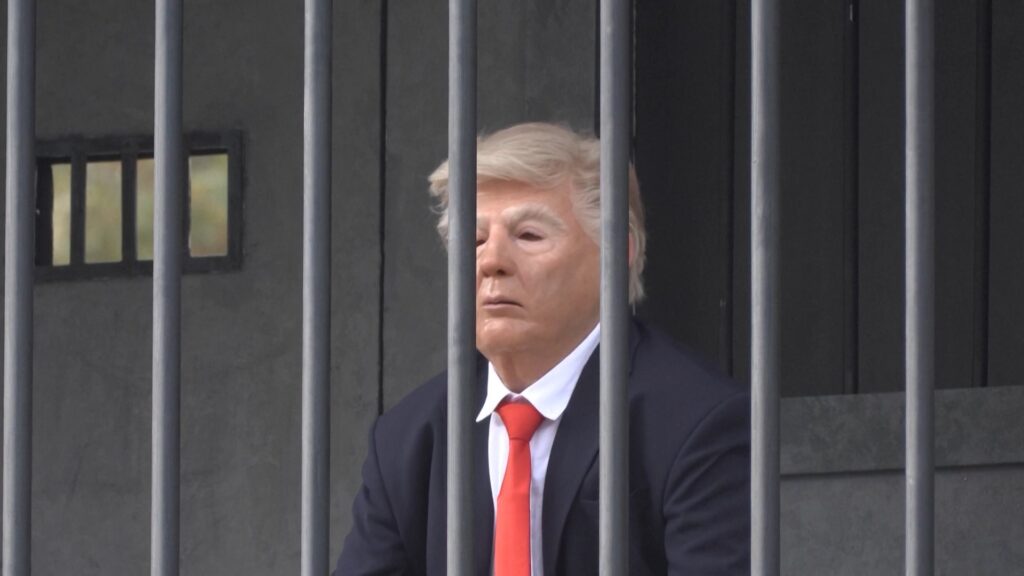
On October 21, 2026, a performer dressed in a navy suit and a distinctive blond wig stepped onto the pavement of Tajrish Square, dragging a wooden jail cell that read “TRUMP – IMPRISONED”. The actor mimed a series of exaggerated gestures – a finger‑pointed rant, a mock tweet on an oversized phone, and a theatrical sigh – while a small crowd gathered and recorded the scene on their phones.
The act lasted roughly three minutes before a uniformed police officer approached, signaling the performer to cease. The officer’s presence was brief; after a short exchange, the performer stepped back, removed the cell’s front panel and bowed to the onlookers, who responded with a mixture of applause and nervous laughter. By the time the police left, the performer had already vanished into the surrounding market stalls.
Why the stunt matters beyond a viral clip
The performance touches on three interlocking issues: the shrinking space for free expression inside Iran, the symbolic power of satire in an era of heightened U.S.–Iran hostility, and the way visual jokes can become diplomatic flashpoints. By portraying Trump—a figure already used by Tehran’s state media to illustrate American aggression—as a captive, the artist amplified a narrative of “justice” that resonates with a public weary of sanctions and economic pressure.
At the same time, the act underscores how street art can bypass traditional media filters. In a country where television and newspapers are tightly scripted, a three‑minute flash‑mob can spread across social platforms faster than any official statement, reaching both domestic audiences and the Iranian diaspora spread across Europe, North America and Africa. The viral nature of the clip forces foreign governments to respond, even if only to issue a diplomatic reminder.
Reactions from Tehran, the diaspora and the wider world
Iranian state media, as reported by the Tehran Times, dismissed the act as “a trivial stunt that disrespects the dignity of foreign leaders”. The official narrative framed the performance as an attempt to inflame anti‑American sentiment for domestic political gain. Conversely, Iranian human‑rights NGOs, such as the Center for the Protection of Freedom of Expression, described the episode as “a courageous assertion of artistic freedom in a climate of intimidation”.
Among the diaspora, especially in London’s Iranian community, the video sparked a debate on the limits of protest abroad. Some activists argued that the performance risked reinforcing negative stereotypes of Iran as a hostile regime, while others praised it as a clever way to keep the conversation about U.S. sanctions alive. In the United States, the White House’s press office issued a brief statement noting that “the United States does not condone the harassment of any individual, regardless of their position, and calls for respect for free expression worldwide”.
What’s next: possible crackdowns and ripple effects across Africa and beyond
Authorities in Tehran have a track record of tightening control after high‑visibility acts of dissent. Sources close to the Ministry of Culture, quoted by an independent Persian‑language outlet, indicated that police are reviewing CCTV footage to identify the performer, and that a “public order” investigation may be opened. If charges are filed, the case could become a reference point for future street‑level satire, signaling either a harsher stance or a tacit tolerance depending on the political climate.
Beyond Iran’s borders, the stunt may influence protest tactics in other authoritarian contexts, including several African nations where street theatre has been used to critique leaders. In Kenya and Ghana, artists have recently turned to flash‑mob performances to comment on corruption, and the Tehran episode offers a template for leveraging social media virality. Moreover, the Iranian diaspora in South Africa’s Cape Town has organized a “Satire Night” inspired by the Tehran act, showing how a single performance can travel and be re‑interpreted across continents.
Quick Answers
Who performed the Trump behind bars act in Tehran?
The performer was an unnamed street artist who used a suit, blond wig, and a wooden jail prop to parody former U.S. President Donald Trump.
Why is the performance significant for Iranian free speech?
It highlights the shrinking space for public dissent in Iran and shows how satire can bypass state‑controlled media to reach both local and international audiences.
Could the stunt affect protests in African countries?
Yes, activists in Kenya, Ghana and South Africa have cited the Tehran flash‑mob as inspiration for using short, viral performances to criticize leaders.
Source: www.aljazeera.com



💬 Comments 0