Is the Strait of Hormuz Uninsurable? The Hidden Cost of the USA and Iran Conflict
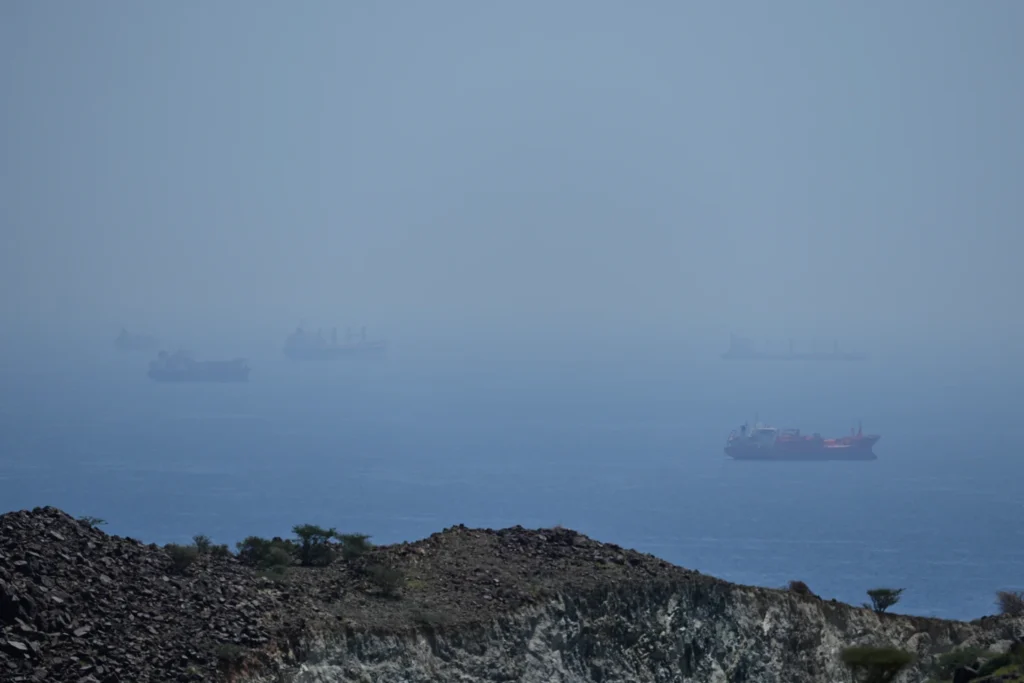
The $98 Barrel is the Least of Our Problems: The World is Getting Smaller (and Way More Expensive)
So, everybody and their mother is freaking out about the headlines right now. We’ve got gunboats playing chicken in the Strait of Hormuz, Brent crude is knocking on the door of $100, and the diplomats in Islamabad are doing what they do best: absolutely nothing.
But while the news cycle is obsessed with the “will-they-won’t-they” drama between Washington and Tehran, I think we’re missing the actual heart attack.
Look, $98 oil sucks. But the real story isn’t just the price of a gallon of gas. It’s the fact that the invisible glue holding the world together the maritime insurance market is currently falling into a black hole. We are watching the permanent end of cheap, predictable trade in real-time, and it’s a lot scarier than a few scary-looking missiles.
The “Uninsurable” Ocean
You’ll see the “UKMTO” mentioned in the reports, which sounds like some boring government agency, but nobody is talking about the guys who actually keep the ships moving: the insurers.
Here’s the deal: When the Revolutionary Guard opens fire on a container ship, it doesn’t just leave a dent. It triggers a “war risk” premium spike that makes shipping anything from your favorite brand of coffee to the chips in your phone, insanely expensive.
We’re hitting a tipping point where the Strait of Hormuz isn’t just “tense” it’s becoming uninsurable. If Lloyd’s of London decides the risk is too high and pulls the plug on coverage, the Persian Gulf effectively closes. You don’t even need a physical blockade at that point; the paperwork alone will kill the trade.
It’s Not Just About Us
The media loves to frame this as a U.S. vs. Iran showdown. But check out who’s actually getting squeezed: East Africa and Southeast Asia.
Places like Ethiopia or Vietnam rely on these lanes for fertilizer and processed goods. While the big powers play high-stakes poker, the “Global South” is feeling a secondary shockwave that could lead to actual famine. These countries don’t have “strategic reserves” to lean on. For them, a 30% jump in oil isn’t a “man, I should buy a Prius” moment, it’s a “we can’t feed our people” moment.
I remember back in 2021 when that one ship got stuck in the Suez Canal for a week. I couldn’t get a specific bike part for three months. Imagine that, but instead of bike parts, it’s the stuff that keeps your country’s heart beating.
The Death of the “Open Ocean”
The big takeaway here is that the era of the “Open Ocean” is basically over. Since 1945, we’ve lived with the assumption that if you put a box on a boat, it’ll show up at your door eventually. That assumption is dead.
We’re moving toward “Fortress Economics.”
The Blockade as a Feature, Not a Bug: Iran realized they don’t have to win a war; they just have to make the ocean too expensive for us to use.
Safety Over Savings: Companies aren’t looking for the cheapest factory anymore; they’re looking for the route with the fewest missiles.
Even if they sign a ceasefire in Pakistan tomorrow, the trust is gone. The Strait of Hormuz has been turned into a toll booth owned by a paramilitary group. Those “crushing blows” the Guard keeps promising? They’re already hitting your bank account, long before that oil ever sees a refinery.
So, do yourself a favor: stop staring at the missile tracking maps. Start looking at the cargo manifests. The world just got a whole lot smaller, and your Amazon Prime habit is about to get a lot more complicated. Good luck out there.
The “Why” Behind the Conflict
Why did the US and Israel attack Iran? The joint military operations – Operation Epic Fury (US) and Operation Roaring Lion (Israel) were launched on February 28, 2026. The official reasoning was that diplomacy had hit a wall and Iran was on the verge of a nuclear breakout. The goal was to “degrade” Iran’s nuclear facilities, missile sites, and leadership.
Why did Trump attack Iran? Since taking office, the Trump administration has used a “Maximum Pressure 2.0” strategy. Trump’s stated goals have been inconsistent but generally focus on forcing Iran into a “unified proposal” that includes dismantling their missile program and ending regional proxy support.
Why did Iran attack Dubai/the UAE? Iran’s logic is simple: if they are under fire, the whole neighborhood feels it. They targeted Dubai and other Gulf hubs to punish US allies for hosting American bases and to make the economic cost of the war especially regarding oil and trade so high that the world would force a ceasefire.
Why did Iran attack Israel? Iran views Israel as the primary driver of the strikes on its soil. Their retaliation, involving thousands of drones and missiles, was an attempt to overwhelm Israel’s “Iron Dome” and “Arrow” systems and prove that Israel isn’t “untouchable.”
The “Did They?” (Historical Timeline & Current Status)
Did Israel/the US attack Iran? Yes. For 40 days between February and April 2026, thousands of strikes were carried out across Iran, hitting everything from the Pasteur district in Tehran to gas fields in the South Pars.
Did Iran attack Israel/the USA? Yes. Iran launched massive counter-strikes hitting Israeli cities and US bases across the Middle East (including sites in Iraq, Syria, and Jordan).
Did Israel/Iran attack today (April 22, 2026)? Technically, we are under a ceasefire that started on April 8. However, today is the deadline. While President Trump just announced he is extending the ceasefire “indefinitely,” Iran has called the ongoing US naval blockade a “truce violation.” It’s a very “loud” silence today no major missiles, but plenty of tension.
Looking Forward
Is Iran going to attack the USA? Iran has mostly stuck to hitting US bases and assets in the Middle East rather than the American mainland. However, they’ve repeatedly warned that if the US naval blockade isn’t lifted, they will treat any ship in the Strait of Hormuz as a target.
Where is Iran going to attack? If the ceasefire collapses this week, experts expect Iran to refocus on “maritime choke points.” Think the Strait of Hormuz and the Bab el-Mandeb. They want to turn the global economy into a hostage.
Will Israel attack Iran again? The Israeli government has stated they will resume “Operation Roaring Lion” the second they feel Iran is using the ceasefire to rebuild its missile stockpiles. They haven’t officially agreed to Trump’s “indefinite” extension yet.

💬 Comments 0