Israel says Hamas internal security chief captured in Gaza raid, 2026 – What it means for the region and African diaspora
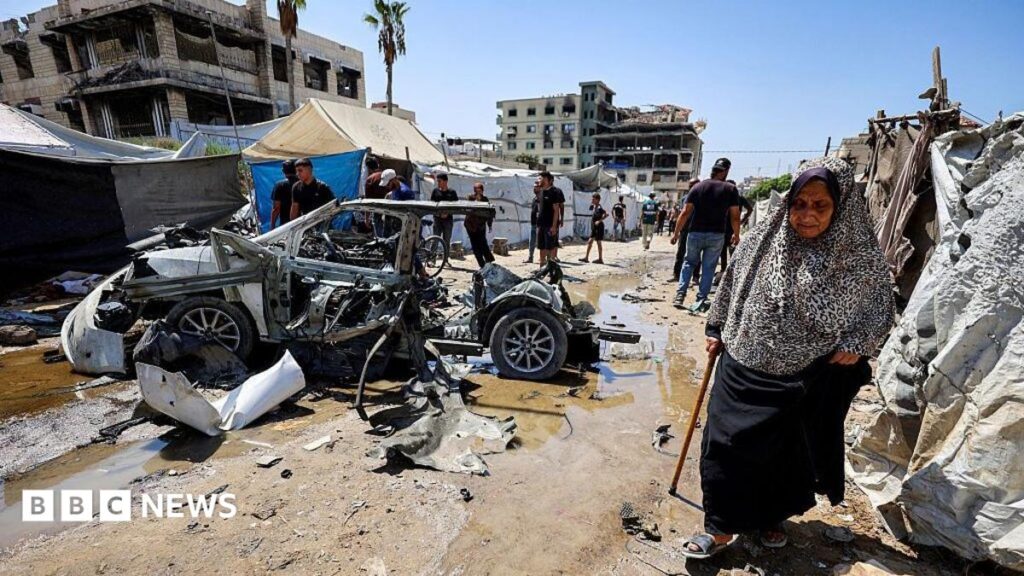
Background: The war’s shifting focus
Since the outbreak of the latest Gaza conflict in October 2023, Israel has pursued a strategy of targeting Hamas’ command structure rather than solely relying on aerial bombardment. The aim, as Israeli officials have repeatedly stated, is to degrade the group’s ability to coordinate attacks and to force a political opening for a negotiated cease‑fire. By early 2026, the war had settled into a grinding stalemate, with periodic ground incursions and a heavy humanitarian toll on Gaza’s civilian population.
Hamas’ internal security service, often referred to as the “Shura” or “Mukataba” branch, oversees intelligence gathering, internal policing, and the vetting of new recruits. Its head, whose identity has been kept secret for years, is considered one of the most influential figures in the organization, second only to the political bureau chief. Capturing or eliminating this figure has been a long‑standing objective for Israel’s special‑operations units.
The broader context includes a growing fatigue among many Arab and African nations toward the protracted conflict. Nations such as Nigeria, Kenya, and South Africa have repeatedly called for an immediate cease‑fire at United Nations forums, while also warning that continued instability could exacerbate regional security threats, including the flow of weapons and radicalisation.
The raid and the capture: How Israel says it succeeded
On 1 September 2026, the Israel Defense Forces (IDF) announced that elite Sayeret Matkal commandos entered Gaza City under cover of darkness to seize the head of Hamas’ internal security service. According to the IDF, the operation involved a coordinated air‑strike on a residential block that housed the target’s family, followed by a swift ground insertion that neutralised nearby resistance.
Israeli military spokesperson Daniel Hagari said the raid resulted in four Palestinian casualties – two combatants and two civilians – and that the captured official is now being interrogated for intelligence that could lead to further arrests of senior Hamas leaders. The IDF did not release the chief’s name, but analysts at the Institute for National Security Studies in Jerusalem identified him as “Abu al‑Qasim,” a veteran operative who has overseen several high‑profile attacks on Israeli territory.
The operation sparked immediate condemnation from Hamas, which vowed retaliation and claimed the strike violated international law. In a televised address, Hamas political leader Ismail Haniyeh described the raid as “a war crime” and warned that the group would “respond with force proportional to the aggression.”
Regional and African implications: Why the capture matters beyond the Middle East
The capture of a senior Hamas security figure reverberates across the African continent, where many governments have been balancing diplomatic ties with Israel against solidarity with the Palestinian cause. Countries such as Algeria and Sudan have historically supported Hamas, while others like Egypt and Morocco have pursued a more pragmatic approach, maintaining security cooperation with Israel to curb extremist spill‑over into the Sahel.
For African states that host sizable Palestinian diaspora communities—particularly in South Africa’s Gauteng province and Kenya’s Nairobi—this development may intensify local protests and pressure on foreign ministries to adopt a firmer stance against Israel. In Johannesburg, community leaders have already called for a public demonstration demanding the release of all Palestinian prisoners, a move that could test South Africa’s delicate diplomatic equilibrium.
Economically, the raid could affect the flow of humanitarian aid that passes through African ports. Nations such as Ethiopia and Djibouti serve as logistical hubs for aid convoys entering Gaza via the Red Sea. If Israel uses the captured intelligence to tighten its blockade, aid agencies might need to reroute shipments, raising costs and delaying relief for Gaza’s 2 million‑plus displaced residents.
Humanitarian fallout and diaspora response
Humanitarian organisations on the ground report that the raid’s air‑strike damaged a nearby school used as a temporary shelter, displacing dozens of families already living in makeshift tents. The United Nations Office for the Coordination of Humanitarian Affairs (OCHA) warned that any escalation could push Gaza’s civilian death toll past 30,000, a figure that would likely trigger renewed calls for international intervention.
African NGOs, including the Nigerian‑based Relief International and the Kenyan charity Islamic Relief, have issued statements urging the IDF to respect civilian zones and calling for an immediate humanitarian corridor. Their appeals echo a broader trend: African civil‑society groups are increasingly vocal on Middle‑East conflicts, leveraging social‑media platforms to mobilise donors and pressure foreign ministries.
The diaspora angle is also evident in remittance flows. The World Bank estimates that Nigerians in the United Kingdom and the United States collectively send over $3 billion a year to family members back home. Some of that money has been earmarked for charitable contributions to Gaza, and the latest raid has prompted a surge in online fundraising campaigns targeting African diaspora audiences.
What’s next: Possible scenarios and the road ahead
Analysts say the capture could either weaken Hamas’ internal cohesion or provoke a brutal retaliation that raises the conflict’s intensity. A senior security official possesses deep knowledge of the group’s networks, so Israeli interrogators may extract information that leads to further arrests, potentially crippling Hamas’ ability to launch rockets. However, Hamas has a history of using high‑profile attacks as a rallying call, and its military wing may respond with a large‑scale barrage aimed at Israeli civilian centres.
In the diplomatic arena, the United Nations Security Council is expected to convene a special session next week to discuss the humanitarian situation. African members, led by South Africa and Nigeria, are likely to push for a resolution that calls for an immediate cease‑fire and unrestricted aid access. Their influence could be decisive if the United States, traditionally Israel’s staunch ally, faces mounting pressure from its own African‑American constituency.
For the African diaspora, the next weeks will be a test of solidarity and advocacy. Community organisations are already planning coordinated lobbying efforts targeting U.S. Congress members of African descent, aiming to shape the American response to the raid. Whether these efforts translate into concrete policy shifts remains uncertain, but they illustrate how a conflict half a world away can mobilise African voices on the global stage.
Quick Answers
Who was captured by Israel in the Gaza raid on 1 September 2026?
Israel says it captured the head of Hamas’ internal security service, identified by analysts as senior operative ‘Abu al‑Qasim.’
How might the capture affect humanitarian aid to Gaza?
If Israel tightens its blockade using intelligence from the capture, aid routes through African ports could be delayed, raising costs and slowing deliveries.
Why does the raid matter to African countries and the diaspora?
African governments balance ties with Israel and support for Palestine, while diaspora communities are organising protests, fundraising, and lobbying that could influence foreign‑policy debates.
Source: www.bbc.co.uk



💬 Comments 0