Israel’s 2024 Greenwashing: How Environmental Policies Devastate Palestine
Background
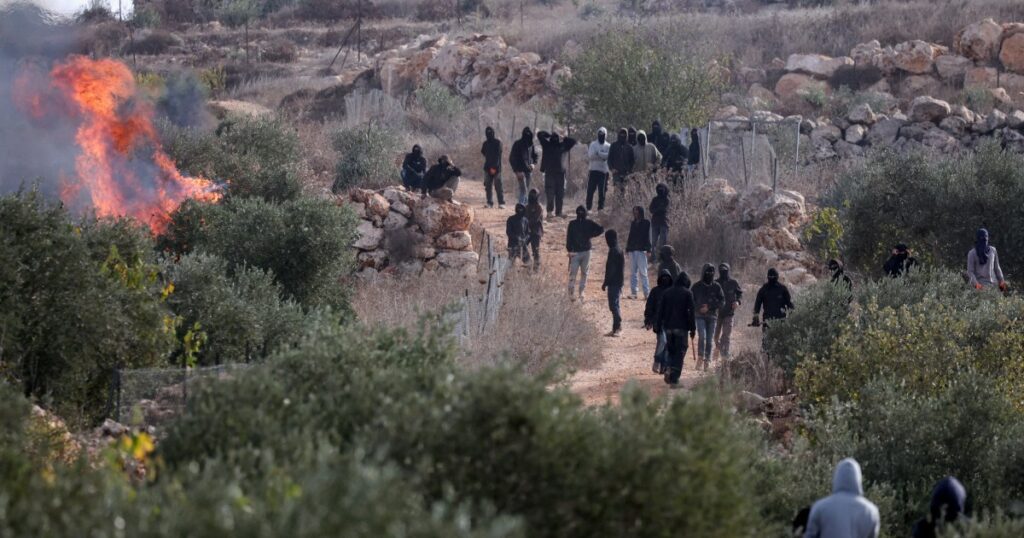
Israel’s environmental narrative is framed by a long‑standing claim of sustainability, highlighted in national media and international green‑initiatives. Yet, since the 1967 occupation, the state has expanded settlements, diverted water, and intensified land use in the West Bank and Gaza, actions that have drawn criticism from NGOs and the United Nations. The Israeli Ministry of Water Resources reports that 70% of the West Bank’s water is allocated to Israeli settlements, leaving Palestinian communities with limited access. This imbalance is compounded by the construction of the separation barrier, which cuts off fertile agricultural zones and disrupts local ecosystems. While Israel promotes renewable energy projects, these efforts often overlook the ecological costs imposed on Palestinian territories, creating a stark contrast between public messaging and on‑the‑ground realities.
What Happened
In 2024, Israeli authorities approved the expansion of a hydroponic greenhouse network in the West Bank’s Hebron area, a project touted as a model of water‑efficient agriculture. However, the expansion required the redirection of a major aquifer, a move that local farmers say has led to a 30% drop in groundwater levels. According to a report from the Palestinian Center for Policy and Research, the project also displaced over 200 hectares of community farmland, displacing dozens of families who rely on subsistence farming. The expansion further intensified air pollution, as new greenhouses rely on diesel generators during off‑peak solar hours, contributing to higher particulate matter levels in nearby villages.
Why It Matters
The environmental degradation in Palestinian territories has broader implications for regional stability and human rights. Water scarcity exacerbates tensions over resource allocation, a core grievance in the Israeli‑Palestinian conflict. Climate models predict that the Middle East will become increasingly water‑stressed; thus, policies that favor one side could accelerate ecological collapse and trigger displacement. Moreover, the environmental injustice faced by Palestinians echoes similar struggles across Africa, where colonial legacies and contemporary resource extraction have led to land dispossession and ecological harm. African NGOs, such as the African Climate Justice Coalition, have drawn parallels between the Palestinian experience and land‑rights movements in Kenya and South Africa, underscoring a shared narrative of environmental racism. For African diasporic communities, particularly in Nigeria and South Africa, these developments resonate with local activism against mining‑induced water contamination and deforestation, reinforcing a transnational call for equitable environmental stewardship.
Reactions
International bodies have responded with caution. The United Nations Office for the Coordination of Humanitarian Affairs (OCHA) issued a brief noting that the greenhouse expansion violates Article 4 of the Fourth Geneva Convention, which prohibits the transfer of the occupying power’s civilian population into the occupied territory. Israeli officials, meanwhile, defend the project as a necessary step toward reducing water consumption and supporting local economies. They cite a 2023 study by the Israeli Energy Authority claiming that hydroponic systems cut water usage by up to 80% compared to traditional agriculture. Palestinian civil society groups have organized protests, demanding the halting of the expansion and the restoration of water rights. In Africa, the African Union’s Climate Change Committee has called for a joint resolution condemning environmental exploitation in occupied territories, highlighting the need for a global framework that addresses resource inequities.
What’s Next
The Israeli government plans to roll out additional agricultural projects in 2025, including a large‑scale solar farm adjacent to the separation barrier. Critics argue that such projects may further marginalize Palestinian farmers and intensify ecological degradation. The Palestinian Authority has filed a complaint with the International Court of Justice, seeking an injunction against the expansion and a broader review of Israel’s environmental policies in the occupied territories. Meanwhile, African environmental NGOs are preparing a coalition of advocacy campaigns, leveraging social media to raise global awareness and pressure for policy change. The upcoming UN Climate Summit in 2026 may serve as a platform for these stakeholders to push for binding agreements that incorporate land‑rights and water‑equity clauses, potentially reshaping the environmental discourse surrounding the Israeli‑Palestinian conflict.
Quick Answers
What is the main environmental issue Israel’s policies cause in Palestine? The diversion of water resources, expansion of settlements, and land use changes have led to severe water scarcity, loss of farmland, and increased pollution in Palestinian territories.
How does this affect African communities? African activists see parallels with environmental injustice in their own regions, using the Palestinian case to highlight global patterns of resource exploitation and to advocate for equitable environmental justice.
Quick Answers
What is the main environmental issue Israel’s policies cause in Palestine?
The diversion of water resources, expansion of settlements, and land use changes have led to severe water scarcity, loss of farmland, and increased pollution in Palestinian territories.
How does this affect African communities?
African activists see parallels with environmental injustice in their own regions, using the Palestinian case to highlight global patterns of resource exploitation and to advocate for equitable environmental justice.
Source: www.aljazeera.com



💬 Comments 0