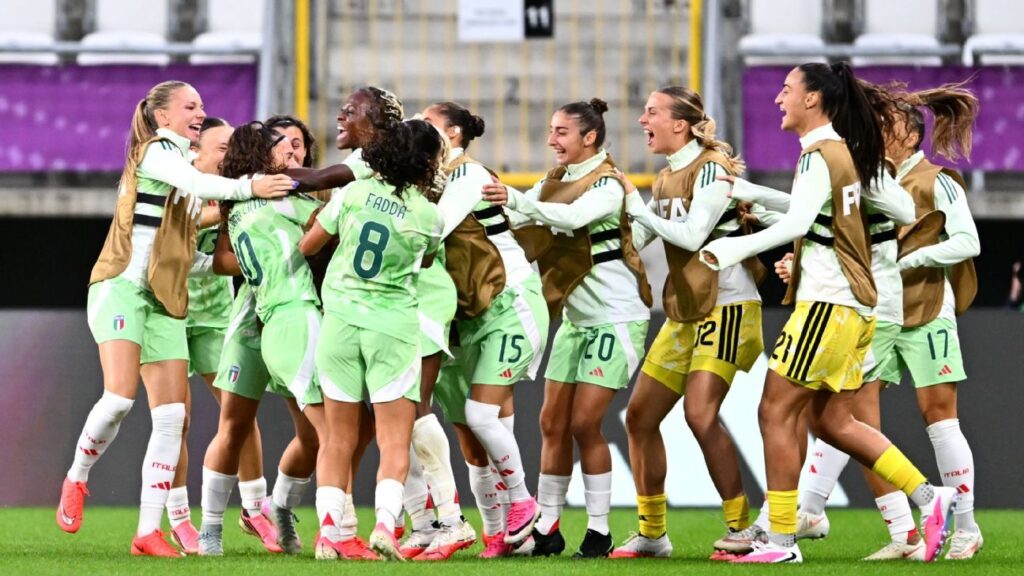
Italy stuns U.S. Women 2-1 in U20 World Cup opener in Łódź – implications for US and African development
Background: U20 Women’s World Cup stakes for the United States
The FIFA U20 Women’s World Cup is the premier showcase for the next generation of talent, often forecasting the senior national team’s future fortunes. The United States entered the 2026 edition as a two‑time defending champion, with expectations that a deep squad would dominate the group stage.
America’s roster combined collegiate stand‑outs from the NCAA with a handful of overseas professionals, reflecting the nation’s expanding pipeline that now includes youth academies linked to NWSL clubs. The team’s preparation included a three‑week training camp at the IMG Academy, where they faced high‑intensity scrimmages against top college programs.
Historically, the U.S. has used the tournament to test tactical shifts—most recently a move toward a possession‑heavy, high‑pressing style under coach Twila Kilgore. The opener against Italy was therefore not just a match but a litmus test for that strategic overhaul.
What happened in Łódź: Italy’s tactical edge
In a compact stadium in Łódź, Poland, Italy struck first through a well‑timed run by forward Giulia Rizzo, whose low‑driven shot beat keeper Sydney Martinez in the 23rd minute. The goal came after a quick transition that caught the U.S. backline out of shape.
The Americans equalised two minutes later from a set‑piece, with midfielder Maya Hall heading in a corner after a defensive lapse from Italy. The moment sparked a surge of optimism among the U.S. bench, but the respite was short‑lived.
Late in the second half, Italy’s midfielder Alessia Bianchi forced a defensive error, creating a one‑on‑one chance that she converted to make it 2‑1. The Italian side, praised for disciplined zonal marking and a compact midfield block, held firm for the remaining minutes despite a flurry of American attempts.
Why the upset matters for American women’s soccer
The result puts the United States in a precarious position: a win against a lower‑ranked opponent is now essential to stay alive in the group. It also signals that the tactical experiment under Kilgore may need refinement, especially in transitioning from possession to a decisive finish.
Scouts and analysts have pointed out that the American side appeared overly reliant on individual flair rather than cohesive team movement—a contrast to Italy’s collective approach. If the U.S. fails to adapt, the loss could ripple into senior‑team selections for the upcoming 2028 Olympic qualifiers.
Beyond the tactical side, the defeat raises questions about the development model that leans heavily on the collegiate system. European clubs are increasingly offering professional contracts to teenage talent, a path that could accelerate growth for players who might otherwise spend three or four years in college before turning pro.
African perspective: what the shock says for the continent’s rising teams
African U20 women’s sides, such as Nigeria, Ghana, and Kenya, are watching the tournament closely. Nigeria, placed in the same group as the U.S., knows that a single point against a traditionally dominant opponent could be enough to advance, as the Italians have proved capable of unsettling the favorites.
The upset also highlights a broader trend: African players are gaining visibility in European academies. Italy’s squad featured several teenagers of African descent—most notably forward Amina Diop, born in Senegal but raised in Milan—underscoring how diaspora talent is shaping the competitive landscape.
For African football federations, the match serves as a reminder that investment in youth coaching, scouting, and exposure to high‑level competition is crucial. The Confederation of African Football (CAF) has announced a new funding program for women’s youth development, hoping to narrow the gap that traditionally favored North American and European programs.
Reactions: coaches, players and the diaspora
Coach Twila Kilgore, speaking to USSF after the game, admitted that “the team showed resilience but we need to be sharper in the final third.” She also praised Italy’s organization, noting that the American side could learn from their disciplined structure.
Italian captain Sofia Ricci expressed confidence, saying the victory proves “that we can compete with the best when we stick to our game plan.” Her remarks resonated with Italian diaspora communities across the United States, where a surge of viewing parties highlighted the growing interest in European women’s football among African‑American and immigrant audiences.
Social media buzz in Nigeria and Ghana amplified the discussion, with fans comparing the tactical discipline of Italy to the more physical style of African teams. Several Nigerian analysts argued that if the U.S. can be beaten, then the African squads have a realistic chance of causing further upsets.
What’s next: the path forward for the U.S., Italy and African contenders
The United States must secure a win in its next two group games—against Nigeria and Brazil—to stay in the tournament. Tactical adjustments, such as a tighter midfield shape and a greater emphasis on quick transitions, are likely to be prioritized in the short window before the next fixture.
Italy, now with three points, will aim to maintain its defensive solidity while looking for a third goal in the upcoming match against Brazil. Their success could inspire other mid‑tier European nations to adopt a similar collective approach, potentially reshaping the competitive hierarchy at the youth level.
For African teams, the upset provides a psychological boost. Nigeria’s coach, Uche Nwankwo, has hinted that the squad will study Italy’s pressing triggers to refine its own game plan. If the African side can emulate that discipline, the group could become one of the tournament’s most unpredictable, with the potential for a historic African qualification to the knockout rounds.
Quick Answers
What was the final score of Italy vs. United States in the U20 Women’s World Cup opener?
Italy defeated the United States 2-1 in the opening match in Łódź, Poland.
How does Italy's win affect the United States' chances of advancing?
The loss puts the U.S. at the bottom of its group, meaning it must win its remaining two games to have any chance of progressing.
Why is the result significant for African women’s football?
The upset shows that disciplined, collective tactics can beat traditional powerhouses, encouraging African U20 teams to adopt similar strategies and boosting confidence ahead of their own matches.
Source: www.espn.com




💬 Comments 0