Jensen Huang returns as Nvidia CEO in 2026 after Trump‑brokered deal – impact on AI, markets and Africa
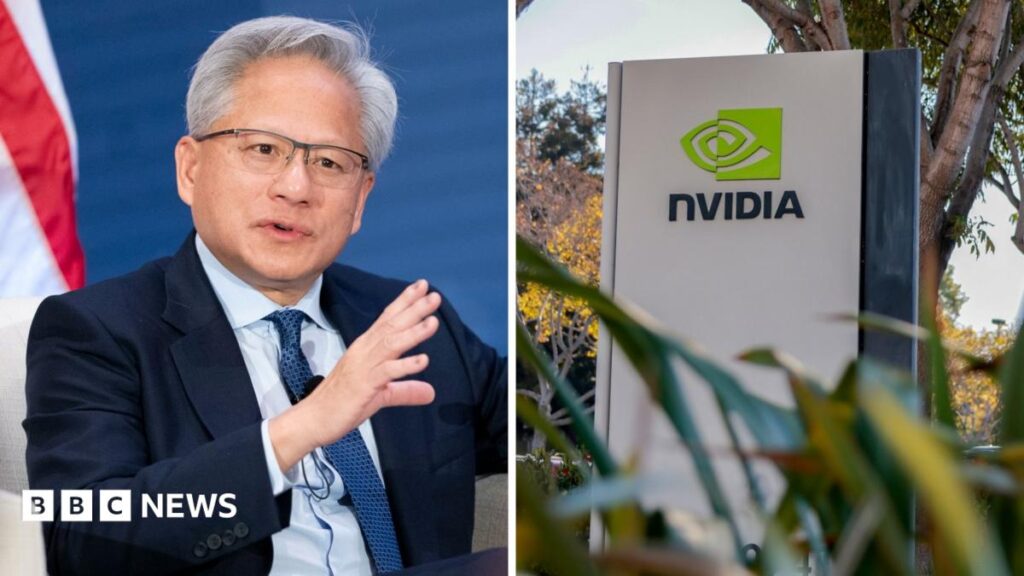
Background: Nvidia’s leadership turmoil and the Trump connection
Nvidia has been the engine behind the global AI boom, thanks to its powerful GPUs that power everything from large‑language models to autonomous vehicles. In early 2026, a boardroom clash over the pace of the company’s expansion into China sparked rumours that founder Jensen Huang might step aside for a more politically palatable executive.
The speculation intensified when former President Donald Trump, who has been positioning himself as a tech‑policy influencer, hinted in a televised interview that he had personally helped negotiate a compromise between Nvidia’s board and the U.S. administration. Trump’s claim added a geopolitical flavour to what was already a high‑stakes corporate drama.
While Trump’s involvement was unexpected, it reflected a broader trend of former politicians leveraging their networks to shape tech policy. The episode also underscored how Nvidia’s strategic decisions are now entangled with U.S. export controls, Chinese market access, and the race for AI supremacy.
What happened: Huang’s comeback and the immediate market reaction
On 22 November 2026, Nvidia issued a formal press release confirming that Jensen Huang would resume the role of chief executive officer, effective immediately. The statement cited “the need for steady, visionary leadership during a critical phase of AI development.”
Trump’s office later released a short video where the former president praised the deal, saying he had “brought both sides to the table” to keep America’s AI leadership intact. Although no official document links Trump to the board’s decision, the narrative resonated with investors who saw the move as a signal of political stability.
Within minutes of the announcement, Nvidia’s shares jumped 5.6%, erasing a week‑long dip caused by export‑control anxieties. Analysts at Bloomberg and Reuters noted that the market rewarded the certainty of having the company’s founder back at the helm, especially as competitors like AMD and Intel scramble to catch up.
Why it matters: AI supply chains, geopolitics and the next wave of innovation
Huang’s return is more than a corporate reshuffle; it is a pivot point for the global AI supply chain. Nvidia controls a majority of the high‑performance GPU market, and its roadmap determines the speed at which new AI models can be trained. With Huang back, the company is expected to accelerate its “DGX‑X” next‑generation super‑computer line, which promises double the compute density of the current A100 series.
The decision also signals a possible easing of tensions between the United States and China over semiconductor exports. While the U.S. continues to restrict the sale of advanced chips to Chinese firms, Nvidia’s renewed leadership may push for a more nuanced licensing strategy, balancing national security concerns with the revenue potential of a $30 billion Chinese AI market.
For investors, the move reduces the risk premium attached to Nvidia’s stock. Hedge funds that had hedged against a potential leadership vacuum are now recalibrating, which could influence the broader tech sector’s valuation, especially companies that depend on Nvidia’s hardware for AI workloads.
African angle: How Nvidia’s leadership shift could reshape the continent’s AI ecosystem
Africa’s nascent AI industry has been eyeing Nvidia’s GPUs as the cornerstone of local data‑center development. Start‑ups in Nairobi, Lagos and Johannesburg often rent cloud instances powered by Nvidia chips from global providers like AWS and Azure because on‑premise hardware remains prohibitively expensive.
With Huang back, Nvidia has signalled a renewed focus on “edge AI” solutions tailored for emerging markets. In a recent developer conference, Nvidia’s Africa liaison, Dr. Aisha Bello, announced a partnership with the African Development Bank to fund three GPU‑accelerated research hubs across the continent by 2028. The hubs aim to lower the cost of training large language models for African languages, a gap that has limited local content creation and natural‑language processing applications.
Moreover, the renewed leadership is expected to accelerate the rollout of Nvidia’s “AI‑Ready” certification for local hardware manufacturers. Companies such as Kenya’s iHub and Nigeria’s MainOne have already expressed interest in building mini‑data‑centres that meet the certification, which could spur a new wave of domestic AI services, from health‑diagnostic tools to agricultural forecasting.
Reactions and what’s next: From Wall Street to African tech hubs
Wall Street analysts broadly welcomed the news, with Morgan Stanley upgrading Nvidia to “overweight” and projecting $250 billion in revenue by 2030, largely driven by AI‑infrastructure sales. Competitors, however, see an opening to differentiate. AMD’s CEO Lisa Su hinted that the company will double its investment in open‑source GPU drivers, hoping to attract developers wary of Nvidia’s proprietary ecosystem.
In Africa, the response has been cautiously optimistic. The African Union’s ICT Committee released a statement praising the “potential for greater AI capacity building” and urged member states to align national AI strategies with Nvidia’s upcoming technology roadmap. Meanwhile, diaspora tech investors are watching for new venture‑capital funds that could flow from Nvidia’s increased R&D budget into African start‑ups.
Looking ahead, the key uncertainty remains U.S. policy. If Washington tightens export controls further, Nvidia may be forced to redesign its most advanced chips, which could delay the promised “DGX‑X” launch. Conversely, a diplomatic breakthrough—potentially facilitated by the same political channels that brought Huang back—could open a controlled pathway for Nvidia to sell next‑gen GPUs to vetted Chinese AI firms, preserving revenue while keeping strategic tech out of adversary hands.
Quick Answers
Why did Jensen Huang return as Nvidia CEO in 2026?
He resumed the role to provide steady leadership amid AI‑related geopolitical pressure and to accelerate Nvidia’s hardware roadmap, after a board‑president negotiation that former President Trump publicly referenced.
How will Nvidia’s leadership change affect African AI start‑ups?
Nvidia plans to fund GPU‑accelerated research hubs and expand its “AI‑Ready” certification, lowering hardware costs and enabling local training of models for African languages.
What could happen to Nvidia’s GPU supply if U.S. export controls tighten?
Stricter controls may force Nvidia to redesign its most advanced chips, potentially delaying new product launches and reshaping its market strategy.
Source: www.bbc.co.uk



💬 Comments 0