Krakow market square shooting 2026: BBC Verify video, casualties and security fallout
What happened on the market square
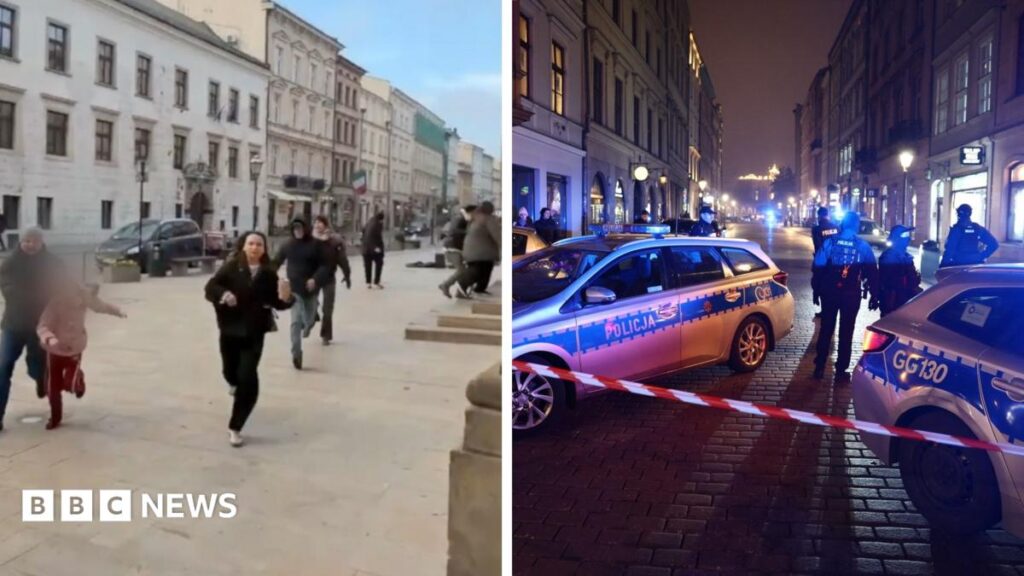
At around 5:30 p.m. on 7 November 2026, a gunman opened fire in Krakow’s historic Rynek Główny, the city’s bustling main market square. The attack was captured on a livestream that was later verified by BBC Verify, showing the sudden burst of gunfire and panicked crowds fleeing the scene. Police arrived within minutes, cordoning off the area and evacuating nearby cafés and tourist attractions.
Authorities identified the shooter as a 28‑year‑old male of Polish nationality who was later taken into custody without further resistance. The motive remains under investigation, but early statements from the Polish police suggest a personal grievance rather than a terrorist plot, according to a press briefing on 8 November.
Immediate response and casualties
The incident left three people dead and twelve injured, including two foreign nationals who were visiting the city on a cultural tour. Emergency services transported the wounded to the John Paul II Hospital, where surgeons performed life‑saving procedures. The city’s mayor, Jacek Majchrowski, declared a day of mourning and promised full support for the victims’ families.
The Polish Interior Ministry activated a rapid‑response unit to secure surrounding streets and launched a city‑wide search for any additional weapons. Public transport was temporarily suspended, and the market square remained closed for cleaning and forensic work through the weekend.
Why the incident matters for Europe and beyond
While Poland has historically enjoyed low levels of gun violence compared with many Western European neighbours, the Krakow shooting underscores a growing vulnerability of open public spaces to lone‑wolf attacks. Security experts note that the incident could prompt a reassessment of crowd‑control policies across the EU, especially in tourist hubs that draw millions of visitors each year.
The shooting also arrives at a time when the European Union is debating tighter cross‑border firearm regulations. Lawmakers in the European Parliament have cited the Krakow case as a concrete example of why existing loopholes—such as the ease of acquiring semi‑automatic weapons through the black market—must be closed, according to a statement from the EU’s Committee on Civil Liberties.
Link to rising public‑space violence in Europe
Krakow joins a list of European cities that have experienced high‑profile attacks in public squares, including the 2024 Barcelona tram shooting and the 2025 Vienna concert hall incident. Researchers at the European Institute for Security Studies point out that such events share common traits: a single perpetrator, limited planning time, and the choice of crowded, symbolic locations to maximise media impact.
The pattern is prompting a shift from traditional police patrols to more technology‑driven solutions. Cities are experimenting with AI‑enabled CCTV that can detect gun‑shot acoustics and automatically alert nearby units, a measure already piloted in Amsterdam and slated for rollout in several Polish municipalities, according to a municipal report released in October.
Implications for African students and travelers
Poland hosts one of the fastest‑growing African student populations in Europe, with over 30,000 Nigerians, Ghanaians and Kenyans enrolled in its universities as of 2025. The Krakow shooting has sparked concern among African student unions, who fear that heightened security protocols could affect campus mobility and cultural exchange programmes. The Nigerian Embassy in Warsaw issued an advisory urging its nationals to avoid large gatherings until the investigation concludes.
Tour operators that specialise in African‑focused cultural tours have also re‑evaluated their itineraries. A spokesperson for Africa‑Travel Poland noted that while Krakow remains a top destination, agencies are now adding contingency plans, such as alternative routes and real‑time safety briefings, to reassure clients from the diaspora.
What comes next – security and policy debates
In the weeks ahead, Polish lawmakers are expected to debate a package of measures that could tighten background checks for firearm licences and increase funding for municipal security teams. Civil‑rights groups, however, warn that overly restrictive laws might infringe on lawful gun owners, a debate that mirrors similar tensions in Germany and France.
Meanwhile, the European Commission is set to release a draft directive on “Public‑Space Safety” that would harmonise emergency‑response standards across member states. If adopted, the framework could require all EU capitals to conduct annual risk assessments of major squares and invest in rapid‑deployment response units, a move that would directly stem from incidents like the Krakow shooting.
Quick Answers
When did the Krakow market square shooting occur?
The shooting took place on 7 November 2026 at about 5:30 p.m. local time.
How many people were killed and injured in the Krakow attack?
Three people were killed and twelve others were injured, including two foreign tourists.
What security changes are being considered after the Krakow shooting?
Polish officials are discussing tighter firearm licensing, increased municipal security funding, and the adoption of AI‑enabled CCTV that can detect gunshots.
Source: www.bbc.co.uk



💬 Comments 0