Macron calls Paris suburb shooting a racist terrorist attack, 1 dead, 5 injured (2026)
Background: rising extremist violence in France
France has seen a spate of attacks in the past decade that blend far‑right ideology with xenophobic rhetoric. While the country’s security apparatus has focused heavily on Islamist terrorism, data from the French Ministry of the Interior shows a 27 % increase in hate‑motivated assaults since 2020, many targeting migrants and people of African descent.
The political climate has also shifted. The 2022 presidential election brought a coalition that promised tougher immigration controls, and subsequent protests have amplified anti‑immigrant sentiment in several suburbs of Paris. Analysts at the Institut français des relations internationales say that these social tensions are creating fertile ground for lone‑wolf actors who see violence as a way to send a political message.
In parallel, the European Union has tightened its counter‑terrorism legislation, but critics argue that the focus on Islamist threats has left a blind spot for right‑wing motivated attacks. This imbalance has been highlighted by NGOs such as SOS Racisme, which warn that under‑reporting of racist violence hampers effective policy responses.
The Paris suburb shooting: what happened
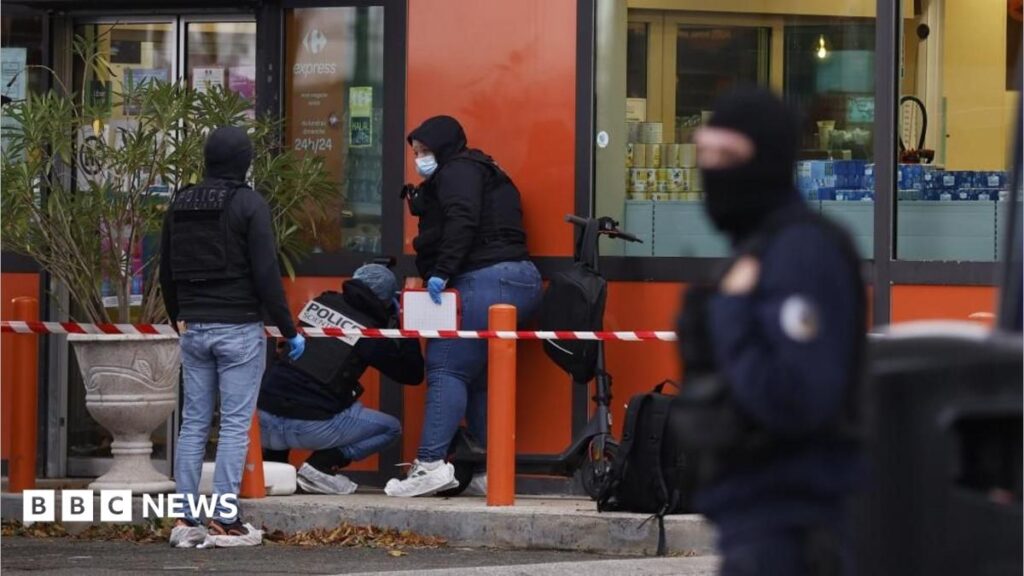
On the evening of 22 October 2026, gunfire erupted near the town of Aulnay‑sous‑Bois, a suburb north‑east of Paris with a large immigrant population. Police reports confirm that a single shooter opened fire on a crowd gathered outside a community centre, killing one person and wounding five others before being detained by officers.
Witnesses described the assailant as a middle‑aged white male who shouted anti‑immigrant slogans before firing. The victims, according to local hospital sources, were of North‑African and Sub‑Saharan origin, underscoring the racial dimension of the attack. The suspect, identified by French authorities as 38‑year‑old Karim B., has a prior record for violent offences but no known links to organized extremist groups.
The French interior ministry released a brief statement confirming the suspect’s arrest and the ongoing forensic investigation. The incident has reignited debate over the adequacy of France’s hate‑crime legislation, which many activists claim is outdated and insufficiently enforced.
Why Macron’s labeling matters
President Emmanuel Macron’s decision to describe the incident as a "racist terrorist attack" marks a departure from the usual cautious phrasing used by French officials. By attaching the term “terrorist” to a hate‑crime, the president signals that the state will treat racially motivated violence with the same severity as ideologically driven jihadist attacks.
Legal scholars, such as Dr. Aïssa Traoré of the University of Paris‑Sorbonne, note that this classification could open the door to harsher sentencing under France’s anti‑terrorism code, which carries penalties up to life imprisonment. It also sets a precedent for future prosecutions, potentially expanding the definition of terrorism to include far‑right motivated acts.
Politically, Macron’s statement aims to reassure minority communities that the government recognises the threat they face. It also serves as a counter‑narrative to far‑right parties that downplay racially motivated violence as "isolated incidents". However, critics argue that the rhetoric may be symbolic unless backed by concrete policy changes.
Impact on African and diaspora communities in France
France hosts the largest African diaspora in Europe, with over 5 million people tracing roots to the continent. The Aulnay‑sous‑Bois attack hit a neighbourhood where many families from Senegal, Mali and the Congo have settled for generations. Community leaders say the incident has reignited fears of targeted violence that date back to the 1990s riots in the banlieues.
Local organisations such as the Association des Parents d’Élèves d’Aulnay (APEA) have called for increased police patrols and cultural sensitivity training for officers. They argue that the current security model often treats African youths as suspects rather than victims, a perception that fuels mistrust and hampers cooperation with law‑enforcement.
The incident also reverberates in the African continent. Diplomatic sources from the Nigerian embassy in Paris reported that the Nigerian diaspora is closely monitoring the situation, fearing that similar attacks could affect Nigerians living in France. The embassy has pledged to work with French authorities to ensure the safety of its nationals.
Wider European trend and policy implications
The Paris shooting aligns with a broader pattern of right‑wing hate attacks across Europe, from the 2024 stabbing in Berlin’s Kreuzberg district to the 2025 arson of a mosque in Brussels. The European Union’s recent "Hate Crime and Terrorism" report warned that the convergence of extremist ideologies is blurring traditional security categories.
In response, several EU member states have begun to draft legislation that expands the legal definition of terrorism to include attacks motivated by racism, anti‑LGBTQ+ sentiment, or anti‑immigrant bias. France’s upcoming security bill, expected to be debated in the National Assembly in early 2027, could incorporate these recommendations, potentially reshaping how courts prosecute hate‑motivated crimes.
Economically, heightened security concerns can affect foreign investment and tourism, sectors where France relies heavily on African business travellers and students. If perceptions of unsafe environments persist, African entrepreneurs may reconsider Paris as a hub for expansion, redirecting capital to other African‑friendly European cities such as Lisbon or Dublin.
What comes next: security, legal and social responses
In the short term, French police have pledged to increase visible patrols in vulnerable suburbs and to accelerate the investigation into the shooter’s network. The interior ministry announced a task force that will coordinate with the anti‑racism watchdog SOS Racisme to monitor hate‑crime trends in real time.
Legislatively, the government is expected to propose amendments that would allow prosecutors to bring terrorism charges in cases where the motive is clearly identified as racial hatred. Civil‑society groups, however, caution that legal tools alone cannot dismantle the underlying social narratives that fuel such attacks.
Long‑term, experts argue that France must invest in integration programs that address unemployment and educational gaps in immigrant‑heavy districts. A 2025 study by the OECD highlighted that suburbs with higher rates of youth unemployment are also hotspots for extremist recruitment, suggesting that economic inclusion could be a decisive factor in preventing future incidents.
Quick Answers
What was the motive behind the Paris suburb shooting?
Police say the shooter shouted anti‑immigrant slogans and targeted a crowd of North‑African and Sub‑Saharan residents, indicating a racially motivated hate attack.
How many people were injured in the Aulnay‑sous‑Bois attack?
Five people were wounded, in addition to the one person who was killed.
What does Macron’s labeling of the incident as a ‘racist terrorist attack’ imply for French law?
It could allow prosecutors to apply anti‑terrorism statutes, which carry harsher penalties, to racially motivated crimes.
Source: www.bbc.co.uk




💬 Comments 0