Macron limits French weekend protests to union demos only, bans in Lyon and Nice
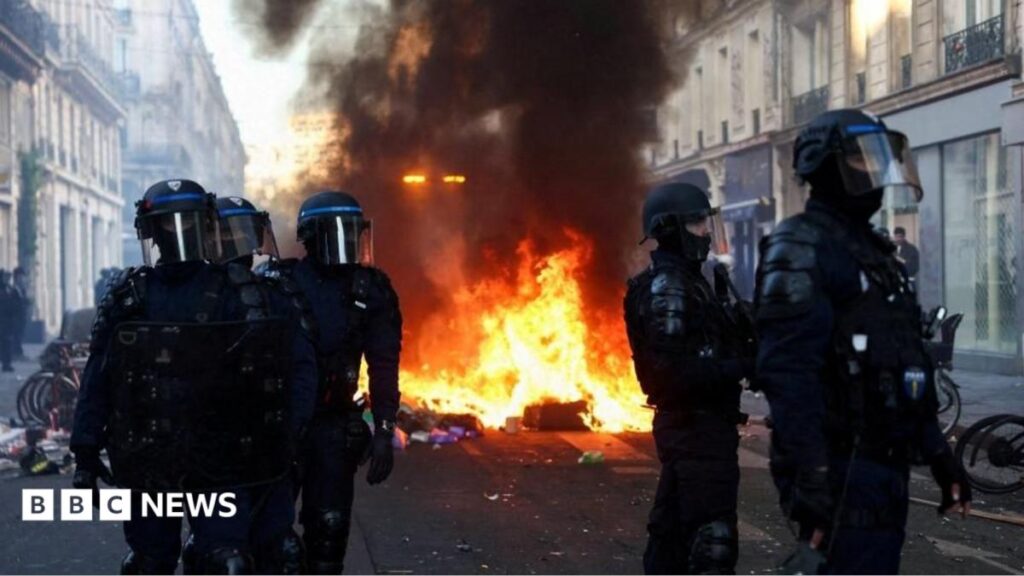
A volatile summer of street unrest
France entered the summer of 2026 with a series of flashpoints that reignited its long‑standing protest culture. From pension reform rallies in Paris to anti‑racism marches in Marseille, the streets saw an unprecedented mix of unions, student groups and community organisations demanding change.
The unrest was amplified by the upcoming presidential election slated for April 2027, prompting security services to warn of potential disruptions. Police reports cited an uptick in clashes between demonstrators and law‑enforcement, especially after the controversial “Security Bill” passed in June, which tightened rules on public assemblies.
Against this backdrop, President Emmanuel Macron announced on October 20 that only pre‑authorised union demonstrations would be permitted over the upcoming weekend, while several municipalities, including Lyon and Nice, moved to ban any unauthorised protests outright.
The decree and the city bans
Macron’s statement, delivered from the Élysée Palace, invoked the need to protect public order and prevent “uncontrolled mobilisation” that could jeopardise citizens’ safety. He cited recent incidents where spontaneous gatherings turned violent, leading to property damage and injuries.
In Lyon, the municipal council voted unanimously to prohibit any protest that had not received a permit from the prefecture, a move described by local mayor Bruno Bernard as “a temporary safeguard while we reassess security protocols”. Nice followed suit, with Mayor Christian Estrosi issuing a city‑wide injunction that bars street assemblies without explicit approval.
Critics, including the CGT and FO unions, argue that the decree undermines constitutional freedoms. A spokesperson for the CGT told Le Monde that the measure “creates a two‑tier system where only the most powerful unions retain a voice, while grassroots movements are silenced”.
Why the restriction matters for French democracy
France’s 1789 legacy of “the right to strike” is a cornerstone of its republican identity. Limiting protests to authorised union demos narrows the arena of dissent, potentially reshaping how civil society engages with the state. Legal scholars warn that such a precedent could be used to marginalise future movements that fall outside the traditional union umbrella.
Security officials, however, argue that the decision is a proportional response to a spike in violent clashes. According to a report from the Ministry of the Interior, the number of injuries during protests rose by 27 % in the first nine months of 2026, prompting a “risk‑based” approach to public order.
The tension between public safety and freedom of assembly is now playing out in French courts. Early filings indicate that several NGOs plan to challenge the city bans on constitutional grounds, a case that could reach the Conseil d’État before the end of the year.
African diaspora communities feel the squeeze
Paris, Lyon and Nice host some of the largest African diaspora populations in Europe, many of whom have been active in recent anti‑racism and immigration rallies. The new restrictions threaten to curtail their ability to organise spontaneous protests against police brutality or discriminatory policies.
Community leaders from Senegal, Mali and the Democratic Republic of Congo told Reuters that the ban “disproportionately impacts migrants and their descendants, who often lack the formal union structures that the law now privileges”. They fear that the rule will push activism underground, making it harder to monitor and protect participants.
Economically, the diaspora contributes roughly €12 billion annually to the French economy through entrepreneurship and remittances, according to the French Institute of Statistics. Any suppression of their civic voice could reverberate in the labor market, especially in sectors like hospitality and construction where many African‑origin workers are employed.
A broader European trend of tightening protest space
France is not alone in tightening its grip on public demonstrations. In the past year, the United Kingdom introduced the Public Order (Amendment) Act 2025, while Germany’s Federal Ministry of the Interior proposed stricter permit requirements for large gatherings.
Analysts see a pattern: governments are reacting to a wave of decentralized, digitally‑organised protests that can erupt with little warning. A study by the European Policy Centre notes a 34 % increase in “unsanctioned” street actions across the EU since 2023, prompting many capitals to revisit emergency powers.
For African activists operating transnationally, the shrinking protest space in Europe adds a layer of complexity. Networks that previously coordinated rallies in multiple cities now have to navigate a patchwork of legal regimes, potentially limiting solidarity actions that link European policy debates to issues on the continent, such as climate justice or trade agreements.
What lies ahead: legal battles, political fallout and possible concessions
The immediate future will likely see a surge in legal challenges. Lawyers for the NGOs that filed constitutional complaints expect hearings at the Conseil d’État by early 2027, a timeline that could intersect with the presidential campaign and force candidates to clarify their stance on civil liberties.
Politically, opposition parties have seized on the issue. The left‑wing coalition has pledged to repeal the weekend restriction if they win the 2027 election, while the far‑right is using the security narrative to argue for even tighter controls. Voter sentiment polls from Ifop show that 48 % of respondents view the protest ban as “excessive”, a factor that may sway swing voters.
If the courts uphold the bans, civil society groups are already planning alternative tactics—legal observer caravans, digital flash‑mobs and “silent marches” that comply with permit rules but convey dissent through symbolism. For the African diaspora, community centres are organizing town‑hall meetings to discuss how to maintain pressure on policy makers while navigating the new legal landscape.
Quick Answers
What types of protests are allowed in France this weekend?
Only demonstrations that have been authorised by the government and are organised by recognised unions are permitted.
Why did Lyon and Nice ban all unauthorised protests?
Both cities cited recent spikes in violent clashes and said the bans are temporary measures to protect public safety.
How could the protest restrictions affect African diaspora communities in France?
The limits may hinder spontaneous anti‑racism or immigration rallies that many African‑origin groups rely on, reducing their public visibility and bargaining power.
Source: www.bbc.co.uk




💬 Comments 0