Macron: Russian hybrid attacks on Europe intensify in 2026, protect France’s sites
Background: Russia’s hybrid playbook in Europe
Since the invasion of Ukraine, Moscow has expanded its arsenal beyond conventional missiles to include cyber intrusions, disinformation campaigns, and sabotage of energy grids. This blend of kinetic and non‑kinetic tactics – termed “hybrid warfare” – aims to destabilise societies without triggering a full‑scale military response from NATO.
European nations have already reported a surge in ransomware attacks on hospitals, interference in elections, and attempts to cripple gas pipelines during the winter months. Analysts at the European Centre for Security Studies note that the pattern reflects a strategic shift: targeting the continent’s most vulnerable infrastructure to erode public confidence and force political concessions.
France, with its sizable defence industry and status as a nuclear power, has been a frequent target. In 2023, French energy firms recorded a 30 % increase in cyber‑attack attempts, according to the national cybersecurity agency ANSSI. The growing frequency of these incidents set the stage for President Emmanuel Macron’s recent warning.
Macron’s warning and new French measures
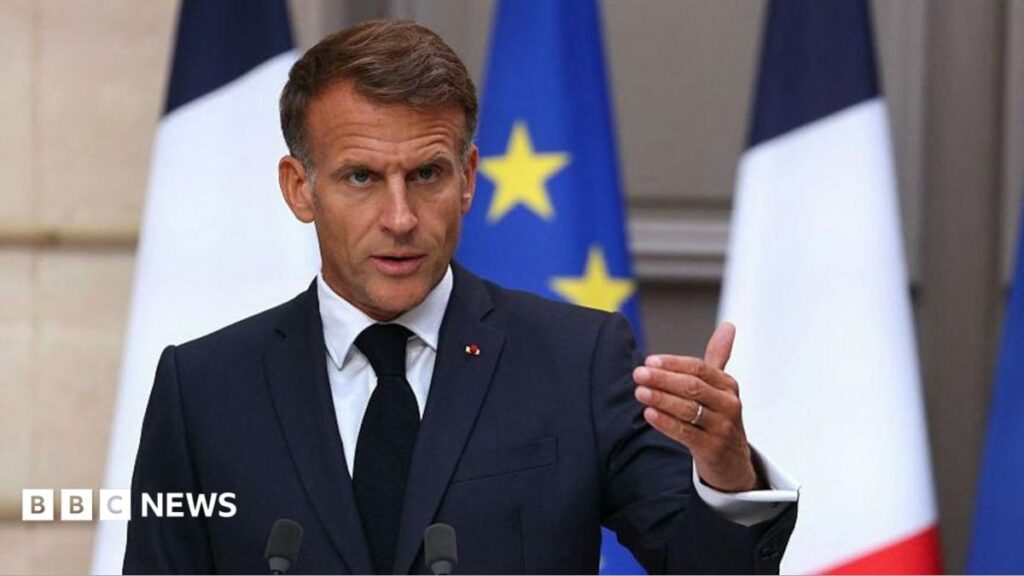
Speaking at a press conference in Paris, Macron declared that Russian hybrid attacks against Europe are “intensifying” and that his government will now treat critical infrastructure and defence‑industry sites as “national security priorities.” He ordered the Ministry of the Armed Forces and the Interior to coordinate a rapid‑response task force capable of counter‑acting both cyber and physical threats.
The president also announced a €2 billion budget boost for the national cyber‑defence agency, ANSSI, to upgrade detection systems at ports, power plants, and aerospace factories. The funding will finance the deployment of AI‑driven monitoring tools and the recruitment of 1,200 additional cybersecurity specialists over the next two years.
In a televised interview, Macron stressed that the move is not a reaction to a single incident but a pre‑emptive step to safeguard the French economy and its role in the European defence supply chain. He cited recent reports from the NATO Cooperative Cyber Defence Centre of Excellence that link a series of ransomware attacks on European manufacturers to groups with known Russian affiliations.
Why hybrid attacks matter beyond Paris
Hybrid attacks have a multiplying effect: a successful breach in a single plant can ripple through supply chains, cause price spikes in energy, and trigger political backlash. For Europe, where many countries still rely on Russian gas, any disruption to pipelines or storage facilities can translate into higher electricity bills for households and factories alike.
The defence sector is especially vulnerable because many European weapons systems depend on a tightly integrated network of suppliers across the continent. A coordinated cyber‑espionage campaign could steal design secrets, delay deliveries, and ultimately weaken NATO’s collective deterrence posture.
Moreover, the psychological dimension of hybrid warfare – spreading false narratives about the safety of public utilities – can sow distrust in democratic institutions. Recent surveys by the European Commission show that 42 % of respondents in France and Germany believe that foreign actors are actively trying to manipulate public opinion through online channels.
Ripple effects for African economies and the diaspora
Europe remains Africa’s biggest trading partner, and disruptions in European energy markets quickly affect African import bills. A surge in European gas prices often leads to higher freight costs for African exporters of cocoa, coffee, and minerals, squeezing profit margins for producers in Ghana, Côte d’Ivoire, and the Democratic Republic of Congo.
Several African defence firms have recently entered joint ventures with French aerospace and naval companies, supplying components for drones and missile systems. Heightened security checks on French sites could delay the certification of these African‑made parts, postponing contracts worth billions of dollars and slowing technology transfer to the continent.
The French diaspora in West and Central Africa – estimated at over 300,000 residents and business owners – may feel the impact of tighter security protocols. Travel restrictions, increased surveillance at French consulates, and a possible rise in anti‑Russian sentiment could affect everyday interactions, from trade missions to cultural exchanges.
What comes next: policy shifts and security trends
In the short term, the French task force will conduct vulnerability audits of all sites classified as “critical,” a process expected to take six months. The findings will feed into a broader EU directive that aims to harmonise cyber‑resilience standards across member states by 2027.
Long‑term, experts predict a rise in public‑private partnerships focused on “digital twins” of infrastructure – virtual replicas that allow operators to test defensive measures against simulated attacks. Companies in Kenya and Nigeria are already piloting such technology for power grids, suggesting that African innovators could play a role in the next wave of hybrid‑war defence.
Finally, the diplomatic arena is likely to heat up. NATO’s recent summit in Brussels included a pledge to increase funding for counter‑hybrid operations, and France is expected to champion a joint European‑African cyber‑security forum. If realised, the forum could create a channel for African states to share threat intelligence on Russian‑linked groups that have previously targeted banks in Tanzania and South Africa.
Quick Answers
What are Russian hybrid attacks?
Hybrid attacks combine cyber‑intrusions, disinformation, sabotage and conventional threats to destabilise targets without a full military invasion.
How could France’s new security measures affect African exporters?
Disruptions in European energy prices and delays in defence‑industry certifications can raise shipping costs and postpone contracts for African firms linked to French suppliers.
When will the French task force begin its infrastructure audit?
The audit is slated to start within weeks and should be completed in about six months, according to the president’s office.
Source: www.bbc.co.uk



💬 Comments 0